The battle between Hollywood and artificial intelligence companies is intensifying — and some of the world’s biggest entertainment studios have just secured an important early victory.
A California federal court has rejected an attempt by Chinese AI startup MiniMax to dismiss a major copyright lawsuit filed by entertainment giants Disney, Universal, and Warner Bros. Discovery. The case centers around allegations that MiniMax illegally used copyrighted characters and film content to train its AI-powered image and video generation platform, Hailuo.
The ruling could become a defining moment in the growing legal war over how AI companies collect and use creative material.

Credits: The Hindu
Hollywood Draws A Line In The Sand
The lawsuit, filed last year, accuses MiniMax of building its Hailuo AI system using copyrighted intellectual property from some of the world’s most valuable entertainment franchises.
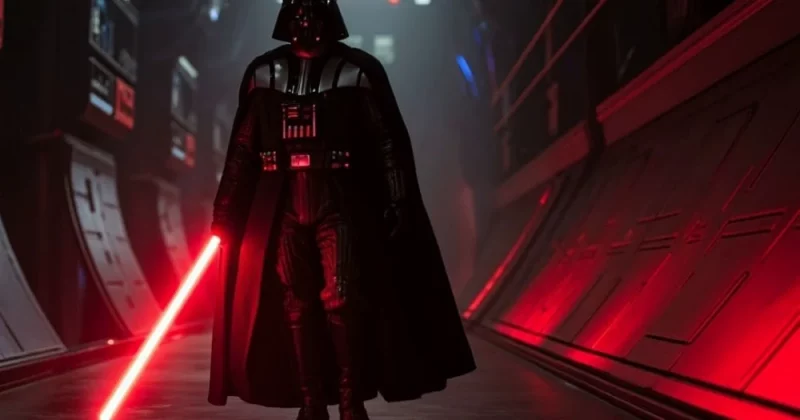
According to the studios, Hailuo generated images and videos featuring recognisable characters from Marvel films, Star Wars, and other blockbuster universes without obtaining proper licenses or permissions.
The companies also alleged that MiniMax marketed Hailuo as a “Hollywood studio in your pocket,” effectively positioning the AI tool as a shortcut to creating studio-style entertainment content.
For Disney, Universal, and Warner Bros. Discovery, the lawsuit is about far more than just a few AI-generated images. It represents a broader fight to protect decades of investment in storytelling, characters, and creative assets from being freely absorbed into generative AI systems.
Judge Rejects MiniMax’s Arguments
MiniMax attempted to get the lawsuit thrown out at an early stage by arguing two key points.
First, the company claimed that a U.S. court lacked jurisdiction because MiniMax primarily operates in China. Second, it argued that the studios had failed to present a legally valid copyright infringement claim.
But U.S. District Judge Stanley Blumenfeld rejected both arguments.
In his ruling, Blumenfeld said there was enough evidence to suggest MiniMax was offering the Hailuo app in the United States, making it reasonable for the California court to hear the case.
The judge also stated that the studios’ complaint “plainly alleges plausible claims” for copyright infringement, allowing the lawsuit to move forward.
While the ruling does not determine whether MiniMax actually violated copyright laws, it gives the Hollywood studios a significant procedural win and keeps pressure firmly on the AI startup.
AI’s Copyright Crisis Deepens
The MiniMax case is just one part of a rapidly expanding legal storm engulfing the AI industry.
Across the world, authors, musicians, artists, news publishers, and movie studios are increasingly accusing AI companies of using copyrighted material without consent to train powerful generative AI models.
The entertainment industry, in particular, sees generative AI as both an opportunity and a threat. While AI tools can reduce production costs and accelerate creative workflows, studios fear losing control over their intellectual property if AI systems can freely replicate famous characters, visual styles, and storytelling elements.
Disney, Universal, and Warner Bros. Discovery have already launched similar lawsuits against other AI firms, including Midjourney, in an attempt to establish clearer legal boundaries for the emerging technology.
The outcome of these cases could fundamentally reshape how AI companies source training data in the future.
Why This Case Matters Globally
The lawsuit also highlights growing international tensions around AI regulation and intellectual property enforcement.
MiniMax is one of China’s rising AI firms, and the case raises difficult questions about how U.S. copyright laws apply to overseas technology companies operating across borders through apps and digital platforms.
If U.S. courts continue asserting jurisdiction over foreign AI firms whose products are accessible to American users, global AI companies may face increasing legal exposure in multiple markets simultaneously.
That could lead to stricter licensing agreements, higher compliance costs, and potentially new international frameworks governing AI training practices.
Credits: Crypto Briefing
The Bigger Battle Ahead
For now, the legal fight is only beginning.
The court’s decision simply means the lawsuit survives long enough to move deeper into litigation, where evidence, internal documents, and AI training practices could face intense scrutiny.
But the ruling sends a clear signal: courts are increasingly willing to seriously examine claims that AI companies may have crossed legal lines while building their models.
As generative AI continues reshaping entertainment, media, and creativity itself, the clash between Silicon Valley-style innovation and Hollywood’s intellectual property empire is becoming one of the most important technology battles of the decade.