DocuSign has launched a new artificial intelligence feature aimed at de-intimidating the legal document process for ordinary individuals. This latest tool from the San Francisco-based document management company boasts the capability to slice through dense legalese and provide distinct, plain summaries of contracts and agreements.
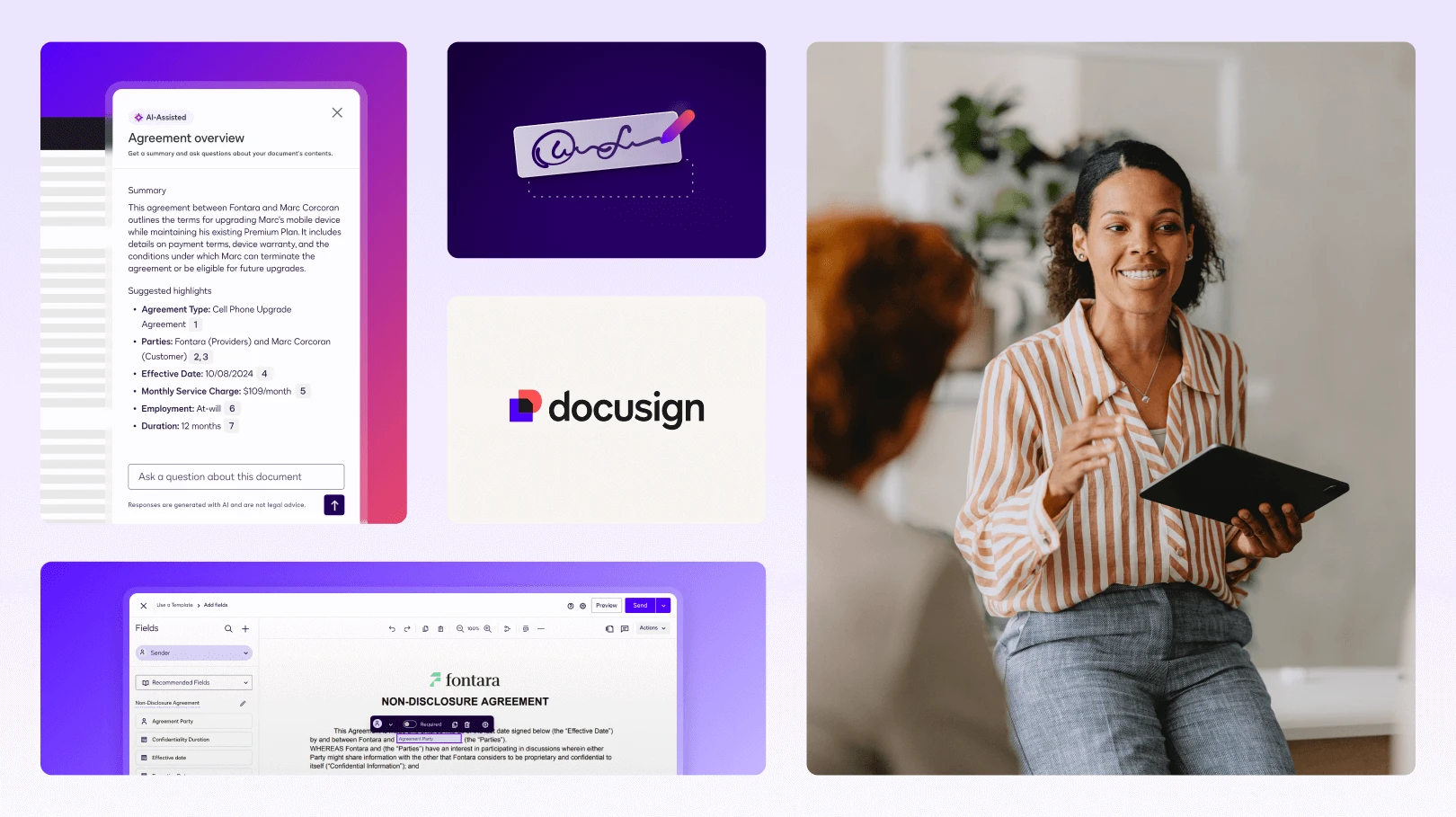
More than simplifying complexities of wording, the AI-powered system explains important terms and conditions, answers certain questions on contracts, and helps users understand what exactly they will be signing before putting pen to paper-or in this case, finger to screen.
What makes DocuSign’s solution unique among other AI solutions is its specialized roots. While most AI solutions are built on language models, DocuSign developed solutions for contracts using its customized AI engine named Iris. According to DocuSign, this AI engine was designed to understand contracts and their structure to provide better insights.
It is fully integrated with the Intelligent Agreement Management system of DocuSign.
Apart from summarizing documents, it has the capability of determining the type of agreement being dealt with, checking if the information of the recipients is correct, and adding the signature and information boxes to the correct places on the documents of agreements.
Users can communicate effectively with this AI, asking questions such as: “What happens if I have to cancel?” or “When does this warranty expire?” The AI will then respond to these inquiries without making it necessary for a user to go through the terms of service written by lawyers, which can take hours to understand.
DocuSign Leverages AI to Tackle “Contract Anxiety”
This launch has taken place at a time when there is a real need for it. This can be attributed to a survey of 1,000 Americans carried out by OnePulse last month, which indicated nearly 60 percent of respondents confessed to signing contracts despite not understanding them. This situation stands out as rather alarming to demonstrate how common it has become for people to feel overwhelmed by legal documents.
The psychological cost of this confusion is considerable. Nearly half of the respondents to a survey reported feeling negatively about being asked to sign contracts that they did not fully understand. Twenty-nine percent felt frustrated about these situations, and 19 percent felt anxious about having important information hidden away in fine print, which they might miss.
Perhaps the most indicative result is that 75 percent of those polled reported being more confident in putting their signature on an official contract if they were able to look at the summary written in plain English beforehand, if it were written by an AI.
Navigating the Limitations of DocuSign’s New Tool
Even as the new AI tool that DocuSign has introduced helps solve a genuine problem, both the company itself and outsiders alike are eager to note that the new tool has certain limitations. Even the most advanced AI solutions tend to suffer from a phenomenon that experts call “hallucinations,” wherein they produce data that may well seem correct but isn’t necessarily so.
This is a reminder that you shouldn’t consider an AI analysis conclusive. So long as you’re dealing with a standard agreement, such as a mobile app user agreement or a standard user agreement, it might be perfectly acceptable to consider an analysis provided by an artificial intelligence tool.
However, where the agreement has important material consequences, such as employment contracts or a real estate or business partnership, you’ll still want a professional analysis.
One might think of the use of the AI of DocuSign as the starting point of the process of trying to understand the document, but certainly not the endpoint or the sole point of reference if the circumstances are serious.
DocuSign and the Democratization of Legal Tech
Already live and available for users in the US, UK, and Australia is the AI-powered eSignature capability. DocuSign added that automated field placement for agreement creation will expand to the US market in a matter of weeks.
This gradual rollout indicates that the company is being measured in its approach, most likely observing user interaction with the technology and taking feedback before expanding to other markets.
The move by DocuSign is reflective of a wider trend where companies leverage AI to open up professional services and expertise to more people.
At the same time, such tools risk leveling the playing field for individuals and small businesses that, because of cost, couldn’t afford extensive legal consultations for every contract that crosses their path.
But at the same time, it underlines a challenge that has been ongoing with such tools: weighing the speed and accessibility of AI against the accuracy and professional judgment that will be required, or expected, in high-stakes scenarios. As such technologies continue to evolve, balance is going to be very much part of it all.