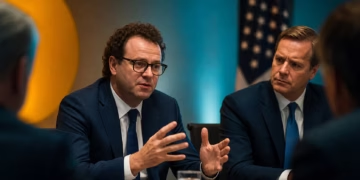
According to official sources, attempts are being made to settle the continuing tariff dispute between the United States and India in an attempt to defuse the heightened tensions caused by recent trade tariffs. The tension arose as the United States threatened to upset the bilateral trade balance by imposing higher taxes on a number of Indian exports, including steel and aluminum products. Despite the present difficulties, both countries have indicated that they are eager to engage in discussions, highlighting the significance of preserving long-term economic relationships. In an effort to defuse trade tensions and provide stability to one of the most important economic partnerships in the world, officials from both sides are working hard to find solutions that both parties can agree on.
Economic Impact of Tariffs on Key Industries:
Important sectors of the American and Indian economy are clearly feeling the effects of the tariffs. India’s exporters of steel and aluminum have had less access to US markets, raising worries about falling profits and job losses in export-dependent manufacturing centers. On the other hand, the cost of imported raw materials has also gone up for US sectors that depend on them, which has hurt their ability to compete globally. If these duties are not removed, trade specialists have said, the consequences may spread to international supply chains, raising prices for both firms and consumers. There is now more pressure on politicians to quickly resolve and lessen these disruptions due to the uncertainty these trade barriers have caused.
Strategic Importance of the Bilateral Economic Relationship:
The economic link between the US and India is still vital for both nations, despite the current difficulties, and both governments are eager to maintain and strengthen their strategic alliance. India is a key player in the global economic architecture and currently has one of the fastest-growing major economies in the world. The United States recognizes the importance of working together with India to solve broader concerns like technology sharing, defense cooperation, and regional security in addition to improving bilateral trade. In order to balance protective economic policies with the objective of promoting growth and innovation on both sides, government representatives have reaffirmed their commitment to maintaining open contacts and using diplomatic channels.
Latest Developments in India-US Tariff Negotiations:
Recent developments signal ongoing challenges in the India-US tariff discord, with the United States imposing a steep 50% tariff on key Indian imports starting late August 2025. This move, a sharp escalation from the previous 25% tariffs, has raised concerns over the potential long-term impact on bilateral trade and economic growth. Negotiations aimed at concluding a bilateral trade agreement have faced setbacks, including the postponement of the US negotiating team’s visit to India. Indian officials continue to push for the removal of additional tariffs before any deal can be finalized, emphasizing the importance of protecting domestic industries and livelihoods. Meanwhile, both countries remain in communication, exploring possibilities for de-escalation and cooperation amid complex geopolitical and economic considerations.
Initiatives and Diplomatic Engagements:
While aiming for more value addition in export goods to boost competitiveness, Indian officials have laid out measures to expand export markets and lessen an excessive dependence on any one economy. To improve communication and look for solutions that benefit all parties involved, high-level discussions and document exchanges are planned on the diplomatic front. In order to facilitate the adjustment at this time, the government is also thinking about taking supportive actions for the impacted industry. In order to create the basis for greater trade fluidity and improved economic links between India and the US, stakeholders are cautiously optimistic that the tariff issues will be resolved through persistent negotiations and cooperative policy changes.