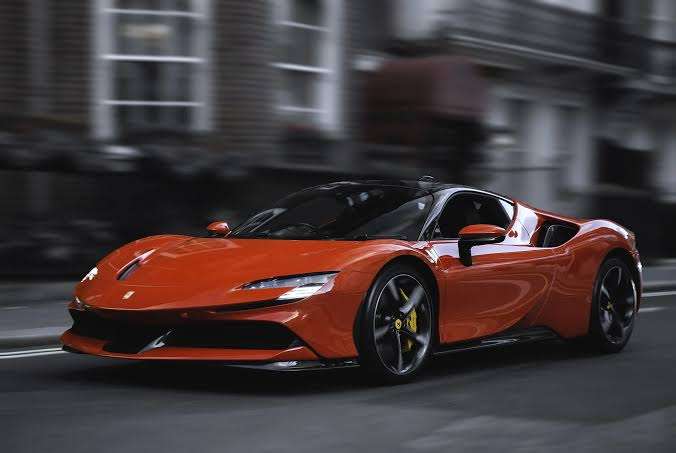
Ferrari is stepping into uncharted territory. The revered Italian marque, known for combustion-powered legends, has confirmed that its first electric vehicle will debut in spring 2026. Internally codenamed Elettrica, the car’s name may still change, but what’s clear is Ferrari is taking the EV game seriously and unusually, it’s looking East for inspiration.
Earlier this month, a bright yellow Xiaomi SU7 Ultra sedan, clad in its now-iconic dual silver stripes, was spotted exiting Ferrari’s Maranello headquarters. It wasn’t there by accident. Ferrari had brought in the Chinese EV as part of its ongoing benchmarking program a common industry practice, but one that takes on new meaning in this context.
Why Xiaomi’s SU7 Ultra Is Turning Heads
Once dismissed as a tech upstart with automotive ambitions, Xiaomi has pulled off a performance miracle. The SU7 Ultra isn’t just fast it’s record-breaking. With a Nürburgring lap time of 7:04.957, it has dethroned the Porsche Taycan as the fastest electric production car around the legendary circuit. Even more shocking? A prototype version clocked 6:22.091, outpacing everything except Volkswagen’s purpose-built ID.R and Porsche’s 919 Evo Le Mans machine.
Underneath its coupe-sedan silhouette lies a triple-motor setup generating a staggering 1,526 hp. That power catapults the car to 100 km/h (62 mph) in just 1.98 seconds and on to a top speed of 223 mph (359 km/h). It’s raw proof that Chinese EV makers can do more than compete they can lead.

(Credit: Gaadiwaadi.com)
Why Ferrari Is Paying Attention Now
Five years ago, the idea of Ferrari studying a Chinese car let alone taking it seriously would’ve been absurd. Today, it’s a strategic move. While Ferrari undoubtedly leads in chassis dynamics and brand prestige, EVs are a different beast altogether. Mastery of thermal management, range under performance load, and battery architecture now matter just as much as steering feel or engine tone.
It’s likely Ferrari is scrutinizing the SU7 Ultra not to mimic it, but to understand how Xiaomi achieved such blistering results with its EV platform. And the admiration may be mutual: Xiaomi CEO Lei Jun was recently seen driving a Ferrari Purosangue, signaling a personal fondness for the brand he may now be unintentionally influencing.
The Road to 2026 and Beyond
Ferrari’s first EV, scheduled to be a limited-production model, is intended as a toe-dip rather than a cannonball. It’ll ease loyalists into the idea of a silent Ferrari. But the bigger gamble is still a few years out: a crossover-style electric Ferrari, originally planned for 2026, has now been delayed to 2028, according to a recent Reuters report. The reason? Waning demand for luxury EVs.
In an automotive world being rapidly redefined by software, range, and kilowatts, Ferrari’s move to study the Xiaomi SU7 Ultra is less about imitation and more about evolution. And if this signals anything, it’s that the next great leap for Maranello might just have a little help from Beijing.