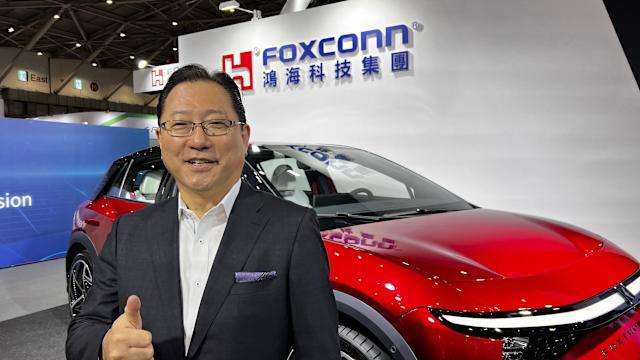
Foxconn has sold the former General Motors factory in Lordstown, Ohio, just three years after acquiring it, ending a high-profile and ultimately unsuccessful bid to establish large-scale electric vehicle production in the United States. The move echoes the Taiwanese electronics giant’s earlier failure to build a promised LCD factory in Wisconsin, a project once hailed by former U.S. President Donald Trump as the “eighth wonder of the world” but which dramatically underdelivered.
Sale to a Newly Formed Partner
The buyer is listed as Crescent Dune LLC, a Delaware-registered entity created only 12 days before the sale, according to state records. Foxconn described Crescent Dune as an “existing business partner” but declined to elaborate. The deal included the plant and land for about $88 million, along with machinery and equipment from Foxconn’s EV subsidiaries for roughly $287 million, according to filings on the Taiwan stock exchange.
A Swift Rise and Fall of EV Plans
Foxconn purchased the Ohio plant in 2021 from struggling EV startup Lordstown Motors for $230 million. At the time, Foxconn Chairman Young Liu described it as the “most important electric vehicle manufacturing and R&D hub in North America.” But in the years that followed, the company’s U.S. EV ambitions collapsed under the weight of failed partnerships and bankrupt clients.
Lordstown Motors, initially a partner and later part-owned by Foxconn, filed for bankruptcy in June 2023, accusing Foxconn of “starving it of cash” and acting in “bad faith.” Foxconn had managed to produce only a small batch of Lordstown’s pickup trucks before operations stalled.
Two other partners, IndiEV and Fisker Inc., suffered similar fates. IndiEV filed for bankruptcy in October 2023 with less than $3 million in assets, while Fisker collapsed in June 2024. A fourth client, Monarch Tractor, has seen minimal production at the plant, with only a few hundred electric tractors built to date.
From EVs to AI Servers
While Foxconn has not officially confirmed future plans for the site, The Wall Street Journal reported that the company intends to pivot the facility toward manufacturing AI servers. Foxconn told Automotive News it will remain “involved in the manufacturing of products for customers at the Lordstown facility” and remains “committed to customers and suppliers” in the automotive sector, though details remain vague.
A Pattern of Overpromising in the U.S.
The Ohio plant’s fate mirrors Foxconn’s earlier Wisconsin episode, where the company pledged to build a massive LCD screen factory that never materialized as promised. Both ventures were positioned as major boons to U.S. manufacturing, attracting political fanfare and public incentives — only to shrink dramatically in scope.
Lingering Questions
The sale raises new questions about Foxconn’s long-term commitment to American manufacturing. Despite its global dominance in electronics assembly, particularly as Apple’s main iPhone supplier, the company has yet to demonstrate it can replicate its Asian-scale operations in the U.S.
With EV demand in flux, partner bankruptcies mounting, and AI hardware surging as a growth market, Foxconn’s Ohio pivot may be less about fulfilling earlier promises and more about chasing the next big opportunity. Whether that opportunity delivers or becomes another cautionary tale remains to be seen.