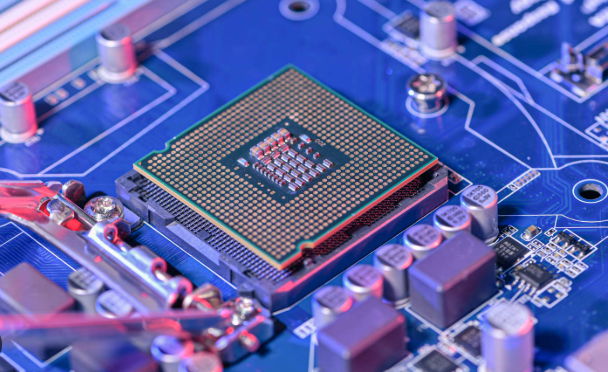
The global economy is currently wrestling with an unprecedented structural paradigm shift. For decades, semiconductor supply chains operated on a predictable, cyclical rhythm, balancing seasonal consumer electronics demand with incremental automotive expansions. However, the explosive emergence of next-generation computation has shattered these legacy models. As corporate enterprises, cloud hyperscalers, and sovereign nations race to deploy high-performance computing clusters, the fundamental architecture of technology manufacturing is buckling under the pressure. The modern global chip shortage is no longer a temporary logistical bottleneck or a pandemic-era inventory miscalculation; it is a permanent, structural reallocation of global manufacturing capacity where advanced industrial sectors are forced to fight over a finite supply of silicon wafers.
This deep systemic crisis is creating a sharp divide across the technology sector. On one side, companies focused on artificial intelligence infrastructure are pulling in record revenues, paying immense premiums to secure cutting-edge computing hardware and advanced memory layers. On the other side, traditional consumer electronics brands, smartphone manufacturers, and automotive giants are facing shrinking allocations, rising input costs, and delayed product timelines. Compounded by unexpected raw material shocks, this crunch has turned from a basic hardware deficit into a pressing national security and macroeconomic challenge, proving that whoever controls the supply of advanced chips ultimately controls the pace of global economic innovation.

1. Historical Retrospective: The Legacy Crisis vs. The Modern Frontier
To truly understand how the modern global chip shortage operates, one must look back at how the semiconductor landscape has evolved over the last half-decade. The world is not suffering from a mere continuation of the 2021–2024 supply chain crisis; instead, it is dealing with an entirely new breed of scarcity built on completely different market dynamics.
The 2021–2024 Supply Disruption: A Logistical Failure
The semiconductor crisis that unfolded during the early 2020s was primarily a demand-shock and logistical failure. When the global pandemic hit, automakers slashed their microchip orders under the assumption that vehicle sales would crater. Simultaneously, millions of remote workers scrambled to purchase laptops, home office equipment, and gaming consoles.
When vehicle demand bounced back faster than anticipated, automakers discovered that their manufacturing slots at massive foundries had been completely sold off to consumer electronics brands. This mismatch was amplified by rigid “just-in-time” inventory models and localized factory lockdowns, ultimately costing the automotive sector over $500 billion in lost revenue and leaving buyers facing multi-month backlogs for basic microcontrollers built on mature, legacy process nodes (such as 40nm to 90nm silicon).
The Modern Frontier: A Structural Resource Conflict
By contrast, the modern bottleneck is structural, permanent, and concentrated at the cutting edge of semiconductor physics. The core issue is no longer a lack of shipping containers or simple manufacturing space for legacy automotive chips. Instead, it is an intense, direct competition for the world’s most advanced fabrication equipment, raw material inputs, and silicon wafer surface area.
As cars transform into high-performance computers on wheels and data centers scale up to train multi-trillion-parameter models, both industries are targeting the exact same advanced nodes (3nm, 5nm, and high-performance memory layers). Because building new factories requires years of construction and billions of dollars in capital, supply simply cannot keep pace with this dual-industry demand, creating a structural deficit that cannot be easily solved by basic supply chain adjustments.
2. The Catalyst: How the AI Gold Rush Reallocated Global Silicon
The primary driver behind this modern semiconductor crunch is the insatiable hunger for artificial intelligence infrastructure. Hyperscalers and cloud giants are building out massive server facilities at an unprecedented rate, completely reshaping the semiconductor industry’s customer priorities.

The Wafer Area Vacuum
The technical reality of an AI accelerator (such as a modern GPU or customized TPU) extends far beyond the central processing core itself. To process massive datasets without hitting a severe performance wall, these specialized chips require immense quantities of ultra-fast memory packed tightly around the processor. This architecture relies heavily on High-Bandwidth Memory (HBM) and advanced Dynamic Random-Access Memory (DRAM).
According to market data, HBM components require up to three times the silicon wafer surface area of standard DDR4 or DDR5 memory to achieve the same capacity due to their complex, multi-layered vertical stacks. This means that for every advanced AI processor manufactured, a disproportionately large percentage of global wafer production is sucked away from the broader market, starving traditional memory supply lines.
The Margin Disconnect
Faced with this massive wave of demand, semiconductor manufacturers are making logical commercial choices. Hyperscalers are fully prepared to pay extreme price premiums to secure their data center buildout schedules.
Because an advanced AI server component commands significantly higher profit margins than a standard automotive microcontroller or an entry-level laptop RAM chip, foundries and packaging facilities are actively reallocating their manufacturing lines. Traditional industries are not being deliberately ignored; they are simply being outbid by a high-margin ecosystem that can absorb steep cost increases without flinching.
3. The Geopolitical Compounder: The Helium Crisis and the Strait of Hormuz
While structural demand was already stretching global chip supplies to their limits, an unexpected geopolitical disruption added immense pressure to the semiconductor supply chain, demonstrating how vulnerable these high-tech systems remain to raw material shocks.
The Ras Laffan Disruption
The semiconductor supply chain took a massive hit when military conflicts in the Gulf region led to drone and missile strikes targeting Ras Laffan Industrial City in Qatar one of the single largest liquefied natural gas and helium production hubs on the planet. Qatar is responsible for roughly one-third of the global helium supply. Within days of the strikes, shipping corridors through the Strait of Hormuz came to a complete standstill, cutting off critical industrial gas exports to the world’s leading chip foundries in South Korea, Taiwan, and the United States.
The Physics of Ultra-Pure Helium in the Fab
To outside observers, a shortage of helium might seem minor compared to a shortage of microchips, but inside an advanced fabrication plant, ultra-pure helium is an absolute necessity. The gas plays two irreplaceable operational roles:
- Nanometer-Scale Thermal Control: Because helium possesses exceptional thermal conductivity, it is injected into processing chambers to cool silicon wafers evenly during intense gas-etching procedures. Without this precise temperature control, the microscopic circuits warp, turning expensive silicon wafers into unusable scrap.
- Microscopic Leak Detection: Due to its tiny atomic size, helium is the only substance that engineers can pump through sealed ultra-vacuum systems to spot microscopic gaps and prevent toxic contamination.
When helium shipments stalled, leading manufacturers like Samsung and SK Hynix were forced to implement strict gas rationing, automatically slowing down their wafer starts and triggering a 30% spike in global memory spot pricing within a few weeks.
4. Downstream Destabilization: Impact by Major Sector
The combination of shifting foundry priorities and raw material shortages has created a massive ripple effect across multiple downstream consumer and industrial markets.
The Automotive Squeeze
The automotive sector is once again bearing the brunt of the chip re-allocation crisis. Modern vehicles have evolved into highly complex networks of software-defined architectures, requiring dense clusters of LPDDR4 and LPDDR5 memory to run Advanced Driver Assistance Systems (ADAS), automated braking logic, and real-time navigation displays.
As memory chip production shifts heavily toward data center customers, major automakers are experiencing severe supply limits. Industrial forecasts indicate that these supply deflections could cut vehicle manufacturing targets by up to 600,000 units, forcing major brands to alter their technology roadmaps and strip out high-end features just to keep production lines moving.
Personal Computing and Smartphones
The consumer hardware market is facing an equally challenging landscape. For the past decade, consumers took cheap, abundant device memory for granted. However, with memory giants like Samsung raising chip prices by as much as 60% to counter the supply crunch, component costs are skyrocketing.
Industry analysts estimate that surging RAM and NAND flash costs are adding nearly $96 to the production cost of a basic office PC or laptop. To preserve their margins, major device brands are passing these costs directly down to the customer, leading to higher retail prices and delayed upgrades for standard enterprise fleets.
5. Microeconomic Realities: Price Volatility and Allocation Rules
The current state of the chip market has completely transformed how components are bought, sold, and distributed worldwide, shifting leverage entirely into the hands of the component manufacturers.
The Elimination of Spot Market Flexibility
| Component Class Type | Legacy Pricing Baseline (Pre-Crisis) | Modern Contract Pricing Reality | Sector Allocation Priority |
| High-Bandwidth Memory (HBM) | $250 per unit configuration | $700+ per unit configuration | Tier 1 AI Hyperscalers |
| Automotive LPDDR4 / LPDDR5 | Stable, multi-year fixed contracts | 70% Year-over-Year Increase | Tier 2 Automakers & OEMs |
| Enterprise Client SSDs | Predictable commodity pricing | 50% Price Spike Mid-Year | Cloud Storage Integrators |
| Traditional Desktop DDR4 | Low-margin, overabundant stock | Gradual phase-out & tightening | Legacy PC Manufacturers |
This immense price escalation has completely wiped out spot market flexibility. Component distributors are moving away from traditional transactional models, forcing buyers to commit to rigid allocation policies. Under these rules, manufacturers distribute their limited inventory based on historical relationships and total order volume, meaning smaller hardware builders and non-AI enterprises are often left facing massive lead times or empty hands.
6. Strategic Playbook: How Enterprises and OEMs Fight Back
Faced with an unpredictable and expensive component market, original equipment manufacturers (OEMs) and enterprise IT leaders are abandoning old procurement models and developing defensive strategies to protect their operations.
Strategic Stockpiling and Capital Locking
The most immediate defensive move is a total shift away from lean inventory strategies. Forward-looking corporations are actively reviewing their long-term hardware roadmaps, purchasing critical computing components up to 12 months in advance, and locking in inventory before prices climb higher. While this approach traps considerable amounts of corporate capital on the balance sheet, it is increasingly viewed as a necessary insurance policy to protect critical project timelines and prevent operational halts.
Dual-Sourcing and Engineering Adaptability
To insulate themselves from single-point-of-failure risks, advanced tech creators are completely re-engineering their hardware layouts. For example, automotive and robotic firms are implementing dual-sourcing strategies, deliberately splitting their high-end processing designs across separate manufacturing foundries (such as TSMC and Samsung).
Concurrently, hardware engineering teams are building modular chiplet platforms that can seamlessly accept different types of memory and processing components. This flexibility allows companies to pivot their manufacturing lines on the fly if a specific node or component line suddenly faces a severe shortage.
Long-Term Prognosis: When Will the Bottlenecks Dissipate?
The most critical question facing the technology sector is when global manufacturing capacity will finally catch up with this unprecedented wave of structural demand. Industry leaders and financial analysts paint a highly cautious picture, warning that the current supply constraints will likely persist through at least 2027, with only gradual improvements arriving as we head toward 2028.
While semiconductor giants are investing hundreds of billions of dollars to build massive new “greenfield” factories across North America, Europe, and Asia, these immense projects cannot bring relief overnight. Constructing an advanced cleanroom facility requires years of intricate work, and expansions face ongoing headwinds from specialized talent shortages and tight regulatory frameworks.
Until these new global manufacturing hubs come online and raw material supply corridors stabilize, the semiconductor market will remain a highly competitive landscape. Navigating this environment requires moving past old, reactive purchasing habits and embracing proactive risk management, ensuring your business holds the physical hardware assets needed to thrive in a digital economy.