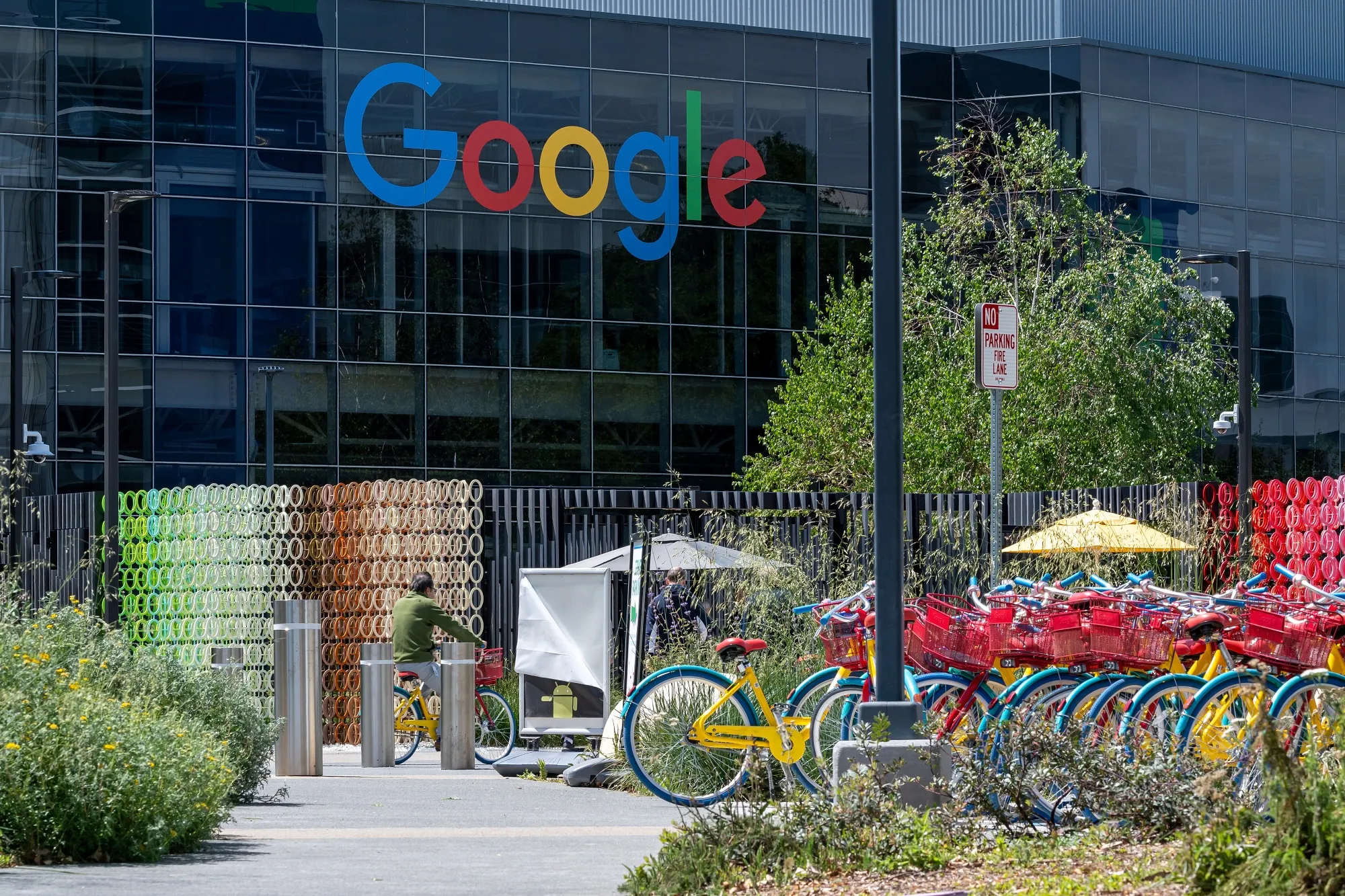
Wall Street doesn’t often serve up comeback tales this extreme, but Google has dished out a story for the ages. The stock of Alphabet, the search engine giant, roared 65% in 2025, marking the strongest showing in more than 15 years, putting concerns about survival in the era of the AI revolution to rest once and for all.
The year began on wobbly feet. Shares of Alphabet, the parent company of Google, reached a low in April due to economic uncertainties and threats of tariffs. The share had fallen by a whopping 18% in the first quarter, the worst performance since the middle of 2022. Investors believed that the company was struggling because Google’s dominance was being challenged by new rivals such as OpenAI, due to the success of ChatGPT.
But then a surprising turn of events. From these bottoms in April, it skyrocketed fully over 100%, leaving all other trillion-dollar technology companies in its wake. Chipmakers Broadcom and Nvidia were strong with gains of 49% and 39%, respectively. But nothing close to what Google shares accomplished.
The turnaround hinged on proving Google could compete and win in the AI arms race. The company made a pivotal move in April, promoting 16-year veteran Josh Woodward to lead its Gemini app development. The decision would pay dividends throughout the year.
Google Strikes Back: Chipping Away at ChatGPT’s Lead Through Nano Banana and Windsurf
In August, Nano Banana launched as part of Gemini to create images using an app. People loved the mixing of photos to achieve personalized digital figurines, and overnight, the feature went viral.
Within a couple of weeks, Gemini had generated over 5 billion images produced by users of the app, who pushed it to be ranked number one on Apple’s App Store, further knocking out ChatGPT.
It didn’t stop there: Google bolstered its AI talent by adding Varun Mohan and his team from Windsurf, the buzzy AI coding startup. The deal cost Google $2.4 billion in licensing fees and compensation, but it was money well spent. OpenAI had been circling Windsurf with a potential $3 billion acquisition, making Google’s successful recruitment a significant competitive victory.
Google also benefited in the courts. Although the company lost a case pertaining to the search monopoly in the antitrust lawsuit, it did not face the severe consequences. In September, the judge ruled against requiring Google to yield the Chrome browser or refrain from paying firms like Apple to be their default search engine.
Although Google would have to share information with its competitors, the basic business structure for Google was not affected.
Meanwhile, the gap is still being closed by Gemini. The introduction of Gemini 3 last month marked a significant improvement, coming eight months after the previous version 2.5.
The figures are telling: The market share of ChatGPT for generative AI traffic declined from 87% to 68%, while Gemini grew from 5% to 18%, based on Similarweb data.
Most notably, Google showed that AI can improve rather than compete with its search business.
Cloud Dominance and the $93 Billion Bet
AI Overviews, which allows for AI-driven summaries to be seen in search results, has enhanced levels of user engagement through the presentation of more relevant responses. This aspect was particularly observed by analysts at Citizens to be a “further tailwind to engagement” and could help Google boost search revenue growth.
The company’s cloud computing division also flexed its muscles, with CEO Sundar Pichai indicating that Google Cloud signed more billion-dollar contracts during the third quarter of 2025 than in both years preceding that period combined.
But success brings pressure too. For the fourth quarter, analysts predict revenue levels to be over $111 billion, reflecting a sharp growth of 15% for the period. For sustaining the growth further, Alphabet has increased the projected spending in 2025 to a maximum of $93 billion, and for the following year, 2026, levels are expected to breach the $114 billion mark.
There are worries over risks in the future, especially if big cloud operators such as OpenAI hypocritically cut back expenses as OpenAI is Google’s competitor cut back expenses. Most are upbeat; Pivotal Research points towards a price target of $400, which is nearly 28% above market value.
Google began 2025 as a struggle for relevance in the era of AI development. 2025 ends as a testament to the fact that established companies, no matter how wealthy and resourceful, can overcome even the worst odds against them.