In a strongly worded judgment, the Madhya Pradesh High Court has set aside the suspension of a bank CEO, holding that the action was the result of “undue pressure” and political ego, not a legitimate public grievance. The court’s order exposes the misuse of authority by an elected representative and reaffirms judicial protection against arbitrary action driven by personal vendetta.

Credits: The Indian Express
Background: A Bank Transfer Sparks Political Backlash
The controversy began when the Chief Executive Officer (CEO) of the Central Cooperative Bank of District Sidhi ordered the transfer of a clerk. This seemingly routine administrative decision snowballed into a political powerplay after it reportedly offended a woman Member of the Legislative Assembly (MLA), who also holds a ministerial position in the state government.
According to the petitioner, the MLA—whose name was withheld in the court’s order—was angered by not being consulted about the transfer. In retaliation, the legislator allegedly called and scolded the CEO and later accused him of using unparliamentary language, leading to his suspension.
Court’s Verdict: Abuse of Authority and Political Overreach
Justice Vivek Jain of the Madhya Pradesh High Court did not mince words in his criticism of the suspension order. He ruled that the suspension was “passed in exercise of excessive powers and actuated by bias”. The judgment made it clear that the MLA had overstepped her jurisdiction, using her position to pressure the CEO into reversing an internal administrative decision.
“It is, in fact, a case of the MLA feeling ego hurt by the refusal of the petitioner to accept her demand of cancellation of transfer of a clerk,” the court stated.
The bench further observed that this was not a case of a public representative acting on general public grievance, which would have been legitimate. Instead, it was an instance where a single employee’s transfer—a clerk, no less—was being reversed for personal reasons under political pressure.
Undue Pressure, Not Public Interest
The High Court drew a sharp line between genuine public concerns and individual interests backed by political clout. It stressed that public representatives have a responsibility to bring collective issues to the attention of institutions—not act as intermediaries for individual staff members with political connections.
“It does not appear to be a case of the MLA bringing to notice of the petitioner some general public grievance within his or her constituency,” the court noted.
The order makes it clear that when elected representatives exploit their influence to interfere with administrative matters—especially for the benefit of a single clerk—they undermine the institutional integrity of public bodies like cooperative banks.
Implications: A Strong Signal Against Political Interference
This judgment is being hailed as a landmark warning to politicians misusing their authority for personal or political gain. It reaffirms that public servants are not subordinates of elected officials, and administrative decisions should not be held hostage to political egos.
Legal experts say the order sends a clear message: “Bureaucracy must be shielded from political vendettas.”
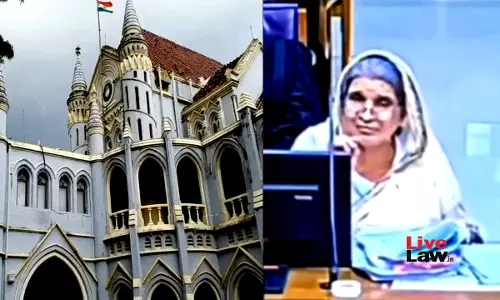
Credits: Live Law
Conclusion: Rule of Law Over Rule by Ego
The Madhya Pradesh High Court’s intervention has not only reinstated a suspended CEO but also upheld a critical principle: public office should serve public interest, not personal pride.
By exposing the underlying politics in the suspension, the court has protected the autonomy of civil administration and reminded all elected officials that power must be exercised with responsibility—not retaliation.
As institutions in India grapple with political overreach, this case stands out as a bold and necessary check on the misuse of authority—and a reaffirmation of judicial independence in upholding fairness and due process.