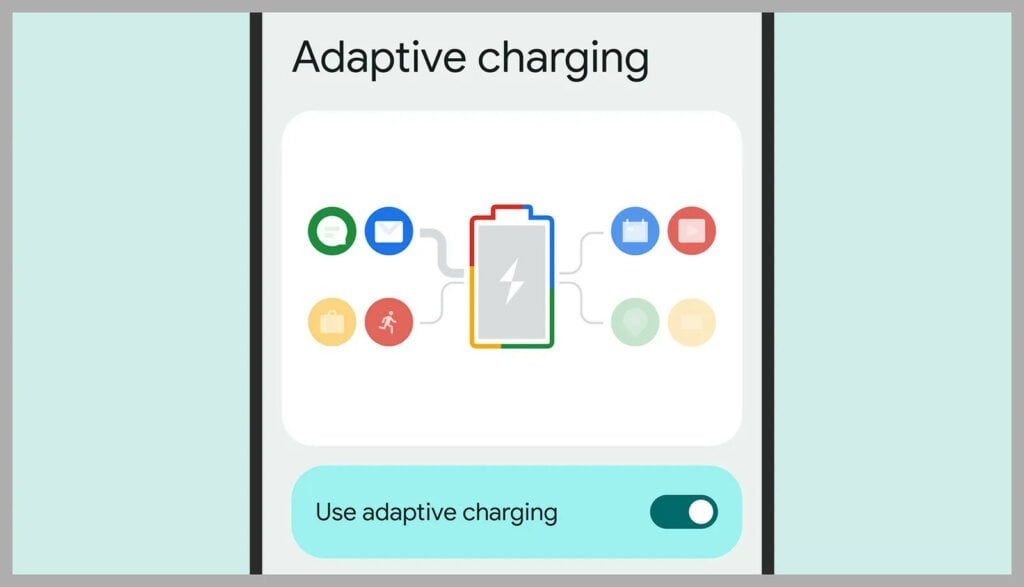
Smartphones, laptops, and other portable gadgets have become an integral part of our day-to-day lives. With people becoming more dependent on their devices, there has been a concern about the health of their batteries. Not only have the techniques of charging become much faster, but companies have also come up with intelligent ways to take care of the batteries over time. One such technique is adaptive charging. Understanding how adaptive charging extends battery life can help you make better use of your device while reducing long-term battery wear. Rather than charging the battery to 100 per cent in the shortest amount of time possible, adaptive charging controls the way your device gets charged.
How Adaptive Charging Extends Battery Life by Reducing Battery Stress
To understand how adaptive charging extends battery life, it is important to know what causes batteries to wear out.
Modern cell phones and computers have their energy storage in the form of lithium-ion batteries. It is well known that such batteries lose their capacity gradually, however, there are specific factors that accelerate this process. Storing a battery fully charged for long periods of time, high temperature exposure, and fast charging while the battery is hot cause extra chemical stress on it.
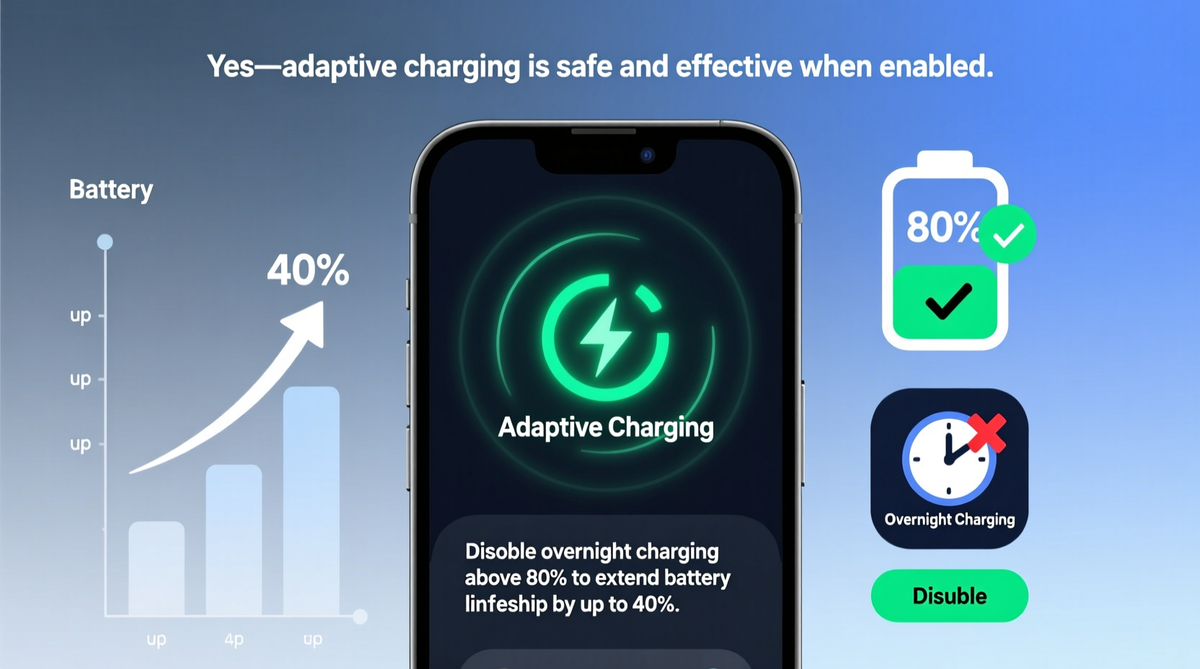
Adaptive charging solves the problem of battery damage by taking into account the user’s charging behavior. The process stops when 80 percent of capacity is gained and waits for the moment close to the one when you are going to unplug the battery.
The solution is rather simple and helps to save the battery’s capacity.
What Is Adaptive Charging?
Adaptive Charging is a software-controlled charging mechanism that uses smart technology in the charging process.
Unlike normal charging, where the device is charged to its maximum capacity as soon as possible, adaptive charging works on your daily behavior and adjusts accordingly.
For instance, when you have a habit of charging your phone before sleeping and disconnecting at 7 a.m., your phone will be charged to 80 percent or more within a short time once plugged in.
The charging will then stop for some time before reaching the last 20 percent just before you wake up.
This method enables you to wake up with a completely charged gadget without the need to keep it at 100 percent all night long.
How Adaptive Charging Extends Battery Life on Modern Devices
Adaptive charging has been implemented through smart software in today’s phones and laptops.
For example, the Google Pixel phones adaptively charge based on your charging pattern. Charging is stopped at certain times depending on your alarm timing or time you anticipate being unplugged. Charging may even be halted to 70% or 80% if the phone stays plugged in for too long or overheats.
Google has further introduced battery health management tools in Android 16. New battery health management settings and Battery Health Assistant slowly change the charging pattern based on how old the battery is. Such adaptation starts to take place after 200 charge cycles and continues till about 1,000 charge cycles.
The concept of adaptive power has been introduced by Apple as well. However, the idea of Adaptive Power does not relate to charging behavior, but it manages power usage, thereby improving battery health through lower screen brightness, decreased background activity, and activation of the Low Power Mode.
Why Lithium-Ion Batteries Wear Out
A better understanding of battery chemistry explains how adaptive charging extends battery life.
It is important to understand that lithium-ion batteries undergo natural chemical aging with each cycle of charging and discharging them. It cannot be avoided, but it can be prevented from progressing.
The following things cause premature aging of batteries:
- Storing the battery at 100% charge level for long periods of time.
- Charging when the battery is still warm.
- Exposure to heat on regular basis.
- Fast charging in stressful situations.
As batteries get older, they lose capacity to hold energy inside them. Therefore, you might notice that your phone does not last for too long after being charged.
Adaptive charging prevents most of these stressors from having an impact on batteries.
New Research Shows How Adaptive Charging Extends Battery Life Even Further
Recent research shows that adaptive charging systems are getting even more sophisticated.
In 2026, scientists invented an AI-driven charging approach for electric car batteries that extended their lifetime by about 23% without making the charging time longer. Unlike traditional fixed-charging algorithms, this new approach alters its strategy according to the state of the battery.
Another 2026 research study created a state-of-health-aware adaptive fast-charging algorithm whose charging strategies were changing according to the health of the battery. It was allowing users to have long-lasting batteries but also to charge them efficiently.
The findings of some additional research into battery degradation were consistent with these results as well – dynamically altered charging strategies could help increase the lifetime of batteries and avoid unnecessary charging stress.
Even though all these studies used electric cars as an example, the same approach may be used when charging smartphones, laptops, tablets, and other devices.
Adaptive Charging vs Battery Saver
A lot of users mistake adaptive charging for Battery Saver, but these two are completely different features.
The concept of adaptive charging is all about prolonging the lifespan of the battery through charging changes. The feature aims at minimizing the battery aging process.
The Battery Saver mode extends battery life during the day. This mode turns off some system activities and decreases the battery drain.
Apple’s Adaptive Power is aimed at increasing battery runtime, not changing the charging behaviour.
Both features are complementary, but they deal with different tasks.
When How Adaptive Charging Extends Battery Life Makes the Biggest Difference
Adaptive charging provides the greatest benefit for users with predictable charging habits.
You will benefit the most if you:
- Charge your phone overnight.
- Keep your laptop plugged in throughout the workday.
- Leave your device connected to power for several hours.
- Follow a regular daily routine.
Because adaptive charging relies on learning your habits, it becomes more effective over time. Devices that can accurately predict when you normally unplug can better optimize the charging schedule.
Chromebooks and many modern laptops also include adaptive charging features that help preserve battery health during extended charging sessions.
Best Practices to Improve Battery Health
Although adaptive charging does everything by itself, there are several ways you can use to make your battery life even longer.
Always have your adaptive charging or charging optimisation on when it is available.
Do not charge your device at 100% for a long time unless you really need all that power right away.
Always try to keep your device cool, including during charging, as heat continues to be the most common reason for battery damage.
Utilize the options for maintaining your battery’s health that are available from your device’s manufacturer, like 80% charge or battery health management.
Lastly, always stick to a regular charging schedule if possible. Adaptive charging will learn your habits better over time.
Conclusion
Understanding how adaptive charging extends battery life shows why modern charging is no longer just about speed. Adaptive charging makes use of software intelligence to reduce the stress of the battery, manage temperature, and limit the amount of time that the batteries stay at 100% charge capacity.
Regardless of whether you have an Android smartphone, iPhone, Chromebook, or laptop, adaptive charging will help prolong the life of your battery. Together with healthy charging practices and software designed to improve battery health, it can slow down battery deterioration and ensure that your device will serve you for many years.
In an ever-changing landscape of charging technologies, adaptive charging has become a must-have feature rather than just something nice to have. Thanks to this functionality, your device will be able to charge itself in a smarter way rather than just faster.