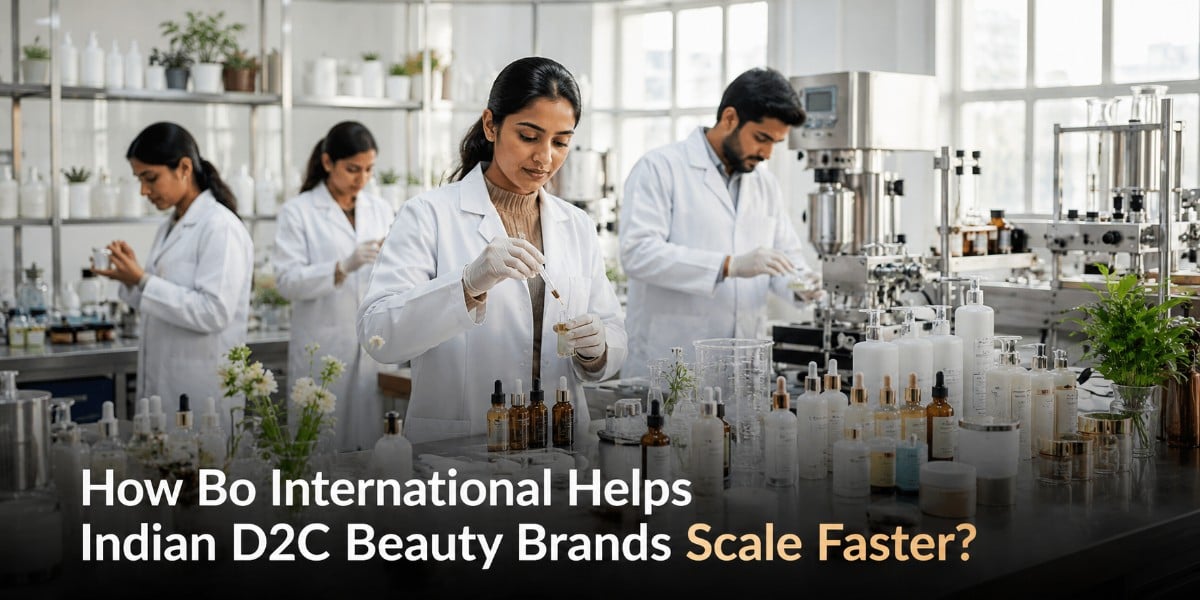
India’s beauty industry is one of the leading buzzing markets in the world. Beauty brands that sell directly to consumers (D2C) and use social media along with e-commerce for brand building and customer acquisition are leading the growth of the industry. With this model, brands establish a direct relationship with their consumers. With the rapid growth of D2C beauty brands, manufacturing is becoming an operational bottleneck for many founders.
With the rapid growth of D2C beauty brands, many founders are unable to build their own manufacturing units, as it is not cost-effective. Bo International is a Private label skincare manufacturer that is helping beauty brands move faster by offering extensive manufacturing solutions.
The Manufacturing Challenge Most D2C Beauty Founders Face
Beauty founders often come up with great ideas for products and brand positioning. However, many of them face problems when it comes to the actual manufacturing of the products. Developing a manufacturing facility that is compliant with the manufacturing regulations of a country requires a great deal of time and high capital investment. Most startups cannot afford to divert their primary focus from marketing to manufacturing.
While working with small scale manufacturers is an alternative, smaller manufacturers often provide a great deal of challenges that include long lead times, sub par product quality, and limited formulation. These challenges lead to products being launched much later than anticipated and brands becoming less relevant in the marketplace.
How Bo International Helps D2C Beauty Brands Scale Faster
Rather than a contract manufacturer, Bo International describes itself as a strategic manufacturing partner to Indian D2C beauty brands. The company gets involved at different growth stages for different brands—from early validation to high scale production.
Several benefits the company offers beauty startups to help them grow at an unmatched speed, includes:
- Faster time to market: Compared to building a completely new facility, it is far easier for a brand from the conceptual stage to the commercially production-ready stage. Speed is of the essence for D2C brands as the brands need to test the market and iterate the product based on customer reviews.
- Custom formulation support: The brand as a whole can support custom formulation, which helps in the differentiation of the products the brand has to offer, and especially in regards to distinct texturing, active ingredients, or Ayurvedic embellishments.
- Flexible production volumes: The brand helps support early stage testing involving smaller production volume to help understand demand and support larger production volumes as the brand gains traction.
- End-to-end support: From formulation to stability and testing, and further to packaging and documentation, they provide brands ongoing support, allowing the brand owners to design effective branding, marketing, and customer acquisition strategies.
The support provided helps scale brands and provides control of the essence of the brand to the company.
Why Manufacturing Partnerships Matter More for Beauty Startups Today
More and more startups are entering the D2C beauty market every year. The competition is fierce. Beauty startups are expected to release products on a regular basis with new trending ingredients all while maintaining quality, consistency, and batch control. Founders who try to do as much as they can within the business tend to find themselves spread extremely thin and overworked.
The right private label skincare manufacturer helps beauty startups grow their teams without losing control of their business. This also helps to reduce the stress on smaller teams for things like R&D and quality and regulatory control. This model works perfectly as beauty founders can shift their focus to the brand, customer, and ecommerce experiences first.
Regulatory Compliance Without the Headache
Skincare startups struggling with the many requirements of CDSCO compliance and quality control and licensing regulations are the norm. Many ignore the massive amounts of documentation and compliance control that skincare manufacturing entails.
They offer quality control regulatory systems that build trust for the brands it partners with as manufacturing compliance control becomes crucial. This highly assists brands that are looking to grow into multiple sales channels as well as focusing on international commerce.
What D2C Beauty Founders Should Look For in a Manufacturing Partner
Not all manufacturers are equally suited for D2C brands. Founders who have scaled successfully usually look for partners that offer:
- Advanced R&D with a strong emphasis on custom formulation
- A history of partnering with D2C brands in both the inception and growth stages
- Low MOQs with a transparent approach
- Well documented quality systems
- Capacity flexibility that meets brand requirements
The Road Ahead for Beauty Startups
As the Indian D2C beauty industry gets more competitive, operational excellence is separating the successful brands from the rest. This refers to the speed and consistency with which a brand can launch high-quality products.
Consider manufacturers as strategic partners, not as vendors. Those who think this way tend to scale at a much faster rate and with less friction from operations. Companies like Bo International are solving a lot of the operational challenges that upcoming D2C beauty brands face and as a result assist upcoming Indian beauty brands to scale faster, grow, and operate within a sustainable model.
For beauty startups that are building long-lasting brands, the right manufacturer gives them a competitive edge in the marketplace and the ability to rapidly and effectively launch and scale their products.