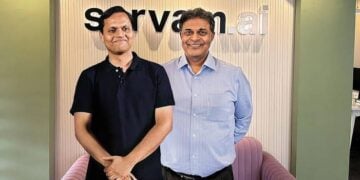
Varun Harnathka is a high-impact leader in the solar energy sector, based in Jersey City, New Jersey. With a Master of Engineering in Chemical Engineering from Cornell University, specializing in Energy Economics, and a Gold Medalist Bachelor’s degree from Manipal University, Varun combines top-tier academic credentials with a track record of operational excellence. His expertise spans estimating, procurement, and preconstruction for large-scale solar projects, where he has pioneered innovative tools, driven multimillion-dollar cost savings, and streamlined complex workflows. He has led groundbreaking initiatives in solar construction, combining engineering excellence with digital innovation to streamline processes, drive sustainability, and shape the future of renewable energy infrastructure.
Q1: What inspired your journey into the solar sector?
A: My passion for energy began during an internship at Reliance’s coal-fired power plant in Mumbai, India, where I found myself quickly grasping complex concepts and craving deeper understanding. After taking energy-focused courses on Coursera, my shift toward renewables solidified in 2017 when an international cricket match between India and Sri Lanka was paused due to severe smog. That moment crystallized my purpose: to contribute solutions that fight climate change. Solar energy, which uniquely blends innovation, sustainability, and economic growth, became the natural path forward.
Q2: How do you approach vendor negotiations?
A: I treat vendors as strategic trade partners, anchored in transparency and long-term collaboration. Keeping them informed about project status, pain points, and cost targets builds trust. I evaluate vendors across multiple dimensions, and my strategic sourcing approach has delivered over $6 million in cost savings across 18 portfolios. By securing advance manufacturing slots for long-lead items, I’ve accelerated project timelines by up to 18 weeks. These outcomes reflect my commitment to both fiscal discipline and schedule excellence.
Q3: Can you share a project that tested your leadership?
A: Leading a cross-functional team during a high-pressure solar EPC project tested my leadership skills profoundly. During a critical transition, I stepped up to lead Engineering and Project Management alongside my Estimating and Procurement responsibilities after the resignation of two department heads. This required rapid cross-training and decisive leadership across three verticals. I successfully mediated a high-stakes conflict between our Civil Subcontractor and Director of Construction, resolving a scope dispute that threatened demobilization. My intervention not only preserved the relationship but protected the project schedule and ensured on-time delivery.
Q4: What role does process improvement play in your strategy?
A: Process improvement is foundational to my leadership strategy. I allocate 20% of my team’s time to it, reducing human error and turnaround time. I’ve implemented a data-driven subcontractor framework, redesigned bid sheets to cut descoping time by 50%, developed a statistical methodology for evaluating new estimating software, and authored a ‘Pre-Drill Decision’ guide to interpret geotechnical reports—ensuring high-quality inputs at every stage. I spearheaded the implementation of AI-driven preconstruction workflows, automating energy yield analyses and financial modelling tasks. These initiatives have not only optimized internal processes but are now viewed as industry benchmarks for preconstruction best practices, significantly enhancing bid accuracy and reducing turnaround times.
Q5: How do you ensure sustainability across the project lifecycle?
A: Sustainability is integral to my project philosophy. By incorporating bifacial modules, optimized racking systems, and advanced energy modelling, we have consistently exceeded performance guarantees while minimizing the carbon footprint. In doing so, we not only improve project sustainability but also contribute to broader national and global clean energy transition goals.
Q6: What project management tools do you rely on?
A: I deploy a comprehensive tech stack—Helioscope for system design, Smartsheet for scheduling, Procore for coordination, and Bluebeam for precision takeoffs, AI-based cost estimation tools, and cloud-based collaboration software. I’ve used these tools on 200+ solar projects ranging from 0.5 to 450 MWDC. I’ve also enhanced PVBid with data-driven insights and built proprietary tools like a Product-Cost Calculator, projected to save ~$1 million annually. These tech-enabled workflows have become internal best practices and are now being scaled across portfolios, significantly improving project delivery speed and accuracy.
Q7: How do you build and lead high-performing teams?
A: Clear communication, defined workflows, and a culture of ownership are key. I’ve standardized preconstruction workflows across teams, improving alignment and reducing inefficiencies. I cultivate an environment where lessons are documented, and initiative is rewarded. The result is a team that continuously improves and operates at a high level of performance. By establishing clear performance metrics and maintaining open communication, we have achieved a 25% reduction in project turnaround time and a 7% improvement in bid success rates, even in high-pressure project cycles.
Q8: What advice would you offer future solar professionals?
A: Master both the technical and commercial sides of solar. Understand constructability, financial models, risk, and contracts. Spend time in the field—there’s no substitute for real-world experience. Hone your communication and leadership skills to align stakeholders. Embrace AI and question conventional wisdom—deep understanding and intellectual curiosity are the keys to long-term growth.
Q9: How do you stay at the forefront of the industry?
A: I engage actively with industry forums, pursue ongoing certifications in project management and artificial intelligence, and participate in renewable energy conferences. I also contribute thought leadership through publications and industry panels, ensuring I remain at the cutting edge of sector developments.
Q10: What are your long-term goals and how do you plan to achieve them?
A: My long-term goal is to lead transformative efforts in scaling solar deployment across infrastructure, policy, and capital markets. At Pfister Energy, I’ve already secured over $200M in bid opportunities and improved our hit rate by 7% through strategic outreach. My ambition is to help catalyze over $1 billion in new solar infrastructure deployment by 2030, shaping not just projects but the very fabric of the renewable energy economy. I envision scaling innovative EPC delivery models and mentoring the next generation of leaders, ultimately contributing to a cleaner, more resilient energy future.
About Varun Harnathka
Varun Harnathka is a results-driven solar energy executive and Director of EPC Business Development & Preconstruction at Pfister Energy. He holds a Master’s degree from Cornell University and a Gold Medalist Bachelor’s from Manipal University. His leadership has driven millions in cost savings, pioneering innovations in process optimization and vendor strategy. Certified in Six Sigma (Black, Green, Yellow) and Advanced Data Analytics, he blends technical rigor with strategic vision. Outside of work, Varun is a PADI-certified diver, trek leader, and co-founder of a youth empowerment initiative in rural Guatemala bridging education and employment gaps.