War leaves behind numbers long before it leaves behind peace. Some of those numbers are measured in lives, others in money, and a few attempt to capture both at once. Iran’s latest estimate of roughly $270 billion in damages and economic losses falls into that last category. It is a figure that tries to put a price on weeks of strikes, disrupted trade, and halted production. It is also a number that raises as many questions as it answers.
The estimate, announced by government spokeswoman Fatemeh Mohajerani, comes after more than a month of fighting involving Iran, the United States, and Israel. The conflict, which began in late February, has moved quickly across multiple fronts, with airstrikes, missile exchanges, and naval tension affecting both military and civilian targets. Tehran has described its estimate as preliminary, a “very crude” calculation that could rise once a fuller assessment is completed. Even in that early form, the number is large enough to shape the political and economic debate that will follow.
Counting the cost in the middle of conflict
Putting a price on war while it is still unfolding is a complicated exercise. Governments often release early estimates to frame the scale of damage, but those figures tend to mix direct losses with broader economic effects. Iran’s $270 billion estimate appears to follow that pattern.
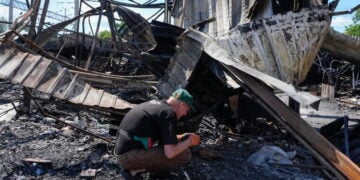
Officials have indicated that the total includes physical destruction as well as lost economic activity. Airstrikes in and around major urban areas, including Tehran, have damaged buildings, industrial sites, and energy facilities. Repairing or replacing those assets carries an immediate cost, but it is only part of the picture. When factories stop operating or export routes are disrupted, the losses continue to accumulate in less visible ways.
Oil revenue is likely a central element in the calculation. Iran’s economy relies heavily on energy exports, and any interruption affects both government income and foreign exchange reserves. Even temporary disruptions can have lasting effects if buyers turn to other suppliers or if shipping routes remain uncertain.
There is also the question of indirect losses. These can include reduced business activity, declining investment, and the long-term effects of uncertainty on the economy. Such costs are harder to measure, and they often depend on assumptions about how quickly normal activity can resume. This is one reason why Mohajerani described the estimate as an early figure rather than a final accounting.
The process of refining the number is expected to take place in stages. The first step involves documenting physical damage to buildings and facilities. Later stages may attempt to measure broader economic effects, including lost output and the cost of recovery. Each stage adds detail, but it can also increase the overall estimate as new categories of loss are included.
Independent verification remains limited. Access to affected areas is restricted, and much of the available information comes from official statements or secondary reports. This does not make the estimate invalid, but it does mean that it should be treated as one side’s assessment of the situation.
A number with political weight
War damage estimates are rarely just about accounting. They also serve a political purpose, shaping how a conflict is presented to both domestic and international audiences. Iran’s $270 billion figure is already being linked to calls for compensation.
Tehran has indicated that it intends to use the estimate as a basis for seeking reparations from the United States and Israel. The argument is straightforward: if the damage was caused by external military action, those responsible should bear the cost. Whether such claims gain traction is another matter. International compensation claims often depend on political negotiations rather than legal rulings alone.
Reports suggest that Iran has also raised the issue with regional countries, including Saudi Arabia, the United Arab Emirates, Qatar, Bahrain, and Jordan. These countries have been accused by Iranian officials of enabling or supporting military actions, though the extent of their involvement is disputed. The inclusion of these states in compensation discussions broadens the issue from a bilateral conflict to a wider regional dispute.
The timing of the estimate also matters. It comes during a period of diplomatic activity, including talks mediated by countries such as Pakistan. Presenting a large damage figure can strengthen a negotiating position by highlighting the scale of losses and the perceived need for restitution.
Comparisons with other figures from the conflict provide context, though they are not directly equivalent. Israeli budgetary costs linked to the fighting have been reported in the tens of billions of dollars, while U.S. military spending has been measured in daily operational costs that add up over time. These figures reflect different types of expenses, including military activity rather than damage sustained, which makes direct comparison difficult.
The gap between these numbers illustrates how each party measures the cost of war differently. For Iran, the focus is on damage to its economy and territory. For the United States and Israel, the emphasis is on the cost of conducting military action. Both perspectives capture part of the financial burden, but neither provides a complete picture on its own.
There is also the question of how such estimates are interpreted. Wartime figures can include a mix of verifiable damage and projected losses, and they may be influenced by political considerations. Governments have an incentive to present the highest plausible estimate when seeking compensation, just as they may downplay costs in other contexts.
At the same time, the scale of the number reflects a broader reality. Even short conflicts can produce large economic effects, especially when they involve key industries and urban centres. The concentration of economic activity in certain areas means that damage in those locations can ripple through the wider economy.
Recovery is another part of the story, though it remains uncertain. Rebuilding damaged facilities, restoring production, and stabilising trade routes all require time and resources. The total cost of recovery may differ from the initial damage estimate, depending on how reconstruction is carried out and how quickly economic activity resumes.