
Amazon Web Services has acknowledged that Iranian drone strikes on its Middle East infrastructure resulted in the permanent loss of customer data stored in facilities in Bahrain and the United Arab Emirates. The disclosure, made around six months after the attacks, highlights the vulnerabilities of cloud infrastructure when physical data centers are caught in the middle of military conflict.
The incident serves as a stark reminder that despite the cloud industry’s emphasis on redundancy, resilience and data durability, cloud services ultimately depend on physical infrastructure. When that infrastructure is severely damaged and data has not been replicated beyond the affected area, some information can become impossible to recover.
The Iranian strikes reportedly caused significant damage to AWS infrastructure in the region, disrupting services for customers that depended on the company’s cloud computing and storage platforms. While AWS was able to restore many services and recover large amounts of information, some customer data stored at affected facilities could not be recovered.
The permanent loss is particularly significant because AWS is one of the world’s largest cloud providers. Businesses, governments and organizations rely on its infrastructure to store everything from application data and corporate records to databases and digital services.
Cloud computing has traditionally been promoted as a safer and more reliable alternative to maintaining physical servers independently. Providers such as AWS operate sophisticated facilities with redundant power supplies, networking equipment, storage systems and backup mechanisms. These measures are designed to protect customers from common failures, including hardware breakdowns, power interruptions and individual server failures.

However, the attacks demonstrated the limitations of those protections when an entire geographic area is affected.
Redundancy within a cloud region can protect against localized failures, but it may not be sufficient during a large-scale physical attack. If multiple facilities or interconnected infrastructure are damaged at the same time, copies of information located within the same region can potentially be lost together.
This distinction between availability and recoverability is becoming increasingly important as organizations move more of their operations to the cloud. A company may have its applications distributed across multiple facilities while still maintaining its underlying data in a relatively limited geographic area.
The AWS incident shows why organizations handling critical information often need disaster-recovery strategies that extend beyond a single cloud region. Maintaining copies of important data in geographically separated locations can reduce the risk of losing everything during a regional disaster.
For businesses operating in the Middle East, the incident could lead to renewed discussions about where critical data should be stored. Countries such as Bahrain and the UAE have become important technology hubs, attracting cloud providers and data-center investments as demand for digital services continues to grow.
The region’s strategic importance, however, also comes with geopolitical risks. Data centers require significant investments in buildings, electricity, cooling systems, telecommunications and physical security. While those facilities are engineered to withstand many operational challenges, military attacks present an entirely different category of threat.
The incident could also affect how companies approach their cloud contracts and disaster-recovery requirements. Organizations may increasingly ask cloud providers about the physical location of their data, the distance between redundant copies and the circumstances under which information could become permanently unrecoverable.
For customers, simply choosing a major cloud provider may not be enough. Cloud infrastructure generally operates on a shared-responsibility model, meaning providers are responsible for the security and resilience of their infrastructure while customers remain responsible for configuring services appropriately for their own requirements.
A company that stores its only copy of sensitive information in one region may therefore remain exposed to a regional catastrophe. Businesses requiring stronger protection may need to use cross-region replication, independent backups or additional cloud providers to ensure that critical information survives a major disruption.
The AWS incident also raises broader questions about the physical reality of the cloud. The term “cloud” can make digital infrastructure appear almost entirely virtual, but every file, database and application ultimately depends on physical machines located inside real buildings.
Those buildings can be affected by floods, earthquakes, fires, power failures and, in extreme circumstances, armed conflict.
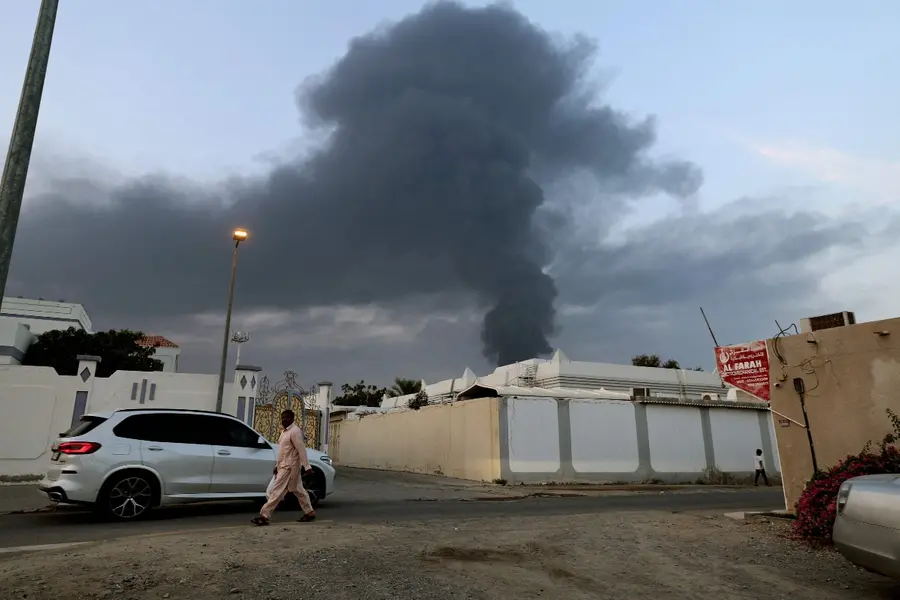
The Iranian strikes therefore represent more than an isolated infrastructure failure. They illustrate how geopolitical events can have direct consequences for the global digital economy. A military attack in one part of the world can potentially affect businesses thousands of miles away if their data or applications depend on infrastructure located in the affected region.
The incident may also encourage organizations to rethink their assumptions about data durability. High durability does not necessarily mean that every piece of information is stored in multiple countries or regions. Protection depends on the specific service architecture and backup strategy chosen by the customer.
For AWS and its customers, the experience could become a major lesson in designing infrastructure for extreme scenarios. Traditional disaster-recovery planning often focuses on technical failures and natural disasters. Increasingly, organizations may need to consider geopolitical instability and physical attacks as part of their risk assessments.
The permanent loss of customer data in Bahrain and the UAE demonstrates that no cloud environment is completely immune to catastrophic physical events. As businesses become increasingly dependent on cloud platforms, protecting data will require more than trusting a provider’s infrastructure.
It will require carefully planned geographic redundancy, independent backups and a clear understanding of where information actually exists.
The attacks ultimately expose a fundamental truth about cloud computing: the cloud is not immune to the physical world. When physical infrastructure is destroyed and no surviving copy exists elsewhere, data can disappear with it.