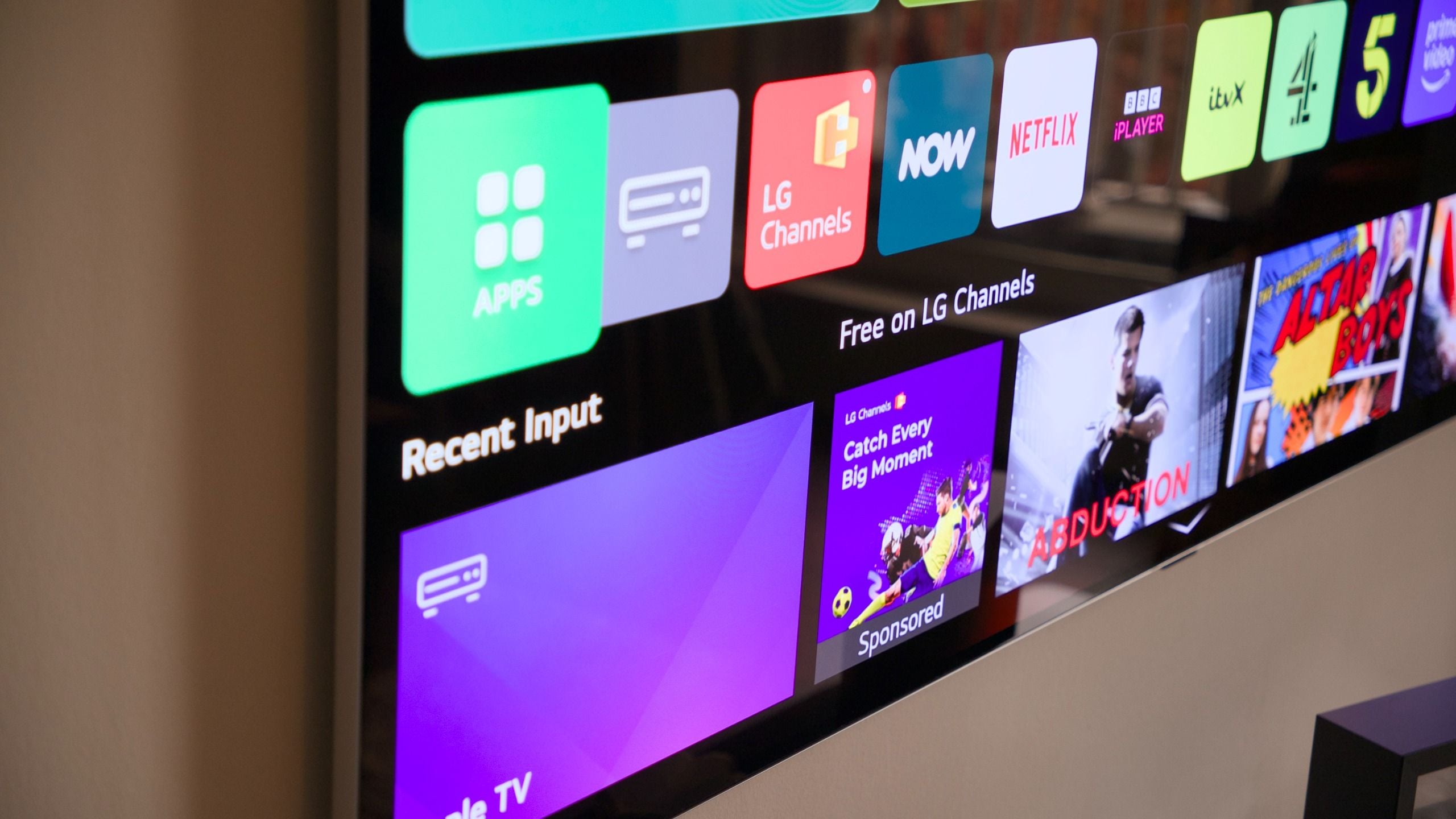
LG smart TVs are facing renewed scrutiny after a 135-minute investigation by Gamers Nexus alleged that the company’s televisions scan home networks, log voice interactions and collect data used for targeted advertising. The July 2026 investigation, led by Steve Burke alongside Level1Techs and independent security researchers, examined an LG G5 OLED television and raised questions about how much information smart TVs can gather beyond what users watch.
However, LG has disputed the investigation’s central claims, denying that its televisions continuously record ambient conversations.

Credits: PCMag
Network Scanning Raises Privacy Questions
According to Gamers Nexus, packet captures and device testing revealed that LG’s webOS operating system actively scans local networks for connected devices, including smartphones, laptops, tablets and wearables. The researchers said the television recorded information such as internal IP addresses, device names and identifiers associated with connected hardware.
The investigation also reported that the television could detect nearby Wi-Fi networks, potentially adding information about the surrounding environment to its data collection.
Such capabilities raise concerns about household profiling. By identifying devices connected to the same network, smart TV platforms may be able to build broader pictures of household behaviour, extending advertising insights beyond viewing habits.
LG, however, says its televisions can scan for and connect to nearby devices to support content sharing, connectivity and smart-home functionality, describing this as a standard feature of connected devices.
Microphone Logging and Standby Recording Allegations
One of the investigation’s most serious allegations concerned microphone activity when the television appeared to be in standby mode.
Gamers Nexus reported that testing detected intelligible audio capture and plain-text voice transcriptions stored in the television’s logs. Researchers also claimed that the microphone continued capturing audio for 10 to 15 seconds after a person stopped speaking.
In another test, the team disconnected the television from the internet and reported that audio data was stored locally before being uploaded after connectivity was restored.
If independently verified, these findings could raise significant questions about consent and the privacy of conversations in homes. However, the distinction between voice-assistant processing and continuous ambient recording remains central to the dispute, with LG rejecting the latter allegation.
ACR Technology and Targeted Advertising
The investigation also examined Automatic Content Recognition (ACR), a technology that identifies content displayed on a television, including material played through external devices connected via HDMI.
ACR is already used across the smart TV industry to support content recommendations and advertising. Gamers Nexus argued that the technology could contribute to a wider household data profile when combined with network telemetry and other information.
LG Ad Solutions promotes its ability to reach audiences across connected devices, highlighting the commercial value of television-based advertising. The investigation cited the company’s claim that it could reach 363 million secondary addressable devices in the United States.
However, that figure alone does not establish that every device is identified through network scanning or that the investigation’s alleged data pipeline accounts for the entire number.
WebOS Security Flaws Add to Concerns
Beyond privacy, the researchers reported finding remote code execution vulnerabilities in webOS, potentially allowing attackers to execute code on affected televisions.
The team said it demonstrated a controlled proof of concept involving an LG G5. Detailed technical information was being withheld during responsible disclosure to give LG time to address the reported flaws.
Such vulnerabilities could create additional risks if attackers gained access to network-facing services. The implications may be particularly serious in workplaces, hospitals and conference rooms, where televisions can be connected to computers handling sensitive communications.
The findings do not establish that these vulnerabilities have been exploited in real-world attacks, but they highlight the importance of software updates and network security.

Credits: Yahoo Tech
LG’s Response
In a statement issued on September 9, 2026, LG strongly denied claims that its televisions continuously record or upload ambient conversations.
The company said voice data is processed when users press and hold the remote’s voice button or activate Far-Field Voice Recognition, which responds to a recognised wake word. According to LG, wake-word detection happens locally, and audio is immediately deleted if the wake word is not recognised.
LG also confirmed that its televisions can scan for nearby network devices, explaining that the functionality supports connectivity and smart-home features.
Regarding ACR, the company said the feature is opt-in and that ACR data is not used for advertising when users have not consented to the relevant optional agreement. LG added that Far-Field Voice Recognition, ACR and interest-based advertising can be disabled through television settings.