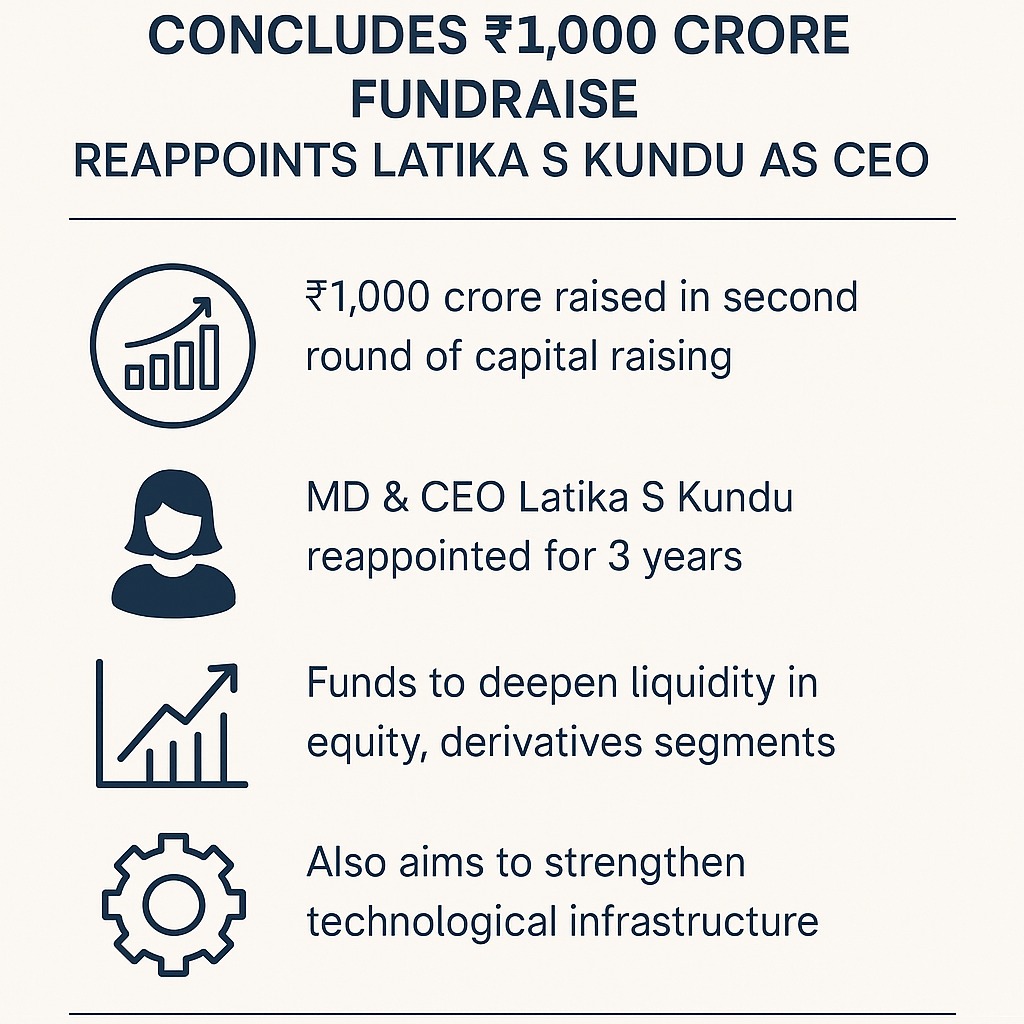
The Metropolitan Stock Exchange of India (MSE) has secured a fresh ₹1,000 crore in its second round of capital raising, marking a decisive step in its bid to transform into a stronger and more competitive trading venue. Alongside this, shareholders have unanimously approved the reappointment of Latika S Kundu as Managing Director and Chief Executive Officer for another three years—a signal of trust and continuity in leadership.
For an exchange that positions itself as India’s youngest bourse, this milestone represents more than just financial muscle; it is a reinforcement of its long-term vision to create a more resilient, inclusive, and future-ready marketplace.
Credits: Ascendants
Strengthening Liquidity in the Cash Market
MSE has made it clear that the immediate priority is to boost liquidity in the equity cash segment. While the exchange already operates in equity, debt, currency derivatives, and equity derivatives, it plans to widen participation with renewed momentum. Derivatives, it hinted, will follow “very soon.”
Liquidity has long been a make-or-break factor for smaller exchanges in India. By placing it at the forefront of its strategy, MSE is directly tackling a challenge that has historically hindered trading volumes outside of dominant players. If successful, this could make MSE a more attractive destination for both institutional and retail traders.
Building the Exchange of the Future
Parallel to liquidity measures, MSE is betting heavily on technology infrastructure. The exchange is setting up a new state-of-the-art data centre as part of a broader technology overhaul. The aim: build scalability, ensure robust security, and guarantee continuity in operations.
A stronger technological backbone is expected to serve as a springboard for innovation, allowing MSE to introduce new products, improve execution speeds, and attract global-standard participation. In an industry where milliseconds can determine trading outcomes, such an upgrade is as much a necessity as it is a competitive advantage.
Leadership Continuity: A Steady Hand at the Helm
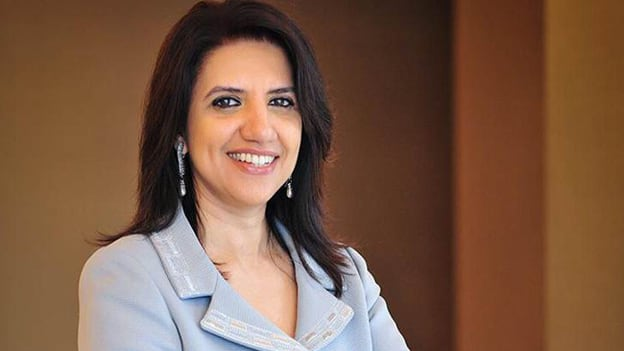
Latika S Kundu’s reappointment as MD & CEO underscores investor faith in her ability to steer the exchange through its next strategic cycle. Kundu, who has been instrumental in charting MSE’s growth path, framed the capital infusion as a vote of confidence from stakeholders.
“This capital infusion is an endorsement of the trust our stakeholders place in MSE’s vision,” she said. “With strengthened financial support and a sharp focus on innovation, MSE is poised to redefine the contours of India’s financial markets. We are building a next-generation exchange, agile, inclusive, competitive—designed not just to participate in the future of finance, but to lead it.”
Her words reflect a leadership philosophy rooted in long-term thinking and market reimagination. By aligning financial strength with technological transformation, Kundu aims to put MSE on the path to becoming a serious contender in India’s exchange ecosystem.
Expanding Market Participation
MSE is recognised by the Securities and Exchange Board of India (SEBI) to operate across currency derivatives, equity, equity derivatives, and debt markets. What sets it apart, however, is its stated ambition to design customised products across asset classes while working with ecosystem players to expand market participation.
By tailoring offerings and collaborating with industry stakeholders, MSE is seeking to broaden its appeal to both traditional and emerging investors. In a market where innovation often decides relevance, this approach could give the exchange an edge in carving out its niche.
Credits: Ascendants
The Road Ahead
With a reinforced balance sheet and a steady leadership hand, MSE is preparing for a two-pronged strategy: a near-term push for liquidity and a medium-term focus on infrastructure and product innovation.
The ₹1,000 crore capital infusion will not only help deepen market activity but also create headroom for ambitious technology projects like the data centre. In turn, these upgrades are expected to support product diversification and pave the way for more resilient market operations.
The message is clear: MSE does not just want to exist as another stock exchange; it wants to emerge as a next-generation platform that can shape the future of India’s capital markets.
Conclusion
In India’s highly competitive exchange ecosystem, size and liquidity have long defined leadership. But with fresh capital, bold technology investments, and leadership continuity under Latika S Kundu, MSE is signaling its intent to challenge old equations. If it can successfully execute on liquidity, innovation, and inclusivity, the youngest bourse may well scale new heights and claim a bigger share of India’s financial future.