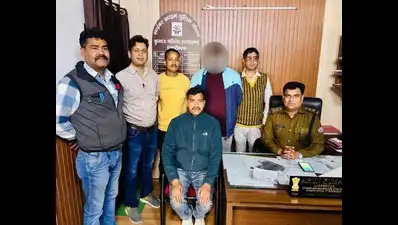
A 58-year-old professor from Nainital, set to retire in two years, fell victim to an elaborate cyber scam that kept him digitally imprisoned for 18 days. The scammers, impersonating officials from the Central Bureau of Investigation (CBI), manipulated him into believing he was involved in a money laundering case. Under intense psychological pressure, the professor followed their every instruction, even seeking their permission to attend work and eat food.
This case, described by Deputy Superintendent of Police (DSP) Ankush Mishra as the “longest period of a digital arrest” in Uttarakhand, highlights the rising threat of cybercrime in India, where sophisticated scammers prey on the vulnerable and isolated.
How the Scam Began
The ordeal started on December 5, when the professor received a call from an unknown number with the ISD code +670 (Timor Leste). Investigations later revealed that it was a Voice over Internet Protocol (VoIP) call, often used by fraudsters to mask their real identity and location.
The caller, posing as a CBI official, falsely accused the professor of being involved in a money laundering case. The fraudster convinced him that the investigation required him to remain under digital house arrest, warning him of severe legal consequences if he spoke to anyone or stepped outside his home.
The Psychological Manipulation
Fearful and confused, the professor complied. The scammers then coerced him into downloading Skype, forcing him to keep the camera on at all times so they could monitor his movements.
For the next 18 days, he lived in complete isolation, following their every instruction. The fraudsters restricted his daily activities, making him seek permission to leave his house or even eat meals. With no prior knowledge of cybercrime tactics, the professor was easily manipulated, believing the scammers’ threats of arrest and prosecution.
Financial Exploitation: ₹47 Lakh Lost
As part of the “investigation,” the fraudsters convinced the professor that he needed to transfer money to prove his innocence. Believing he would get the funds back, he wired ₹47 lakh in six separate transactions.
The money was transferred into mule accounts, which are bank accounts used by fraudsters to launder stolen money. One such account was handled by Aman Kushwaha, a 25-year-old man from Agra, who was arrested in a joint operation by the Uttarakhand Police Special Task Force (STF) and State Cyber Police.
The main accused, who impersonated the CBI officer, remains at large, but police are actively working to track him down and recover the stolen money.
The professor’s digital captivity ended on December 23, when the scammers suddenly stopped responding to his messages. Realizing something was wrong, he finally confided in a friend, who urged him to report the matter to the police.
A case was immediately registered under relevant sections of the Bharatiya Nyaya Sanhita (BNS) and Information Technology (IT) Act. Investigators are now tracing other suspects involved in the fraud, hoping to dismantle the cybercrime network responsible.
This case is not an isolated incident. The concept of digital arrest, where fraudsters manipulate victims into believing they are under government surveillance or investigation, has been rapidly growing.
According to state cyber police records:
- In 2023, only one case of digital arrest was reported in Uttarakhand.
- By 2024, the number surged to 15 cases, with victims collectively losing ₹13 crore.
- In Dehradun alone, one man lost ₹3 crore, while another was defrauded of ₹2.27 crore.
This sharp rise in cases indicates that cybercriminals are refining their tactics, preying on individuals who live alone or have limited awareness of digital fraud.
The modus operandi of digital arrest scams follows a calculated psychological pattern:
- Initial Contact – The victim receives a VoIP call from fraudsters impersonating government officials (CBI, police, or tax authorities).
- False Accusations – The scammers accuse the target of crimes like money laundering, tax fraud, or illegal transactions.
- Fear and Isolation – They create panic, warning of arrest or legal action. The victim is pressured into isolation, cutting off communication with friends and family.
- Surveillance and Control – Victims are forced to install Skype or similar apps, keeping cameras on so scammers can monitor their every move.
- Financial Extortion – The criminals demand money transfers, claiming the funds will be returned after verification.
- Abandonment – Once the victim has sent all their money, the scammers cut off contact, leaving them confused and helpless.
Lessons Learned: How to Protect Yourself
With digital scams on the rise, awareness and education are key to prevention. Here’s how individuals can protect themselves:
- Verify Caller Identity – Government agencies do not contact individuals via random phone calls. If someone claims to be from the CBI, police, or tax department, verify their identity through official channels.
- Never Download Unknown Apps – If a caller asks you to install apps like Skype, AnyDesk, or TeamViewer, it is likely a scam.
- Do Not Share Financial Information – No legitimate authority will ask for money transfers to verify your innocence.
- Stay Connected – If a caller insists you stay isolated or not speak to family or friends, it is a red flag.
- Report Suspicious Calls Immediately – If you suspect a scam, hang up and report the number to cyber police or government helplines.
The Nainital professor’s 18-day digital arrest is a shocking reminder of how cybercriminals exploit fear and isolation. As digital fraud evolves, authorities must step up awareness campaigns, strengthen cyber laws, and track down international fraud networks.
For individuals, staying informed and cautious is the first line of defense. The rise in digital arrests in Uttarakhand shows that anyone can be a target. The key to stopping such crimes lies in early detection, quick reporting, and widespread education about the dangers of cyber fraud.