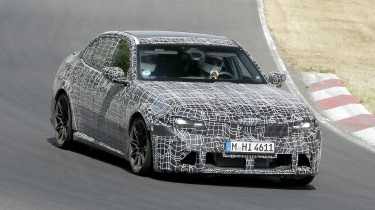
BMW’s future M3 lineup is taking shape, and it looks like enthusiasts won’t have to choose between tradition and technology. Fresh spy shots from the Nürburgring have revealed the next-generation gasoline-powered BMW M3 testing for the first time, confirming that the iconic performance sedan will continue with an inline-six engine even as an all-electric M3 prepares to join the lineup.
Rather than replacing one with the other, BMW is taking a dual approach by offering both electric and combustion-powered versions of its legendary sports sedan. For drivers who still value the sound and character of a turbocharged straight-six, that’s welcome news.
A Familiar Formula With a Modern Twist
The latest prototype gives a clearer picture of what BMW has planned. Compared with the electric M3 prototypes seen in recent months, the gasoline-powered model features a noticeably longer hood, hinting at the familiar six-cylinder engine underneath. It also appears less compact than its electric sibling, maintaining the proportions that have long defined the M3.
Despite the different powertrain, the overall styling borrows heavily from BMW’s Neue Klasse design philosophy. The front fascia features slim headlights connected visually with redesigned kidney grilles, creating a cleaner and more futuristic appearance. The signature BMW face remains, but it has been simplified for the brand’s next generation of vehicles.
Performance-specific styling is evident through larger front air intakes, muscular wheel arches, and wider track dimensions. At the rear, a subtle lip spoiler and the unmistakable quad exhaust outlets leave little doubt that this is a traditional M car.
Six Cylinders Are Staying
Perhaps the biggest takeaway from the latest sighting is what lies beneath the camouflage.
The next M3 is widely expected to continue using an updated version of BMW’s S58 3.0-liter twin-turbocharged inline-six engine. While the company has embraced electrification across its lineup, reports suggest the new M3 will avoid the plug-in hybrid system found in the larger M5. Instead, BMW could introduce a mild-hybrid setup to improve efficiency without significantly altering the driving experience.
The decision reflects BMW M’s effort to preserve the lightweight, responsive character that has made the M3 a benchmark in the performance sedan segment for decades.
Performance Focus Remains Strong
The prototype also hints that BMW is refining the M3’s performance package beyond the engine.
Larger brake hardware sits behind newly designed alloy wheels, while the wider body suggests improved handling and stability. All-wheel drive is expected to remain standard or at least widely available, continuing the formula introduced on the current generation.
However, there are signs that some traditional options may disappear. Industry reports indicate the rear-wheel-drive entry model could be dropped, and the manual transmission may not return. If true, the upcoming generation could mark the end of another beloved feature as stricter emissions regulations and changing buyer preferences reshape the performance car market.
Two M3s, One Future
BMW’s strategy is becoming increasingly clear. Instead of forcing customers into a single direction, the company plans to offer two distinct interpretations of the M3.
The electric model will showcase BMW’s latest battery technology and high-performance electric drivetrain, while the gasoline-powered version will continue to cater to enthusiasts who still prefer the engagement of an internal combustion engine.
The electric M3 is expected to arrive first, with the combustion-powered version likely following in 2028. Until then, testing at the Nürburgring will continue as BMW fine-tunes what could become one of the final generations of its iconic six-cylinder performance sedan.