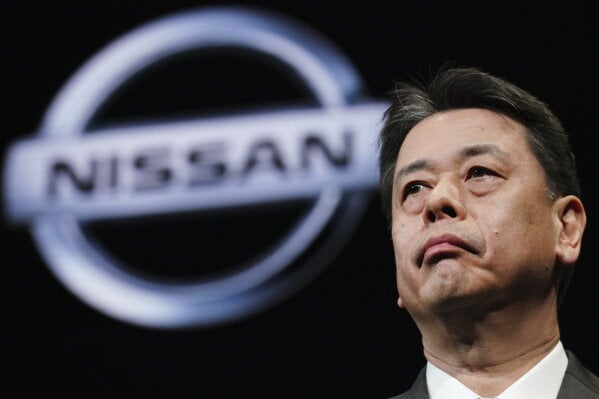
Nissan’s latest annual shareholder meeting turned into a sharp public display of investor frustration, with one attendee suggesting that former chairman Carlos Ghosn should return to lead the troubled Japanese automaker.
The comment, made during Nissan’s 127th Ordinary General Meeting of Shareholders in Yokohama, highlighted the pressure now facing chief executive Ivan Espinosa as the company attempts to stabilise its business, cut costs, and rebuild confidence.
Ghosn, who was arrested in Japan in 2018 on allegations of financial misconduct before fleeing to Lebanon in 2019, remains one of the most divisive figures in Nissan’s modern history. Yet his name resurfaced as some shareholders compared the company’s current uncertainty with the turnaround years he once led.
A difficult meeting for Nissan’s leadership
According to reports from the meeting, Espinosa had to repeatedly manage interruptions from shareholders unhappy with Nissan’s direction. At one point, he asked an attendee to remain quiet and warned another that they could be removed from the venue.
Espinosa, who became CEO in April 2025, told investors that he was prepared to answer difficult questions and accept accountability for the company’s performance.
The challenge is not small. Nissan is dealing with weak demand in several markets, high production capacity, and growing pressure to invest in electric vehicles while managing costs. Its failed merger discussions with Honda earlier this year also exposed how urgent the company’s turnaround has become.
For many investors, the meeting was less about Ghosn himself and more about a deeper concern: whether Nissan has a clear enough plan to regain its position in a highly competitive global auto market.
Renault’s boardroom move adds pressure
The shareholder meeting also brought a notable development involving Renault, Nissan’s long-time alliance partner.
Renault, which holds voting rights in Nissan, abstained from supporting the reappointment of outside director Motoo Nagai. The decision resulted in Nagai losing his board seat.
Nagai had played an influential role in Nissan’s leadership decisions following Ghosn’s removal. Renault said its decision was based on concerns around independence, pointing to Nagai’s long association with Nissan and links to Mizuho Financial Group, one of Nissan’s main creditors.
The move has revived questions about the balance of power between Nissan and Renault. Their alliance has survived several difficult years, but the relationship remains sensitive due to long-running disagreements over governance and control.
Can Ivan Espinosa win investor patience?
Espinosa now faces a familiar problem for turnaround CEOs: investors want visible progress quickly, while fixing a carmaker usually takes years.
Nissan has already begun restructuring its operations, including efforts to reduce excess production capacity and streamline costs. But plant closures, workforce changes, and slower product cycles can create further tension among employees, dealers, and shareholders.
The company also has to compete with fast-moving Chinese electric vehicle makers, established global rivals, and a shifting consumer market that has become less predictable.
The Ghosn reference may have made headlines, but it reflects a broader reality. Nissan’s investors are looking for decisive leadership, stronger products, and a credible path back to growth.
For Espinosa, the next few quarters will determine whether shareholders see him as the person to lead that recovery or simply another chapter in Nissan’s long-running leadership struggle.