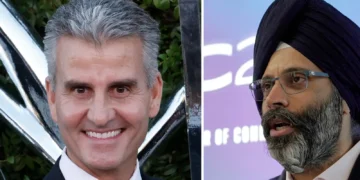
David Sacks has drawn a line in the sand on the artificial intelligence industry and government support. The venture capitalist and President Donald Trump’s AI and cryptocurrency czar had a blunt message on Thursday: if AI companies get into financial trouble, taxpayers won’t bail them out. The discussion started on Wednesday when OpenAI’s CFO, Sarah Friar, talked about the company’s funding problem in an appearance. She indicated that OpenAI seeks an ecosystem including private equity firms, banks, and even a federal “backstop” or “guarantee” to finance substantial infrastructure investments.
“The U.S. has at least 5 major frontier model companies. If one fails, others will take its place,” Sacks said in a post on X, formerly known as Twitter. His comments came at a critical juncture, with the AI sector facing massive infrastructure costs and long-term sustainability in question.
Her comments immediately raised eyebrows across the tech and political landscape. The idea of government backing for a private AI company, particularly one valued at tens of billions of dollars, struck many as unusual and potentially problematic.
OpenAI Clarifies Stance as Trump Advisors Focus on Regulatory Easing
Friar quickly tried to walk it back. Later that day, she published a post on LinkedIn backpedaling from her earlier comments, explicitly saying that OpenAI is not looking for government support for its infrastructure commitments. She admitted that her use of the word “backstop” had muddled her intended message.
“As the full clip of my answer shows, I was making the point that American strength in technology will come from building real industrial capacity, which requires the private sector and government playing their part,” Friar explained in her follow-up post.

While Sacks categorically dismissed the idea of federal bailouts, he did provide some guidelines on the areas in which the Trump administration is likely to support AI development. It centers on making it much easier for companies to build infrastructure rather than directly offering financial support.
Sacks says the administration wants to streamline permitting and facilitate power generation. The goal is to enable rapid infrastructure buildouts that AI companies desperately need, without seeing residential electricity rates spike for ordinary Americans.
That approach-just take away regulatory barriers, not taxpayer money-represents a more classic conservative philosophy. Access to energy is a key bottleneck for AI companies, which consume enormous quantities of electricity powering data centers and training models.
Sacks’ comments emphasize his belief in the competitiveness of the market for AI. His mention of at least five major frontier model companies in the United States suggests that market forces-not government intervention-should dictate which ones will prove their worth and which ones won’t survive.
The major players in this space include OpenAI, Anthropic, Google’s DeepMind division, Meta’s AI research team, and other well-funded ventures. Each of these is racing to develop more powerful AI models while managing the substantial costs involved.
The White House ‘Misunderstanding’ Highlights AI’s Financial Growing Pains
Sacks offered something of an olive branch in his post, suggesting the whole situation may have been a misunderstanding. “To give the benefit of the doubt, I don’t think anyone was actually asking for a bailout. (That would be ridiculous.),” he wrote.
This framing, from a diplomatic standpoint, allows both parties to move beyond the controversy without further escalation.
OpenAI, he said, can retain its position as an industry leader without the stigma of seeking handouts from the government, while the administration reinforces its free-market credentials.
The exchange exemplifies the growing pains of an industry expanding at a rate perhaps unparalleled in technology history. Private AI companies are making massive infrastructure bets while their business models and revenue streams are still evolving.
The apparent position of the Trump administration is that AI firms should look to private capital markets, conventional financing, and their own means for financing growth. At the same time, the willingness of the government to facilitate permitting and access to energy evidences an understanding that the creation of AI is important to American competitiveness.
The White House and OpenAI had no further comment beyond Friar’s LinkedIn clarification. When CNBC reached out to OpenAI for comment, the company directed reporters to Friar’s post instead of providing new statements.
The episode is an early test of how the Trump administration will balance its goal of supporting critical technology development against its commitment to fiscal discipline. For now, at least, the message is clear: American AI companies are on their own financially.