For most people watching the war between the United States, Israel and Iran, the story appears straightforward. Airstrikes, missile retaliation, oil prices rising, shipping routes tightening, and governments trading warnings through television statements. It looks like the familiar rhythm of a Middle East conflict. But inside military planning circles another conversation is quietly gaining attention. It is not about a large city or a battlefield. It is about a small island in the Persian Gulf that many people outside energy markets have never heard of.
That island is Kharg.
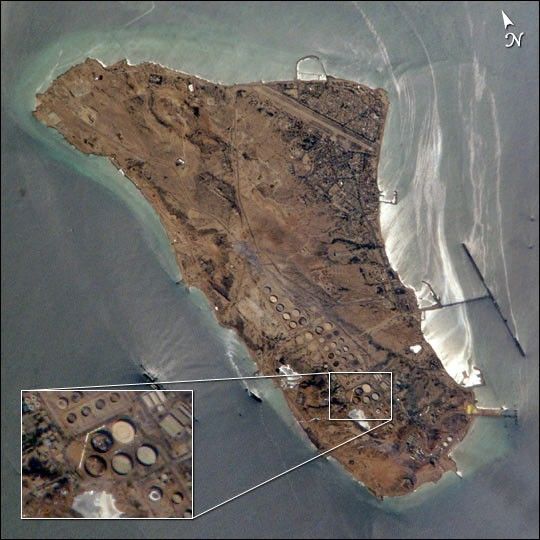
What makes Kharg unusual is not its size but what passes through it every day. The island sits roughly 25 kilometres off Iran’s southern coastline and stretches for about eight kilometres in length. To a casual observer it might look like a modest strip of land in the Gulf. Yet in energy terms it functions like a valve controlling the flow of Iran’s oil exports.
For decades Kharg Island has served as the main exit point for Iranian crude oil. Tankers anchor near its terminals, load cargo, and depart through the Persian Gulf toward buyers in Asia. Shipping trackers and energy analysts estimate that between 80 and 90 percent of Iran’s crude exports pass through Kharg.
In normal conditions the numbers are substantial. Roughly 1.5 to 2 million barrels of oil per day leave through the island’s loading points. That crude is mainly purchased by refiners in China and India, along with a smaller number of buyers willing to navigate sanctions restrictions.
The island also acts as a storage hub. Oil tanks there are believed to hold close to 30 million barrels at a time. This allows Iran to manage export flows even when tanker traffic slows or prices fluctuate. In energy trade terms, Kharg functions as both warehouse and shipping port.
But the island’s value is not limited to trade figures. It underpins the financial structure of the Iranian state.
Oil revenue remains one of the largest sources of government income in Iran. Estimates from economists suggest that petroleum exports still account for roughly one-third of the country’s budget revenue. That money supports everything from public spending to military salaries.
Part of those funds flows toward the Islamic Revolutionary Guard Corps, known as the IRGC. The organisation controls large sections of Iran’s defence structure and also plays a major role in regional security activity. Its finances are tied, at least partly, to oil revenue moving through ports such as Kharg.
This connection between one island and a large share of state income explains why Kharg has quietly entered discussions inside Washington during the current war.
Why Kharg Appeared in Military Discussions
Reports from Axios indicate that officials inside the US administration have examined the possibility of seizing Kharg Island. The discussion is not presented as a final decision. But the fact that it has entered serious conversation shows how the conflict has already moved into deeper strategic territory.
The logic behind such an operation is relatively simple. If control of Kharg changed hands, Iran’s oil exports would drop sharply. Tankers would no longer load freely, and the country’s main oil revenue stream would weaken overnight.

Economic pressure has been used against Iran before, mainly through sanctions. But sanctions tend to work slowly. Revenue declines over months or years as buyers withdraw or restrictions tighten. Seizing the island would create a much faster shock.
In financial terms the argument is blunt. Without the oil leaving Kharg, government income drops sharply. That makes it harder for the state to fund military activity, pay salaries or support armed groups across the region.
Supporters of the idea see it as a way to weaken Iran without launching a full-scale invasion. In theory it targets the economic engine rather than population centres or large ground battles.
However, this plan is not new. In fact, American officials debated something very similar nearly five decades ago.
The Lesson From 1979
During the Iranian revolution in 1979, Washington feared that instability inside Iran might threaten oil shipments from the Gulf. The administration of US President Jimmy Carter examined several contingency plans related to energy supply routes.
One of those plans involved Kharg Island.
Military planners studied whether American forces could capture or secure the island in order to protect oil exports. The idea was examined carefully. The United States had the naval capability to reach the island and control the surrounding waters.
But the plan was eventually rejected.
The reason was not about military feasibility. Officials believed that occupying the island could trigger a chain reaction across the region. Oil markets might panic, neighbouring states could be drawn into the conflict and the crisis might expand far beyond the island itself.
In short, the economic shock could spill into political escalation.
That decision has remained a reference point in strategic discussions ever since.
The current conflict, however, is unfolding under very different circumstances.
According to several military analysts, Iran’s air defence network has suffered heavy damage during the opening phase of the war. Strikes by Israel and the United States have reportedly destroyed large portions of radar installations, missile batteries and early warning systems.
This means the skies over parts of Iran are now far more vulnerable than they were in earlier decades.
At the same time the United States has moved powerful naval forces into nearby waters. Aircraft carrier strike groups bring hundreds of combat aircraft, surveillance systems and support ships. Their presence allows American forces to control large sections of airspace over the Gulf.
On paper these conditions make a Kharg operation easier than it would have been decades ago. Air cover, naval protection and strike capability are already present in the region.
Yet the main danger in such a move does not lie in capturing the island. It lies in what could follow.
Iran’s Decentralised Military Structure
Iran’s military system does not rely entirely on a single chain of command. Over the past two decades the IRGC has built a structure in which regional commands hold substantial autonomy.
These commands operate across various provinces. They maintain their own missile units, drone fleets and storage facilities. In some cases they also control local economic networks such as smuggling routes and informal trade channels.
This means that even if central authority faces disruption, local commanders can still conduct military activity.
Weapons stockpiles already exist within these regions. Missiles, drones and other equipment do not require immediate funding from the central treasury to be used. Once deployed, they can operate for extended periods.
For planners studying the Kharg scenario, this raises a serious concern. Cutting off oil revenue weakens the state financially, but it does not automatically neutralise these regional commands.
Instead, it might remove one of the few restraints still present.
The Gulf’s Vulnerable Energy and Water Systems
Iran’s missile forces sit within range of much of the Gulf coastline. Along that coastline lie facilities that keep Gulf economies running.
Oil refineries, gas export terminals, shipping ports and desalination plants are spread across Saudi Arabia, Kuwait, Bahrain and the United Arab Emirates. Many of these installations sit close to the sea for logistical reasons.
Desalination plants deserve particular attention. In several Gulf states these facilities provide the majority of drinking water. Kuwait relies on desalinated seawater for around 90 percent of its supply. Bahrain operates under similar dependence.
Saudi Arabia runs one of the largest desalination plants in the world at Ras Al-Khair on the Gulf coast, which supplies water to Riyadh and other cities.
These plants are massive engineering projects but they remain vulnerable. They cannot easily be moved inland. Their pipelines, pumps and storage tanks occupy wide areas that are difficult to protect completely.
A single drone costing tens of thousands of dollars can threaten equipment worth billions.
Missile defence systems exist across the Gulf, but interceptors are expensive and limited in number. Defending every installation continuously is extremely difficult.
Energy markets have already reacted to the war. Brent crude prices rose sharply during the early phase of the conflict as traders worried about the Strait of Hormuz and shipping disruptions.
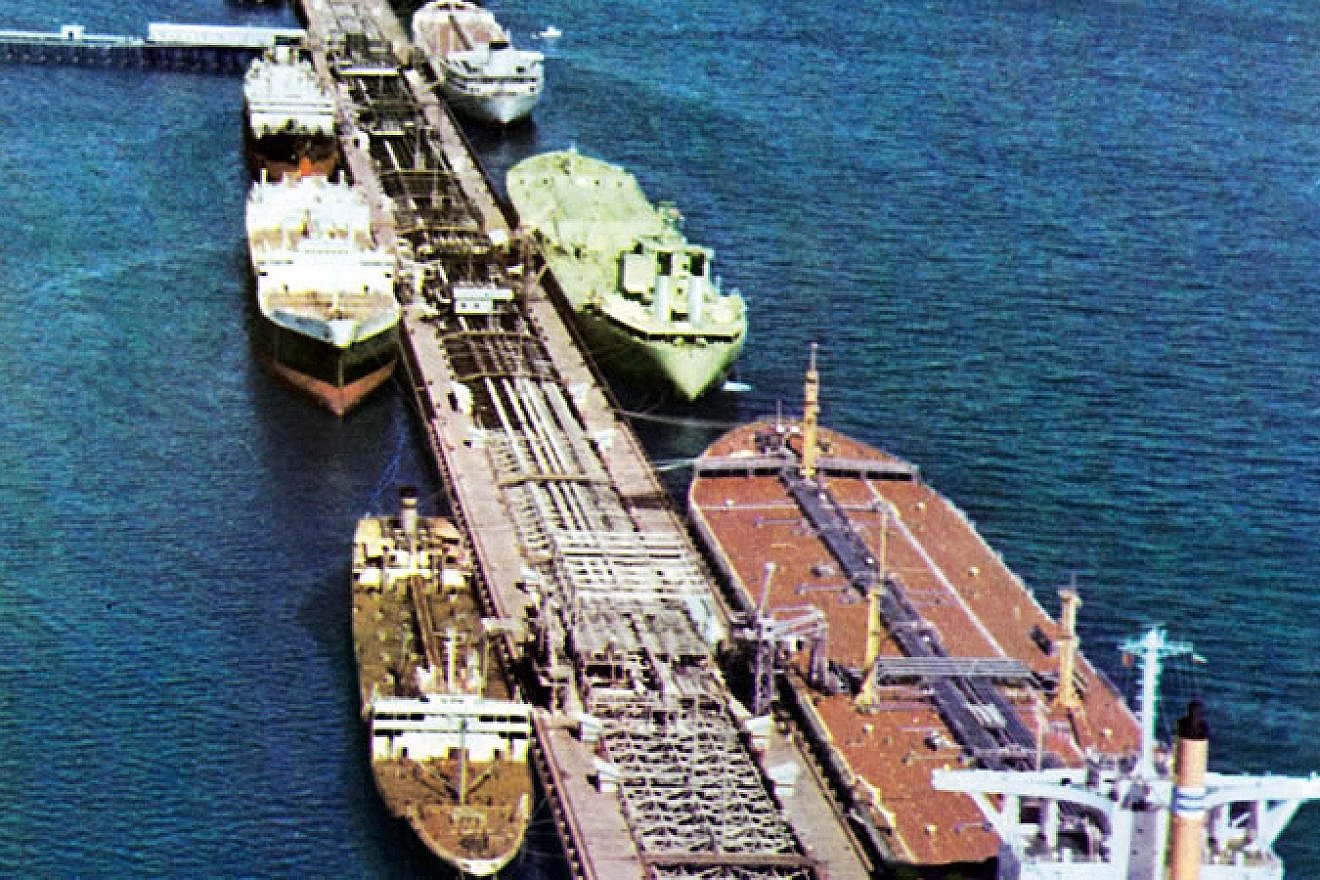
Insurance costs for tankers moving through the Gulf have also climbed. Ship owners now factor in higher risk premiums when planning routes through the region.
But many analysts believe the most severe scenario has not yet been reflected in market prices.
If Kharg Island were seized and Iranian regional commands responded by targeting coastal facilities across the Gulf, the supply shock could be substantial. Oil shipments might slow dramatically as ports shut down temporarily or shipping companies withdraw vessels.
Export terminals in Saudi Arabia, the UAE or Kuwait could face operational interruptions. Even limited damage might be enough to disrupt supply schedules.
In such a situation oil markets would react quickly. Prices would not only reflect current supply disruptions but also the uncertainty surrounding future shipments.
A War That Could Change Shape
Up to now the war has largely focused on strikes against Iran and retaliation toward Israel or US military locations. The battlefield remains relatively defined.
Seizing Kharg could transform that structure.
Instead of a campaign directed at one state’s central leadership, the conflict could expand into a regional confrontation involving multiple armed groups acting independently. Attacks might occur across a wide stretch of coastline and against different types of targets.
This type of environment becomes harder to control. Negotiations become complicated because there may not be a single authority capable of ordering every group to stop.
For energy markets, shipping companies and governments in the region, this possibility remains one of the most unsettling elements of the Kharg discussion.
Kharg Island itself is not large. It does not host a massive population or a famous skyline. But in economic and military terms it carries unusual weight.
The island connects Iran’s oil production to international markets. It ties together energy flows, government finances and regional security.
This is why it has become a focal point in strategic debates surrounding the current war.
Capturing the island could deliver an immediate financial blow to Iran. At the same time it might open the door to a wider confrontation affecting the entire Gulf region.
For now the idea remains part of internal discussion rather than active policy. Yet the fact that it is being seriously examined tells us something important about the stage this conflict has reached.