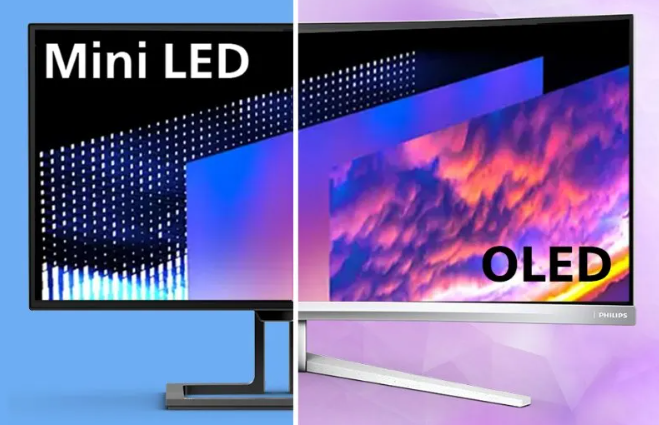
The global display and consumer electronics sectors are locked in a historic technological civil war. For years, the gold standard of premium visual performance was dictated by a single, unyielding metric: the pursuit of infinite contrast through absolute black levels. This criteria positioned organic light-emitting diode (OLED) technology as the undisputed monarch of high-end televisions, monitors, and flagship smartphones. However, as HDR content mastering demands increasingly extreme specular highlight peaks, and ambient-light environments push home entertainment hubs out of darkened home cinemas into sunlit, open-plan living spaces, an advanced competitor has fundamentally disrupted the premium market. The structural battle between OLED vs Mini LED display technology has evolved past simple panel choice into a defining war of display physics, chemistry, and hardware engineering.
Consequently, consumers and corporate enterprise teams face a highly nuanced decision. Rather than choosing between basic budget panels and luxury displays, buyers are caught between two highly advanced, completely different engineering frameworks. While OLED relies on carbon-based organic molecules that emit their own localized light per pixel, Mini LED uses a matrix of thousands of tiny, inorganic blue gallium-nitride (GaN) diodes combined with advanced local dimming algorithms and quantum-dot layers. By dissecting the underlying physics, thermal profiles, and longevity traits of OLED vs Mini LED screens, users can move past superficial showroom marketing and deploy the exact display architecture engineered for their environment.
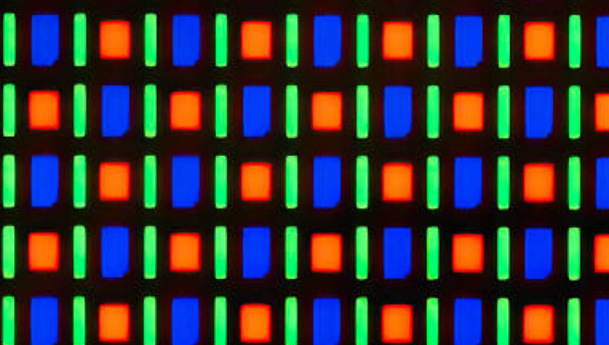
1. Atomic Architectures: How Light and Color Are Born
To accurately judge the performance metrics of modern display panels, one must look at how each framework operates at the sub-pixel level. The fundamental split is simple: self-emissive organic pixel physics versus high-density inorganic backlight filtration.
The Self-Emissive Organic Grid (OLED)
OLED technology entirely removes the concept of a standalone background light source. Every single pixel on an OLED display is its own self-contained light engine. When a localized electrical current passes through the carbon-based organic compound layers, the pixels emit light directly. To display absolute black, the TV’s processor cuts the voltage to that individual pixel down to zero. The pixel turns off completely, emitting exactly 0.0000 nits of light. This capability yields a mathematically infinite contrast ratio, ensuring dark cinematic scenes maintain rich depth without the distracting background haze typical of older liquid crystal displays (LCDs).
The Inorganic Backlight Matrix (Mini LED)
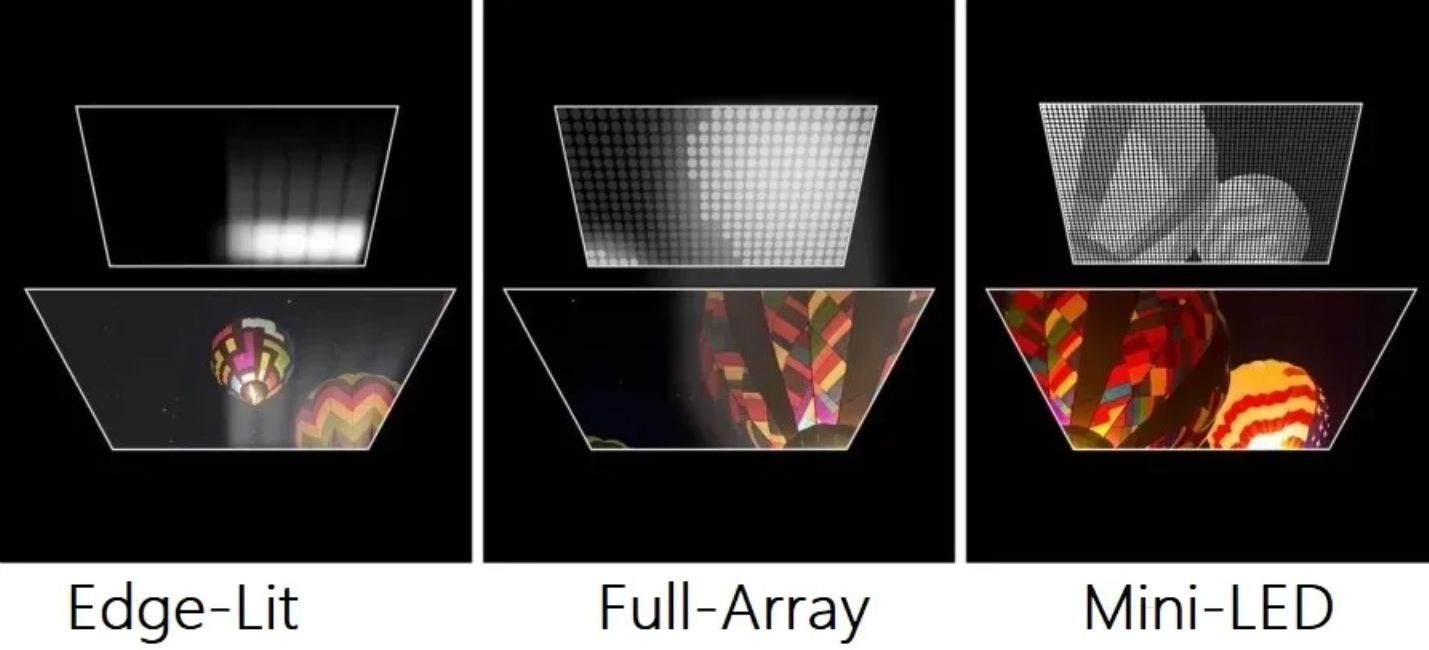
Mini LED is the ultimate evolution of traditional liquid crystal display (LCD) design. Instead of using a few dozen large, bulky edge-lit or direct-lit LEDs to illuminate the entire screen from behind, a Mini LED panel populates its backlight infrastructure with tens of thousands of microscopic, inorganic diodes. These tiny diodes are tightly clustered into thousands of individually controlled local dimming zones.
These blue gallium-nitride light engines shoot massive amounts of light through a Quantum-Dot enhancement film (QDEF) to create rich, pure reds and greens. The light then passes through a fast-switching liquid crystal matrix that shapes the fine details of the image. By dynamically turning off specific backlight zones behind dark sections of the on-screen content, Mini LED mimics the deep blacks of OLED while utilizing the incredible power of traditional semiconductor illumination.
2. Structural Metrics: Direct Engineering Benchmarks
The core architectural differences between the two display systems translate directly into completely opposing real-world hardware capabilities.
Picture Quality and Hardware Specifications
| Core Performance Vector | OLED (Self-Emissive Panels) | Mini LED (High-Zone Backlight Arrays) |
| Light Generation Mechanism | Organic Self-Emissive Pixels | Inorganic Gallium-Nitride (GaN) Diodes |
| Black Level Performance | Perfect Absolute Black (0.0000 Nits) | Deep Black (Dependent on zone count thresholds) |
| Peak HDR Specular Highlights | ~1,000 to 2,500 Nits (Small window limits) | 4,000 to 10,000 Nits (Massive highlight capacity) |
| Sustained Full-Screen Output | ~250 to 400 Nits (Restricted by ABL safety loops) | 800 to 1,500 Nits (Stable, unthrottled luminance) |
| Pixel Response Velocity | 0.03 Milliseconds (Near-instantaneous) | ~1.0 to 4.0 Milliseconds (Liquid crystal transition delay) |
| Long-Term Burn-In Hazard | Measurable physical risk under static workloads | Zero Risk (Completely immune to static image retention) |
| Off-Axis Viewing Profile | Perfect wide color tracking and no illumination drop | Variable drift (Susceptible to slight blooming off-center) |
3. The Brightness War: Full-Field Luminance and the ABL Ceiling
The most decisive functional separation between OLED vs Mini LED display panels emerges when measuring sustained full-field light output. This performance gap is dictated by basic thermal realities and the power limits of organic chemistry versus inorganic semiconductors.
The OLED Thermal Wall and Auto Brightness Limiter (ABL)
While modern premium OLED panels can hit brief, impressive peak brightness levels for tiny highlights, they cannot sustain high brightness across the entire screen. Because organic material degrades rapidly when subjected to sustained high voltage and heat, self-emissive panels utilize a hardcoded safety protocol called the Auto Brightness Limiter (ABL).
When a user opens a large, bright window such as a white Excel spreadsheet, a web browser, or a snow-filled winter scene in a movie, the ABL protocol detects the massive current draw and automatically dims the entire screen down to roughly 250 to 400 nits. This sudden drop produces an obvious visual “breathing” effect that can look sluggish and washed out in sunlit living rooms or highly illuminated office spaces.
The Mini LED Luminance Sovereign
Mini LED displays are completely unaffected by these full-field power limits. Because inorganic gallium-nitride diodes handle high voltage and heat with extreme resilience, a high-end Mini LED screen can easily pump out a steady, unthrottled 800 to 1,500 nits across a full-white field. Furthermore, flagship models can drive tiny, hyper-focused highlights up to an astonishing 4,000 to 10,000 nits. This incredible luminance headroom completely overpowers bright reflections from large windows or ambient lighting, allowing the screen to deliver punchy, realistic HDR content that mimics the intense dynamics of real-world sunlight.
4. Image Artifacts: Infinite Contrast vs. Local Dimming Blooming
While Mini LED dominates the brightness race, it faces its own distinct image management challenge: a visual artifact known as blooming or haloing. Because a Mini LED display relies on backlighting zones to illuminate objects rather than single pixels, showing a bright, high-contrast white object directly against a pitch-black background such as a starfield in a space film or white subtitles on a dark movie screen requires an individual dimming zone to crank its brightness to maximum right next to a zone that is turned completely off.
Because the liquid crystal matrix cannot perfectly block 100% of that massive light blast, some light leaks forward into the dark regions, creating a noticeable glowing halo or “bloom” around the bright object. To counter this, modern panels pack over 5,000 to 20,000 local dimming zones onto the backplane. At this density, the human eye can no longer easily distinguish between a self-emissive OLED panel and a high-zone Mini LED cluster in most real-world content, keeping blooming artifacts to an absolute minimum.
5. Longevity Audits: 10,000-Hour Wear and Burn-In Realities
For productivity power users, long-session gamers, and commercial installers, long-term panel reliability is a critical metric that shapes overall return on investment.
Because an OLED display relies on independent organic molecules to generate its light, the sub-pixels degrade at different rates based on the specific colors and brightness levels they display over time. If a user displays static, unchanging content for hours on end such as an operating system taskbar, a spreadsheet gridline, an IDE sidebar, or a static news channel banner, those specific pixels age faster than the surrounding ones. After thousands of hours of repetitive exposure, this uneven degradation results in permanent image retention, commonly known as burn-in.
Even with modern pixel-shifting algorithms and advanced heat sinks, organic material will always fade under prolonged, high-brightness workloads. Mini LED completely removes this point of failure. Its inorganic backlight components degrade uniformly at an incredibly slow rate, experiencing less than 3% luminance drift over 10,000 hours of continuous use. This durability makes Mini LED a highly reliable, long-lasting display solution that can run static applications for a decade without a single ghost image or retention artifact.
6. The Gaming Arena: Instantaneous Response vs. Peace of Mind
For competitive esports athletes and casual console gamers alike, choosing between these two display systems requires prioritizing either extreme speed or peace of mind.
The Motion Clarity Champion
OLED is the undisputed king of fast-action motion clarity. Because it completely bypasses the physical limitations of twisting liquid crystals, an OLED sub-pixel can change its state in a near-instantaneous 0.03 milliseconds. This incredible transition speed eliminates ghosting, trailing, and motion blur during fast-paced, high-refresh-rate action. Competitive gamers playing frantic shooters or esports titles gain a clear, split-second visual edge because targets stay perfectly sharp and legible, even during rapid camera pans.
The Static HUD Safe Zone
On the other hand, many modern video games feature high-contrast, permanent Heads-Up Displays (HUDs) including health bars, mini-maps, weapon inventories, and static UI icons that sit on screen for hundreds of hours. For a dedicated gamer, running these static elements on an OLED display requires constant monitoring to avoid burn-in. Choosing a high-refresh-rate Mini LED monitor removes that digital stress entirely. Gamers can run long, intense play sessions at maximum brightness with complete peace of mind, knowing that their inorganic display hardware is completely immune to permanent image retention.
Summary Decision Guide: Matching Panel to Space
To simplify the choice, we can look at how these technical trade-offs align into clean recommendations based on your physical room lighting and daily viewing habits.
Choose OLED If:
- You View in Light-Controlled Spaces: Your primary setup is a dedicated home theater, a dark bedroom, or a studio with controlled ambient light.
- Cinematic Contrast Is Your Priority: You prioritize deep shadow detail, infinite contrast, and pixel-perfect clarity without any blooming or haloing.
- You Focus on Competitive Gaming: You need ultra-fast 0.03ms pixel response times to eliminate motion blur during competitive esports sessions.
- Wide Viewing Angles Are Critical: Your seating arrangement wraps around the screen, requiring perfect color accuracy from any off-axis viewpoint.
Choose Mini LED If:
- Your Space Features Heavy Ambient Light: Your screen sits directly opposite large windows or inside a bright, sunlit room.
- You Demand High-Impact HDR Highlights: You want to experience intensely bright HDR highlights that range from 4,000 to 10,000 nits.
- You Run Constant Static Content: Your daily workflow includes hours of spreadsheets, code editors, static web browsers, or games with permanent HUD lines.
- You Want Maximum Screen Size for Your Money: You are investing in massive cinematic screens (75 to 100+ inches) where Mini LED provides incredible value.
Ultimately, neither panel technology is a universal winner each is a specialized tool engineered to conquer a specific physical environment. OLED remains the ultimate choice for dark-room movie lovers and competitive gamers who demand perfect contrast and near-instant response speeds.
Simultaneously, Mini LED has evolved from a simple alternative into the undisputed king of bright-room versatility, longevity, and high-nit HDR impact. By evaluating your room’s physical lighting, your daily application mix, and your long-term reliability expectations, you can easily cut through the corporate marketing labels and purchase the exact display physics designed to bring your digital content to life.