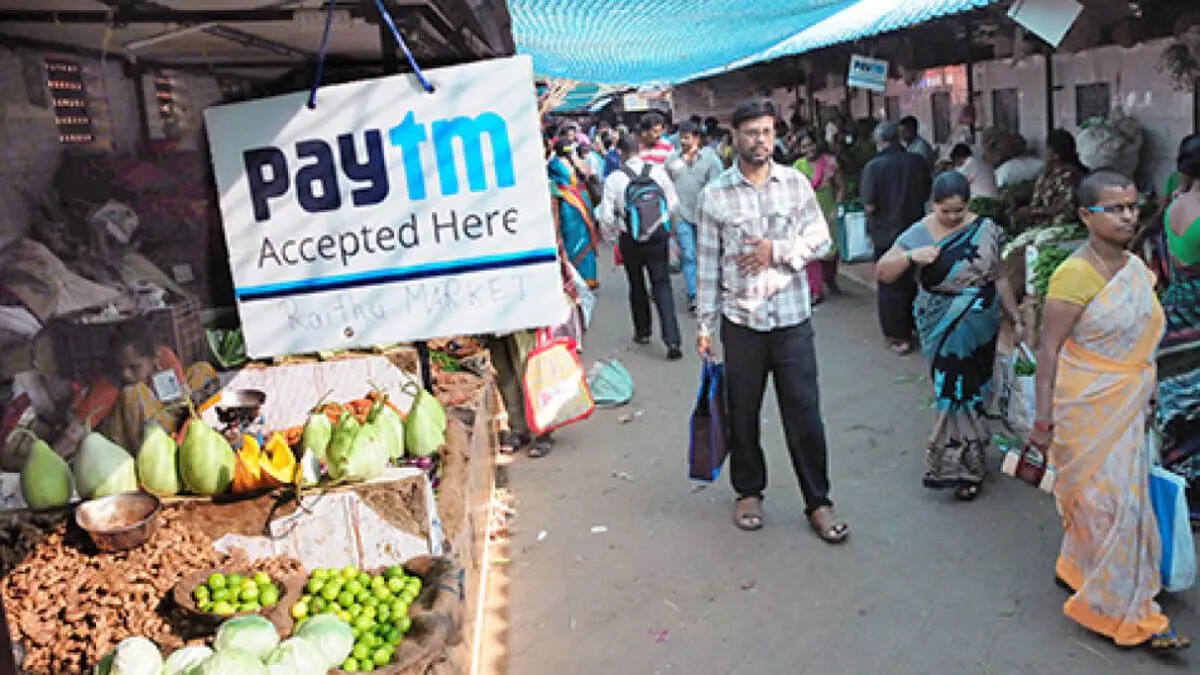
One 97 Communications Ltd (OCL), the parent company of Paytm, has announced fresh capital infusion worth ₹455 crore into two of its wholly owned subsidiaries—Paytm Money and Paytm Services. According to the company, it will subscribe to a rights issue of equity shares worth ₹300 crore in Paytm Money and ₹155 crore in Paytm Services Private Ltd (PSPL).
Despite the fresh cash injection, OCL’s 100% shareholding in both subsidiaries will remain unchanged. The company expects the transactions to be completed within 30 days, reflecting its urgency to strengthen these business verticals.
Credits: Upstox
Paytm Money: Losing Ground in a Crowded Market
Paytm Money, which houses the group’s broking and wealth management arm, has been struggling to keep pace with rivals over the past 18 months. The broking sector in India has seen an aggressive influx of discount brokers and new-age fintech platforms, intensifying competition for active users.
The firm reported a turnover of ₹173 crore in FY25, an 11% decline from ₹194 crore in FY24. This underperformance highlights the urgency of OCL’s move to recapitalize and re-energize Paytm Money. With fresh capital, the subsidiary could ramp up tech innovation, improve customer retention, and expand its product portfolio in investment services—critical steps if it wants to compete against players like Zerodha, Groww, and Upstox.
Paytm Services: The Manpower Engine
Paytm Services Private Ltd (PSPL), on the other hand, acts as a manpower and support services provider for the group. Unlike Paytm Money, PSPL has been relatively steady, posting a turnover of ₹252 crore in FY25. The ₹155 crore infusion will help it scale operational efficiency and continue supporting Paytm’s growing ecosystem.
With Paytm diversifying its verticals—ranging from payments to lending and insurance distribution—PSPL plays a critical role in ensuring human capital and service delivery keep pace with its expansion.
First Games: Regulatory Blow to Real-Money Gaming
While Paytm is shoring up its core businesses, its gaming venture has hit a major roadblock. Paytm First Games, a joint venture, has discontinued its real-money gaming (RMG) business following India’s new legislation banning such formats.
The company said First Games will now focus only on social and casual games that comply with the updated laws. Importantly, Paytm clarified that First Games contributes less than 1% to OCL’s consolidated profit or loss, and the carrying value of its investment is nil as of June 30, 2025.
However, there remains uncertainty. Paytm has an exposure of about ₹200 crore to First Games, and it is unclear how the ban will affect the entity’s ability to repay this loan. This could emerge as a potential risk if the gaming arm struggles to generate meaningful revenue in its restructured form.
A Quarter of Firsts: Profitability and Growth
Despite the challenges, Paytm has something to celebrate. In the June quarter, the Noida-based fintech major reported its first-ever operational net profit of ₹123 crore. This was driven by strong momentum in its lending business and improved cost efficiency, with overall expenses falling 19% year-on-year.
Revenue for the quarter surged 28% to ₹1,918 crore, while EBITDA turned positive at ₹72 crore, marking a significant financial turnaround for a company that has long faced scrutiny over its losses and sustainability.
The Bigger Picture
The dual strategy of investing in underperforming subsidiaries while exiting high-risk businesses paints a clear picture of Paytm’s current priorities. With regulators tightening the leash around gaming and fintech practices, OCL appears to be focusing on areas where it sees both compliance certainty and long-term growth—broking, wealth management, lending, and manpower services.
If Paytm Money can leverage the ₹300 crore lifeline to revive user engagement and grow assets under management, and if Paytm Services continues to bolster operational efficiency, the group could emerge more resilient. On the flip side, the uncertainty surrounding First Games’ ₹200 crore loan exposure could pose a challenge in the near term.
Credits: Yourstory
Conclusion
As Paytm charts its next growth phase, its decisions signal a pragmatic pivot—cutting down risky bets, doubling down on regulated segments, and demonstrating operational profitability. With competition fierce and regulations evolving, the road ahead may not be easy, but the June quarter’s profit milestone suggests that Paytm is finally learning to balance growth with discipline.