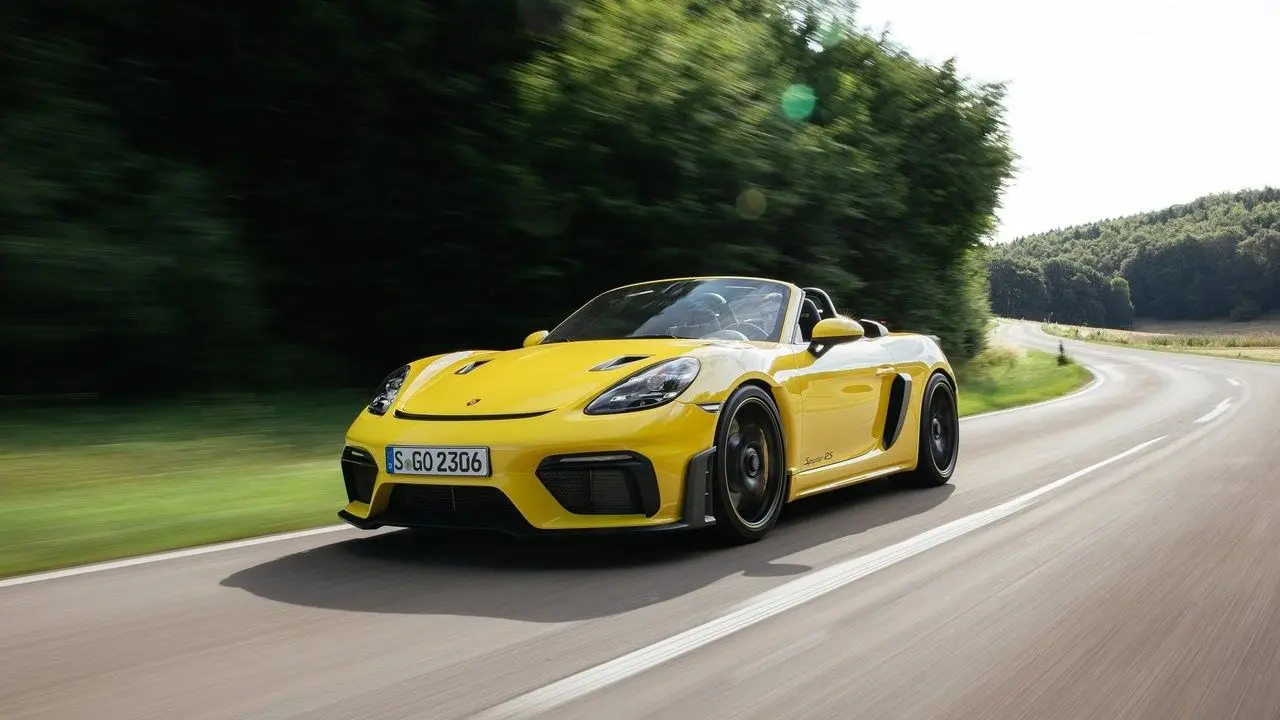
Porsche raised eyebrows back in 2022 when it pledged to phase out combustion engines in its 718 lineup, with the next-generation Boxster and Cayman announced as fully electric. Fast forward to 2025, and the German automaker has quietly hit the brakes on that plan. In its latest strategic realignment, Porsche confirmed that the upcoming 718 range will still feature pure internal combustion engines, though with a caveat: only the top-tier variants will retain gasoline power.
The ICE Twist
What exactly qualifies as “top versions” remains a mystery. Industry insiders speculate it could mean RS-badged models or similar high-performance trims, effectively making the gas-powered 718 a halo product. In an unusual turn for the market, combustion variants may actually cost more than their EV siblings, flipping the traditional pricing hierarchy on its head.
For enthusiasts, this is welcome news. Rather than a hybrid compromise, Porsche is committing to delivering a traditional ICE driving experience, ensuring the sound, character, and feel of the mid-engined sports car aren’t lost.
Platform Puzzle
The decision raises technical and financial questions. The next 718 was initially conceived as an EV-only model, which means engineering challenges lie ahead. If the ICE and EV variants share a platform, Porsche would face costly retooling. Alternatively, the brand may choose to update the existing MMB hardware, first introduced in 2016 with the 982 series.
Developing a completely new platform seems unlikely given the shrinking market for combustion-powered two-seaters. Yet, Porsche’s willingness to absorb the added costs shows just how critical the 718 remains to its brand identity.
A Pause Between Generations
There’s a catch: the current-generation 718 bows out of production next month, and the next ICE Boxster and Cayman aren’t due until near the end of the decade. That means a gap in availability—something Porsche loyalists will have to weather before the reborn models arrive.
Wider Product Roadmap
Porsche’s change of heart isn’t limited to the 718. The brand is carefully recalibrating its entire lineup to balance market demand with electrification goals. Highlights include:
-
Macan Replacement (2028): A gas-powered crossover with a plug-in hybrid option, replacing the first-gen Macan.
-
Electric Cayenne: Still on track, though combustion versions of the Cayenne and Panamera will continue well into the 2030s.
-
Three-Row “Prestige” SUV: Initially planned as EV-only, it will now launch first as ICE and PHEV, with a full-electric model arriving later.
-
911: The brand’s crown jewel remains untouched. Full electrification is off the table for this decade, but hybridization is expected to spread beyond the GTS and Turbo S trims.
V-8 Stays, Supercar Waits
One reassurance for traditionalists: Porsche has confirmed its V-8 engine isn’t going anywhere. Both Cayenne and Panamera will carry it proudly into the next decade. What’s missing, however, is a halo supercar. The much-hyped Mission X concept remains uncommitted, as Porsche avoids risky all-electric flagships in a market still hesitant to fully embrace EVs.
Enthusiasts Get a Win
Porsche’s revised strategy reflects a broader industry shift, as demand for EVs softens and carmakers hedge their bets with combustion and hybrid offerings. For driving purists, though, the takeaway is clear: the flat-six soundtrack of the Boxster and Cayman will live on