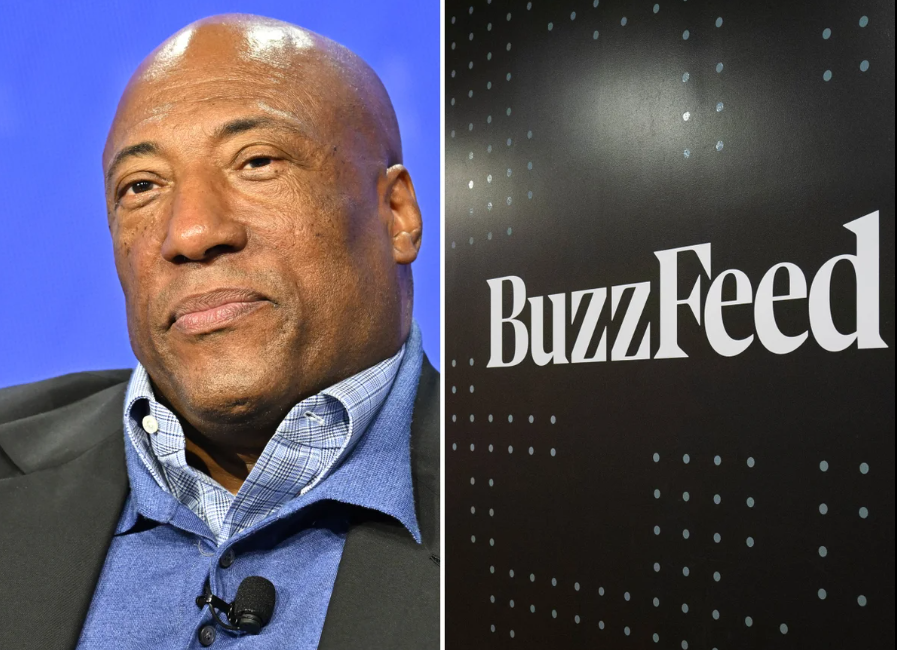
The turbulent evolution of digital media has reached another sobering milestone. For over a decade, viral publishing pioneers built massive audiences on social media platforms, leveraging listicles, trending videos, and digital newsrooms to attract venture capital and achieve public market listings. However, shifting social algorithms, declining advertising yields, and heavy debt loads have forced a fundamental reckoning. Two months after media mogul Byron Allen acquired a controlling interest in the company, a massive round of BuzzFeed layoffs Byron Allen acquisition restructuring has eliminated over a third of the digital publisher’s remaining workforce.
According to a regulatory filing with the Securities and Exchange Commission (SEC) on July 27, 2026, BuzzFeed is cutting approximately 35% of its staff and dedicated contractors. The headcount reduction affects roughly 180 employees across the primary BuzzFeed platform, news portal HuffPost, recipe network Tasty, and BuzzFeed Studios. The strategic move marks the first major operational overhaul executed under Allen’s ownership as the newly appointed Chief Executive Officer attempts to stem years of steep financial losses.
1. The 35% Workforce Reduction: Scope and Operational Impact
The decision to eliminate roughly 180 positions follows a decade of gradual downsizing. At its peak, BuzzFeed employed thousands of journalists, creators, and media strategists globally. However, after shuttering BuzzFeed News in 2023 and executing successive rounds of buyouts, the company’s workforce had contracted to approximately 510 full-time employees prior to this week’s announcement.
In an internal management memorandum sent to staff, leadership stated that while the company had actively managed operational expenses for several months, deeper cuts were unavoidable:
“We’ve been actively managing costs for some time, working through scenarios to save as many jobs as possible. Unfortunately, the elimination of certain roles is still required to put our business on a path to profitable and sustainable growth.” BuzzFeed Management Internal Memo
The cuts impact every core division within the enterprise, including editorial operations at HuffPost, production teams at Tasty, and digital entertainment development at BuzzFeed Studios.
2. From Founder Mode to Turnaround Strategy: Peretti to Allen
The restructuring comes on the heels of a historic shift in corporate governance. In May 2026, Byron Allen’s family office completed a $120 million acquisition to secure a 52% controlling stake in BuzzFeed, Inc. As part of the transaction, founder Jonah Peretti stepped down after 20 years as Chief Executive Officer, transitioning to lead Branch Office a specialized subsidiary focused on artificial intelligence applications, interactive games, and automated content frameworks. The takeover was precipitated by severe liquidity challenges. In early 2026, BuzzFeed warned investors of substantial doubt regarding its ability to continue as a going concern, burdened by $58.4 million in legacy debt and a 2025 net loss of $57.3 million. Allen, who also heads Allen Media Group, assumed the role of Chairman and CEO with a mandate to stabilize the balance sheet and restructure operating expenses.
3. Structural Comparison: The Decline of First-Wave Digital Publishers
BuzzFeed’s trajectory reflects broader economic pressures impacting digital-native media outlets that emerged during the 2010s.
Historical Transformation of First-Wave Digital Publishers
| Operating Metric | Peak Growth Era (2018–2021) | Post-Restructuring Reality (2026) |
| Market Valuation | ~$1.5 Billion (2021 SPAC Listing) | $120 Million Controlling Buyout |
| Primary Audience Engine | Facebook/Social Media Referral Traffic | Direct Apps, Search, & AI Integration |
| Workforce Footprint | Over 1,700 Global Staff | Sub-350 Full-Time Employees |
| Operational Priority | Rapid Traffic Expansion & VC Funding | Cash Flow Positivity & Expense Reduction |
The Horizon for Digital Media
The restructuring executed following the BuzzFeed layoffs Byron Allen acquisition underscores a definitive end to the venture-backed digital publishing model. In an era dominated by short-form video algorithms, generative AI search summaries, and changing advertiser preferences, digital publishers can no longer rely purely on high-volume web traffic.
As Byron Allen reorganizes BuzzFeed into streamlined divisions focused on studios, AI tech assets, and core media brands, the company’s survival hinges on achieving sustained profitability proving whether legacy digital publishers can adapt to the modern media landscape.