
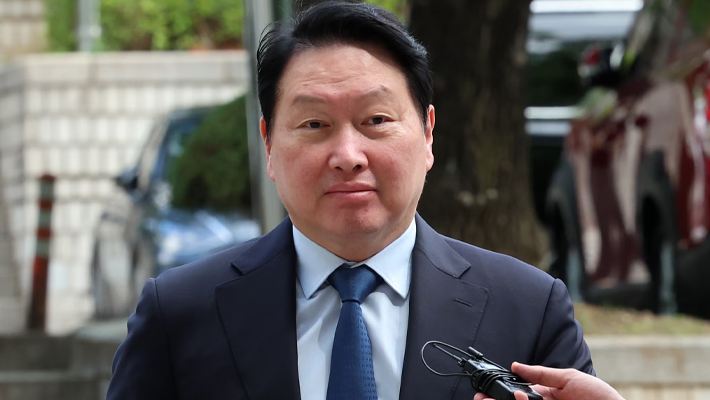
Chey Tae‑won, chairman of South Korean tech giant SK Group, has been ordered to pay his ex‑wife Roh Soh‑yeong 944 billion won, about $644 million, in one of the country’s biggest divorce settlements, widely called the “divorce of the century”.
Below is a full, reader‑friendly explainer in the style you requested.
A South Korean appeals court has ruled that Chey Tae‑won must pay his former wife Roh Soh‑yeong 944 billion won in cash. That is roughly $644 million or £483 million at current exchange rates.
The case has become a national story. It mixes money, politics and technology. Local media describe it as the “divorce of the century” because of the size of the payout and the public status of both families.
Who are the two sides?
Chey Tae‑won is the chairman of SK Group, one of South Korea’s biggest conglomerates. SK Group controls SK Hynix, a major global chipmaker that supplies memory and other semiconductors used in artificial intelligence systems and data centres.
Roh Soh‑yeong is the head of Art Center Nabi in Seoul, a well‑known digital art and media institution. She is also the daughter of former South Korean president Roh Tae‑woo. This link to a former head of state has added political interest to the case.
The couple married in 1988 and were part of South Korea’s business and political elite for decades. They have three children together.
How the marriage broke down of Chey Tae‑won
The marriage effectively fell apart after Chey admitted to having a child with another woman. In 2015, he publicly acknowledged the affair and the child, which led Roh to seek divorce and a division of property.
From that point, the dispute moved into the courts. What might have been a private matter became a long legal battle over how to divide a fortune built around a family‑run business group, known in Korea as a chaebol.
The latest ruling: 944 billion won
On 24 July 2026, the Seoul High Court issued its latest ruling. It ordered Chey to pay Roh 944 billion won as her share of marital assets. In simple terms, the court decided that Roh should receive one‑third of the couple’s marital property, while Chey keeps two‑thirds.
The judges said Roh had helped preserve and increase the family’s wealth during the marriage. They recognised both her financial and non‑financial contributions, including her role in social and cultural circles that supported SK’s standing.
Importantly, the court ordered that the settlement be paid in cash, not in shares. It argued that Chey’s stake in SK Group is central to his control of the conglomerate, and transferring stock to Roh could disrupt that control.
Why the amount changed from $1 billion
This is not the first time a court has tried to settle the dispute. In 2024, the Seoul High Court ordered Chey to pay Roh 1.38 trillion won, close to $1 billion, in what was then the largest divorce settlement in South Korean history.
In that earlier ruling, the court treated Chey’s shares in SK Inc, the group’s holding company, as joint property. It estimated his total wealth at around 4 trillion won and awarded Roh about 35 per cent of his assets.
Chey appealed to the Supreme Court. In 2025, the Supreme Court partly overturned the 1.38 trillion won award. It sent the case back to the High Court and told it to review which assets were marital and how they should be valued.
One key point was the treatment of “political funds” linked to Roh’s father, former president Roh Tae‑woo. The Supreme Court ruled that controversial funds tied to his political activities could not be counted as marital property. That reduced the pool of assets the court could divide between Chey and Roh.
After this guidance, the High Court recalculated the marital estate. The new figure of 944 billion won reflects that narrower definition of marital assets and a smaller share for Roh.
What counts as marital assets in the case of Chey Tae‑won
The central legal question is simple: which parts of Chey’s fortune are considered marital assets, and which are his personal or legacy holdings?
The courts have looked at several elements:
- Shares in SK Inc and other group companies, including SK Hynix.
- Other financial assets built up during the marriage.
- Property and investments linked to the couple as a household.
The earlier High Court ruling in 2024 took an expansive view and treated most of SK’s holdings as joint property. The Supreme Court’s intervention forced a more cautious approach, especially around assets with political or legacy ties.
In the 2026 decision, the High Court still treated key SK shares as marital assets, but it applied stricter limits. It then awarded Roh a one‑third share of the marital portion, rather than the larger share she had sought.
Why this is called the “divorce of the century”
The case attracts such intense coverage for several reasons.
First, the size of the payout is unprecedented. The 944 billion won award is now the largest divorce asset division ever ordered by a South Korean court. Earlier figures of 1.38 trillion won were even higher before being cut back.
Second, both families are prominent. Chey leads a group that spans semiconductors, energy, telecommunications and AI. Roh comes from a presidential family and runs a respected art centre. Their split combines corporate power with political history.
Third, the case shines a light on how South Korean law treats chaebol wealth in divorce. Many of these groups are controlled through complex share structures and cross‑holdings. When a marriage ends, courts must decide how far a spouse can claim a share of corporate stakes that underpin national champions like SK Hynix.
How the courts described Roh’s contribution
One argument in the case was whether Roh’s contribution to the marriage justified a significant share of Chey’s wealth.
The High Court found that she did contribute to the growth and preservation of the family fortune. It pointed to her role in family life, social duties and support for Chey’s position as a business leader.
Courts in South Korea, as in many other countries, now recognise non‑financial contributions to a marriage. These can include managing the household, raising children and supporting a spouse’s career and public image. In Roh’s case, the court accepted that such contributions helped Chey build and maintain his business empire, even if she did not directly manage SK Group.
This reasoning underpins the one‑third share, though it stops short of the almost half share Roh had argued for earlier.
The legal journey so far of Chey Tae‑won
The dispute has passed through several stages:
- 2020–2022: Lower courts granted Roh a much smaller settlement of around 66.5 billion won and limited alimony. They did not treat Chey’s major SK holdings as joint property.
- May 2024: The Seoul High Court overturned the lower decision and ordered Chey to pay 1.38 trillion won, including recognition of SK Inc shares as marital assets, plus 2 billion won in alimony.
- October 2025: The Supreme Court partly overturned the High Court’s ruling, especially on the scale of the property division, and sent the case back for review while keeping the 2 billion won alimony in place.
- July 2026: The High Court issued the new order for 944 billion won, cutting the settlement and tightening its definition of marital assets.
- This path explains why the numbers have shifted over time and why media coverage has followed each stage closely.
Is this the final word?
Despite the scale of the latest ruling, the case may not be over.
Chey and Roh can still appeal the High Court’s decision back to the Supreme Court. Legal experts expect at least some further challenges, given the sums involved and the wider questions about asset division in chaebol families.
Until the Supreme Court either confirms or modifies the payout, the settlement remains open to change. That uncertainty is one reason investors and commentators continue to monitor developments closely.
Why this matters beyond one couple
This case has wider significance for South Korea and for global observers.
It sets a reference point for how courts may treat corporate stakes as marital assets. It also shows how political legacy funds and business fortunes can intersect in divorce proceedings. The decision will likely influence future cases involving chaebol leaders and their spouses.
For the public, the story highlights changing social expectations. Spouses who have not led companies directly can still claim a significant share of wealth if courts recognise their broader contributions. At the same time, the courts have drawn lines around what counts as marital property when family wealth is tangled with politics and inherited assets.
If you like, I can next turn this into a 1,700‑word, SEO‑ready article with headline options, meta description, subheadings and FAQ, tuned for a British audience and search intent around “SK Group divorce of the century” and “Chey Tae‑won settlement”.