The semiconductor industry in India is at a turning point. Tier-2 cities are quickly becoming the new frontier in semiconductors as traditional hubs like Hyderabad and Bengaluru get closer to saturation and global supply chains deal with geopolitical challenges. Early investors in places like Ahmedabad, Mohali, and Thiruvananthapuram are well-positioned to contribute significantly to India’s semiconductor growth narrative because to government policy incentives, cost advantages, and expanding industrial clusters.
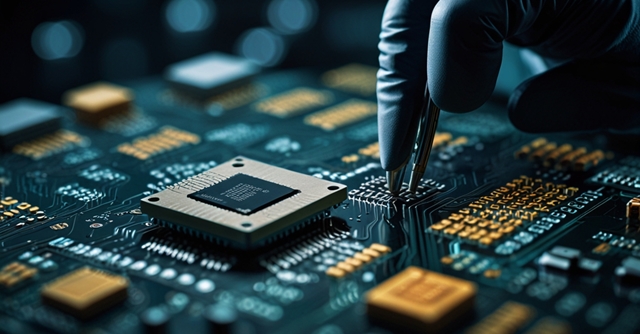
Credits: Techcircle
Policy Push and Cost Arbitrage: A Golden Opportunity for Investors
According to a recent report by Quess Corp Limited titled “The Chip Catalyst: India’s Emerging Semiconductor Ecosystem”, the Indian government’s focused strategy to decentralize semiconductor capabilities is opening up massive opportunities. The report highlights that early investors in Ahmedabad (focused on ATMP – Assembly, Testing, Marking, and Packaging), Mohali (design), and Thiruvananthapuram (embedded systems) will benefit from policy-driven incentives and significant cost arbitrage compared to Tier-1 hubs.
With over-reliance on Bengaluru and Hyderabad showing signs of strain—such as talent shortages and rising costs—companies are now diversifying operations into Tier-2 regions. This shift is not only reducing dependence on saturated markets but also enabling long-term scalability.
India Semiconductor Mission Accelerates Expansion
An important factor in this change is the India Semiconductor Mission (ISM). With a total investment of almost Rs 4,600 crore, the central government has approved four new semiconductor projects: two in Odisha and one each in Andhra Pradesh and Punjab. More than 2,000 skilled jobs are anticipated to be created by these projects.
As of right currently, ten projects totaling Rs 1.6 lakh crore in investments across six states have been sanctioned under the ISM. By strengthening India’s position in the global semiconductor supply chain, the effort seeks to reduce India’s reliance on Taiwan and other uncertain geopolitical areas.
Rising Demand: The New Engines of Growth
According to the analysis, India’s semiconductor industry is expected to develop at a spectacular 13.8% CAGR, which is significantly higher than the global average, from USD 54.3 billion in 2025 to USD 103.5 billion by 2030. Although over 70% of present demand is still met by smartphones, laptops, and industrial systems, new development drivers are changing the face of the sector.
In particular, there is an unprecedented need for advanced processors due to the rise in electric vehicles (EVs), 5G rollouts, and hyperscale data center build-outs. India’s semiconductor business is expected to grow rapidly, with hyperscale capacity expected to increase by more than 75% by 2030 and EVs accounting for about one-third of all new car sales.
Talent Pool: India’s Growing Semiconductor Workforce
India already boasts a robust semiconductor workforce of over 250,000 professionals, with 43,000 new job postings expected in 2024-25. Quess Corp’s report forecasts that this talent pool will expand by 120% to nearly 400,000 by 2030, making India the world’s second-largest semiconductor talent hub after the US.
This growing workforce spans chip design, embedded systems, EDA (Electronic Design Automation) tool development, and ATMP manufacturing. Despite Bengaluru and Hyderabad currently housing over 80% of India’s semiconductor Global Capability Centers (GCCs), the report stresses that diversifying into Tier-2 cities is essential for de-risking and sustainable growth.
Investments Strengthen Tier-2 Clusters
Investments like Micron’s ATMP plant in Gujarat further demonstrate the government and industry’s commitment to building semiconductor capabilities across the value chain. State-level initiatives in Tamil Nadu, Kerala, and Gujarat are accelerating the emergence of Tier-2 cities as serious semiconductor destinations.
These regions are not only attracting new design mandates but also aligning closely with EV and industrial clusters. Supported by robust policy frameworks and Electronic System Design and Manufacturing (ESDM) parks, Tier-2 cities are fast becoming essential pillars of India’s semiconductor roadmap.

Credits: MSN
Conclusion: The Road Ahead
The semiconductor industry in India is changing from being concentrated in Tier-1 cities to becoming more diversified and scalable. India’s ambition to become a worldwide semiconductor powerhouse by 2030 is expected to be greatly aided by Tier-2 cities, which have the support of the government, a growing talent pool, and increasing demand from next-generation technology. As India prepares for the technological future, early investors in this sector should see large long-term returns.