• Send Us A Tip
  • Calling all Tech Writers
  • Advertise
Sunday, June 21, 2026
  • Login
TechStory
  • News
  • Crypto
  • Gadgets
  • Memes
  • Gaming
  • Cars
  • AI
  • Startups
  • Markets
  • How to
No Result
View All Result
  • News
  • Crypto
  • Gadgets
  • Memes
  • Gaming
  • Cars
  • AI
  • Startups
  • Markets
  • How to
No Result
View All Result
TechStory
No Result
View All Result
Home Cars

Rivian subtle about R1T full specs including peak DC charging rate

by Meghana Kandra
December 13, 2021 - Updated On December 14, 2021
in Cars, Electric Vehicles
Reading Time: 2 mins read
0
Rivian subtle about R1T full specs including peak DC charging rate
TwitterWhatsappLinkedin

US Environmental Protection Agency(EPA) test documents showed that Rivian R1T didn’t have any heat pump. Also, the peak DC charging rate also seems to be different than claimed. The documents were posted on Rivian Owner’s Forum and it showed some interesting tidbits about Rivian’s vehicles.
You might also like

How to Increase Gas Mileage: Small Driving Changes That Save Big at the Pump

Honda Recalls Nearly 99,000 Vehicles Over Front Passenger Airbag Sensor Defect

How Long Do Toyota Camrys Last? New Data Shows Why the Sedan Refuses to Quit

Rivian R1T and R1S Lack Heat Pumps, Could Reduce Cold-Weather Range
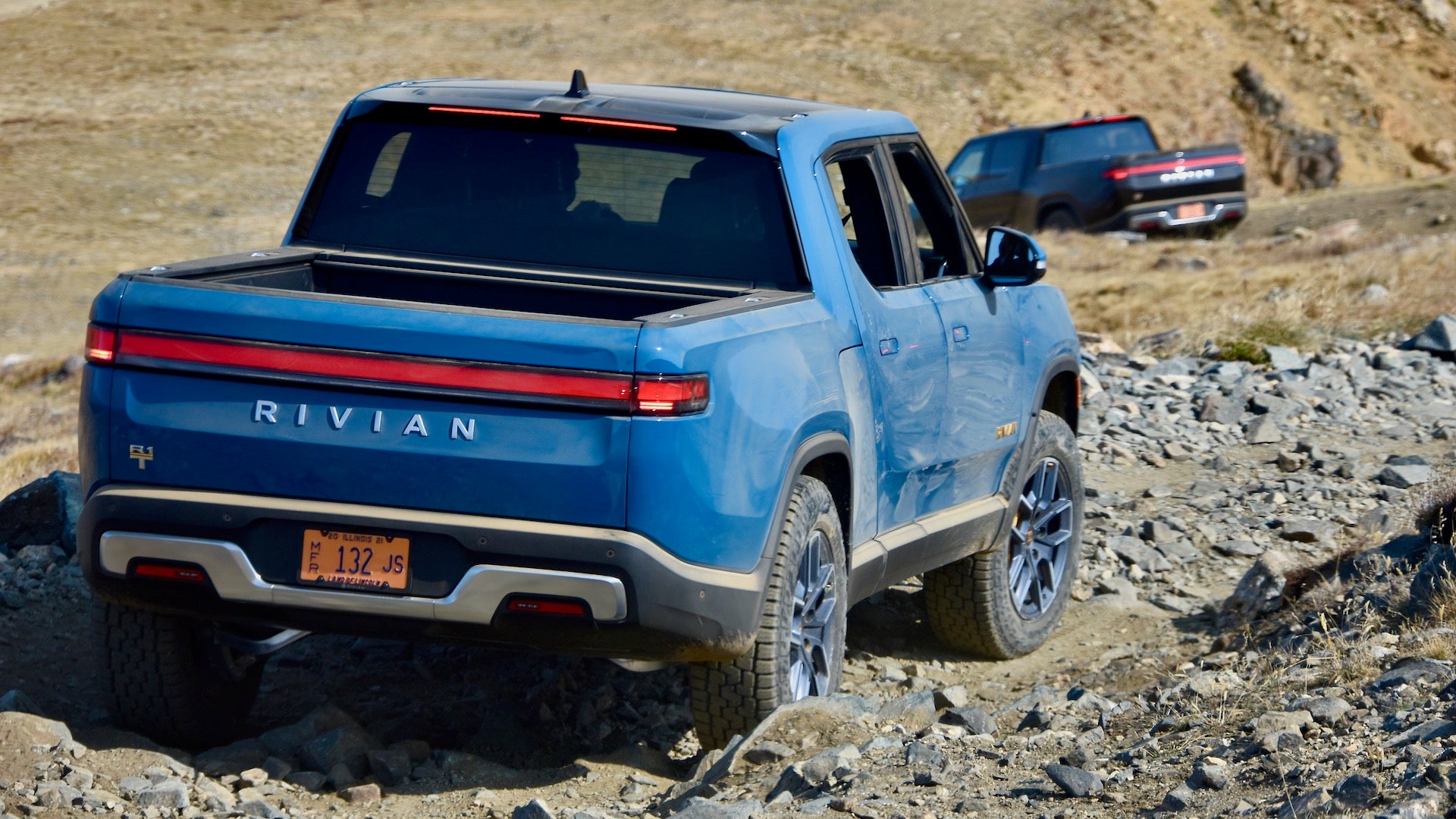
Image credits- The Drive

The numbers show interesting things, the vehicle is equipped with 11.5 kW onboard charging. While the DC fast charging peaks at 210kW. In March the company stated that the vehicles can charge over 210kW and also stated that they target 300kW for future vehicles. There is no point in reaching conclusions because the average value might still be very high. With a battery capacity of 135kWh, the peak values are not the highest.
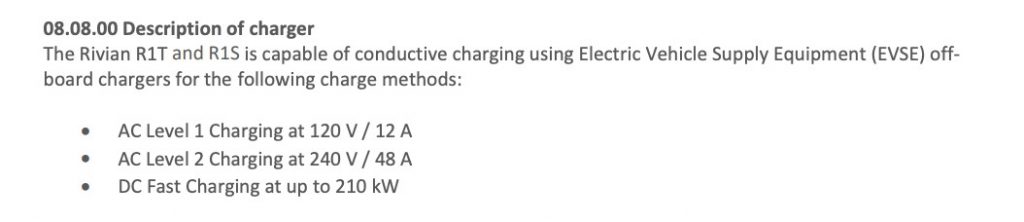
Image credits- Teslarati

Furthermore, there is no heat pump in the vehicles. Where the document stated under heat pump as “N/A”. There are also details about the weight of the vehicle, R1T curb weight is stated to be 6,949 lbs (3,152 kg) and R1S at 6,916 lbs (3,137 kg). The nominal capacity of the battery is  360 Ah and the battery is 135kWh with 9 modules consisting of a total of 7,776 2170-type cylindrical cells. The voltage values range between the values between 216 V and 459 V. As there was some discharge energy of about 125 kWh and 128 kWh, the usable battery capacity could be 5-7.5% lower.

Features

The features as specified in the documents are as below for R1T,

  • Range:
    EPA: 314 miles (505 km)
    400+ miles (644+ km) version (January 2022)
    250+ mile (402+ km) affordable version to follow
  • Battery capacity of about 135 kWh
    9 modules, 2170-type cylindrical cells (7,776), supplied by Samsung SDI
    voltage: 216-459 V; capacity: 360 Ah
  • 0-60 mph (96.5 km/h) in 3.0 seconds
  • quad motor, all-wheel drive
  • on-board charger: 11.5 kW (AC Level 2); up to 25 miles of range per hour of charge
  • DC fast charging: up to 140 miles of range in 20 minutes (up to 210 kW)
  • wading depth: 3+ ft (more than 0.91 m)
  • curb weight: 6,949 lbs (3,152 kg)
  • towing capacity: up to 11,000 lbs (4,990 kg)

However, it should be noted that the specs listed in the EPA test documents are for the 2022 Rivian R1T and R1S specifically. Taking into account that the company has spoken about upgrading its rapid chargers earlier this year. Also, the fact that they talked about the design of the vehicles is being improved on a rapid basis. There is a good chance that succeeding iterations of the flagship all-electric pickup truck and SUV may have improved in the current vehicles. Like the peak charging rates that could stand toe to toe with some of the best in the industry today.

 

Tags: electric vehiclesEnvironmental Protection AgencyRivianRivian R1SRivian R1tUS EVs
Tweet54SendShare15
Previous Post

The Paraguayan government may adopt Bitcoin as a legal tender

Next Post

WIRED: How to Guard Against Smishing Attacks on Your Phone.

Meghana Kandra

Meghana studied PGD in Journalism, open university. She has more than five years of experience in content writing, from creative content development to online journalism. Electric vehicle enthusiast, engineer, and feminist.

Recommended For You

How to Increase Gas Mileage: Small Driving Changes That Save Big at the Pump

by Samir Gautam
June 21, 2026
0
Fuel prices may rise and fall, but one thing stays constant: drivers want to make every litre go further. The good news is that improving gas mileage does not always require buying a new hybrid or changing cars altogether. A few disciplined habits behind the wheel, along with basic maintenance, can make a noticeable difference over time. For most drivers, the biggest gains come from reducing waste. That means less aggressive acceleration, fewer unnecessary trips, correctly inflated tyres and a car that is mechanically healthy. Smooth Driving Uses Less Fuel The quickest way to burn more fuel is to drive as if every traffic light is a starting grid. Hard acceleration, sharp braking and sudden changes in speed force the engine to work harder and consume more petrol. A smoother approach works better. Accelerate gradually, maintain a steady speed where possible and look ahead to anticipate traffic. If a red light is visible in the distance, easing off the accelerator early is usually more efficient than rushing forward and braking hard at the last moment. Speed also matters. As speeds rise, aerodynamic drag increases and the engine needs more energy to keep the vehicle moving. On highways, staying within a sensible cruising range rather than constantly pushing at high speeds can help reduce fuel consumption. Check Tyre Pressure Regularly Tyres are easy to ignore until something goes wrong, but they play a major role in fuel economy. Under-inflated tyres create more rolling resistance, which means the engine has to use more fuel just to move the car forward. Drivers should check tyre pressure at least once a month, preferably when the tyres are cold. The correct pressure is usually listed on the driver-side door frame or in the owner’s manual. It is important not to use the maximum pressure printed on the tyre sidewall as a target. That figure is not necessarily the recommended setting for the vehicle. The US Environmental Protection Agency notes that under-inflation reduces fuel economy, increases tyre wear and adds to emissions. Stop Carrying Extra Weight A car is not a storage room. Heavy items in the boot may seem harmless, but extra weight makes the engine work harder, especially in city traffic where the vehicle is constantly stopping and starting. Clear out unnecessary tools, boxes, sports gear and other items that have been sitting in the car for weeks. Roof racks and cargo boxes can also hurt mileage by increasing aerodynamic drag. If they are not being used, remove them. This is especially relevant for drivers who spend most of their time on highways, where wind resistance becomes a bigger factor. Keep Up With Maintenance A well-maintained vehicle is usually a more fuel-efficient vehicle. Delayed oil changes, worn spark plugs, clogged air filters, dragging brakes and poor wheel alignment can all affect how efficiently a car runs. Following the manufacturer’s service schedule is the safest route. Use the recommended engine oil grade and get warning lights checked instead of ignoring them. A sudden drop in mileage can be an early sign that something needs attention. The EPA advises motorists to follow their vehicle maintenance schedule and use the recommended motor oil to support better fuel efficiency and safer operation. Combine Trips and Avoid Long Idling Short trips can be surprisingly fuel-hungry because the engine has not had enough time to reach its most efficient operating temperature. Combining errands into one planned route can reduce cold starts, unnecessary kilometres and fuel use. Idling is another quiet fuel drain. If you are waiting for an extended period, switching off the engine can be more sensible than leaving it running. Modern cars do not need long warm-up periods before driving. Start, settle for a few seconds and drive gently. The Bottom Line Better gas mileage is less about one miracle trick and more about consistent habits. Drive smoothly, maintain the right tyre pressure, remove excess weight and service the car on time. These small changes may not feel dramatic on a single trip, but over months of commuting, school runs and highway drives, they can add up to real savings.

Fuel prices may rise and fall, but one thing stays constant: drivers want to make every litre go further. The good news is that improving gas mileage does...

Read more

Honda Recalls Nearly 99,000 Vehicles Over Front Passenger Airbag Sensor Defect

by Samir Gautam
June 20, 2026
0
Honda Recalls Nearly 99,000 Vehicles Over Front Passenger Airbag Sensor Defect

Honda is recalling nearly 99,000 vehicles in the United States after identifying a defect in the front passenger seat weight sensor that could affect how airbags deploy in...

Read more

How Long Do Toyota Camrys Last? New Data Shows Why the Sedan Refuses to Quit

by Samir Gautam
June 19, 2026
0
Toyota Camry lifespan guide

For decades, the Toyota Camry has built a reputation that few mainstream sedans can match. While many vehicles begin showing their age after a decade on the road,...

Read more
Next Post
WIRED: How to Guard Against Smishing Attacks on Your Phone.

WIRED: How to Guard Against Smishing Attacks on Your Phone.

Please login to join discussion

Techstory

Tech and Business News from around the world. Follow along for latest in the world of Tech, AI, Crypto, EVs, Business Personalities and more.
reach us at info@techstory.in

Advertise With Us

Reach out at - info@techstory.in

Aviator Game India 2026

BROWSE BY TAG

#Crypto #howto 2024 acquisition AI amazon Apple Artificial Intelligence bitcoin Business China cryptocurrency e-commerce electric vehicles Elon Musk Ethereum facebook funding Gaming Google India Instagram Investment ios iPhone IPO Market Markets Meta Microsoft News OpenAI samsung Social Media SpaceX startup startups tech technology Tesla TikTok trend trending twitter US

© 2025 Techstory.in

No Result
View All Result
  • News
  • Crypto
  • Gadgets
  • Memes
  • Gaming
  • Cars
  • AI
  • Startups
  • Markets
  • How to

© 2025 Techstory.in

Welcome Back!

Login to your account below

Forgotten Password?

Retrieve your password

Please enter your username or email address to reset your password.

Log In
Are you sure want to unlock this post?
Unlock left : 0
Are you sure want to cancel subscription?