Sam Altman isn’t holding back when it comes to defending OpenAI’s ambitious financial trajectory. The CEO appeared on the Bg2 Pod this week with a bold message for skeptics: the company’s revenue is significantly higher than publicly reported figures, and he’d love nothing more than to watch short-sellers lose money betting against OpenAI’s success.
During a wide-ranging conversation with host Brad Gerstner, founder of Altimeter Capital, Altman addressed questions about how OpenAI could commit to $1.4 trillion in financial obligations when annual revenue has been reported at around $13 billion.
“We’re doing well more revenue than that,” Altman responded without hesitation, suggesting the actual figures are considerably higher than what’s been circulating in the media. The timing of these comments is most interesting in light of a recent spate of massive infrastructure deals by OpenAI.
The company has announced partnerships with tech giants, including Nvidia, Broadcom, and Oracle, as it races to build out computing capacity to support the growth of its artificial intelligence operations. That expansion comes as other major players in the AI space, Amazon, Alphabet, Meta, and Microsoft, are collectively spending hundreds of billions of dollars annually on capital expenditures.
But Altman did not stop at correcting revenue figures. He went on the offensive against critics who question OpenAI’s long-term viability, with particular attention to those concerned about the company’s mounting losses.
OpenAI’s $12 Billion Loss Fuels Doubts, Sam Altman Welcomes Short-Sellers Amid Bold Growth Bet
Microsoft’s latest quarterly results included a $4 billion charge, suggesting OpenAI lost approximately $12 billion in one quarter, raising eyebrows about the sustainability of the company’s business model.
“We do plan for revenue to grow steeply. Revenue is growing steeply,” Altman explained. “We are taking a forward bet that it’s going to continue to grow and that not only will ChatGPT keep growing, but we will be able to become one of the important AI clouds, that our consumer device business will be a significant and important thing, that AI that can automate science will create huge value.”
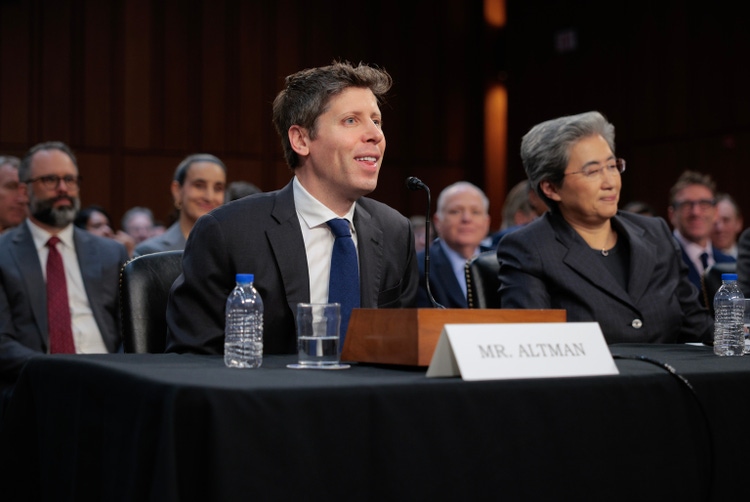
The OpenAI chief executive made it clear he welcomes the scrutiny, even expressing a rare enthusiasm for what a public listing might offer: the chance to prove doubters wrong in a very tangible way.
“I would love to tell them they could just short the stock, and I would love to see them get burned on that,” Altman said, referring to potential short-sellers who might bet against the company once it goes public.
Despite his bullish outlook, Altman did acknowledge the inherent risks in OpenAI’s aggressive growth strategy. He noted that the company’s revenue projections depend heavily on securing adequate computing capacity, a challenge that has become increasingly critical as demand for AI services explodes. If OpenAI fails to obtain the necessary infrastructure, revenue could fall short of forecasts.
However, Microsoft CEO Satya Nadella, who joined the podcast conversation, offered strong support for OpenAI’s execution. Microsoft has been one of OpenAI’s most significant investors and partners.
“Everyone talks about all the success and the usage and what have you,” Nadella said. “But even I’d say all up, the business execution has been just pretty unbelievable.”
Sam Altman Aims for 2027 Amidst Deep Investment Losses
Perhaps the most eyebrow-raising was when Gerstner said revenue would exceed $100 billion annually by 2028 or 2029, which lines up with previous New York Times reports that said OpenAI internally projected a $100 billion figure by 2029. Altman’s response was characteristically ambitious: “How about ’27?”
That interjection suggests OpenAI believes it can reach the $100 billion revenue milestone a full two years earlier than previously discussed, an acceleration that would represent one of the fastest growth trajectories in corporate history.
The conversation speaks to the tension at the heart of OpenAI’s position right now: It raises tens of billions from investors while bringing in great revenue, and it is still recording losses as it spends aggressively on infrastructure, research, and development.
Altman has been pretty clear about these losses, making many statements that they are necessary investments in building a foundation to lead in the AI marketplace for years to come.
OpenAI did not immediately respond to requests for comment on the specific revenue figures and loss projections discussed in the podcast.
As the AI race intensifies and competition heats up, Altman’s combative confidence signals that OpenAI intends to maintain its position as a leader in the space regardless of what the doubters say.