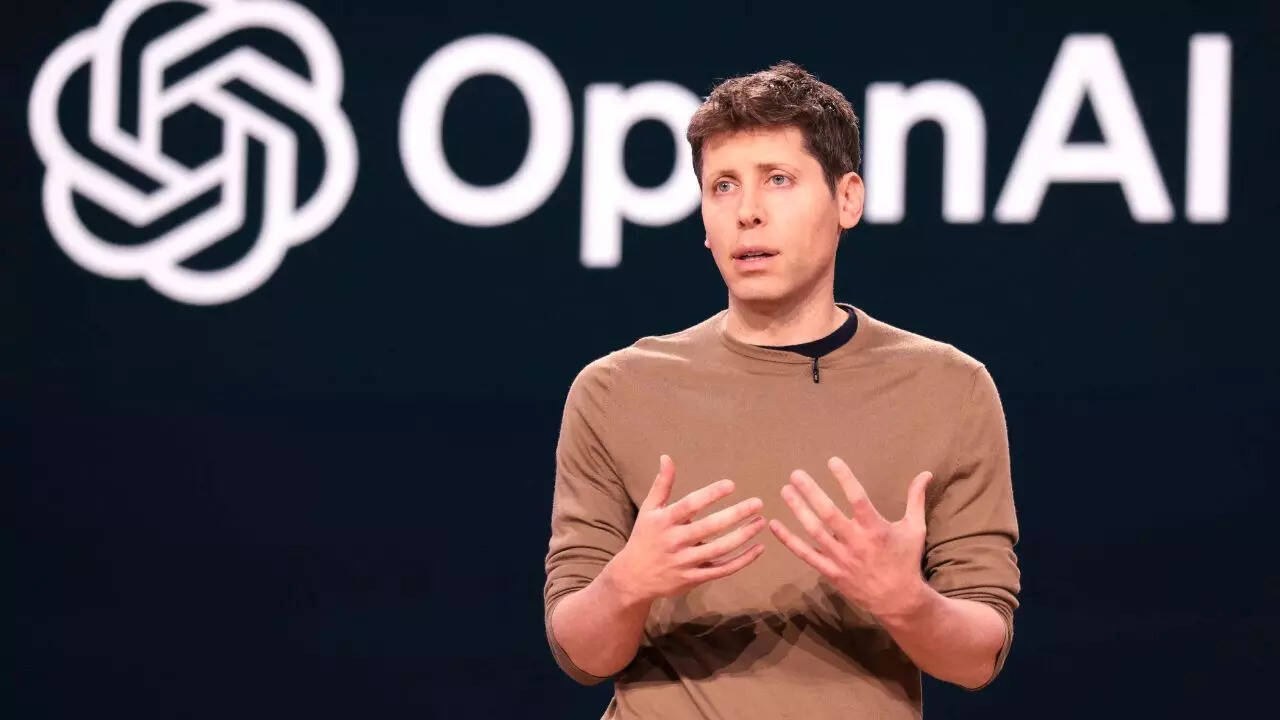
You know it’s going to be an interesting day when an AI executive starts redefining what “real work” means while talking about how their technology could make millions of jobs disappear. This time, it’s OpenAI CEO Sam Altman, again, who sparked debate with his comments at OpenAI’s DevDay conference earlier this week.
During an interview with Rowan Cheung, the founder of The Rundown AI, Altman was asked about a familiar and uncomfortable topic: the massive wave of job losses that artificial intelligence could trigger before new roles emerge. Instead of offering clarity or comfort, Altman went philosophical.
He revisited an analogy that’s become one of his favorites: the farmer. Cheung began by referencing how a farmer fifty years ago could never have imagined the internet creating a billion new jobs.
His point was simple, AI might cause disruption now, but eventually, it will create new opportunities we can’t yet picture.
Altman ran with that idea, but took it in a direction no one quite expected. He suggested that maybe, just maybe, the kind of work many people do today isn’t “real work” at all.
“The thing about that farmer,” Sam Altman said, “is not only that they wouldn’t believe you, but they very likely would look at what you do and I do and say, ‘that’s not real work.’”
He added that the thought makes him “a little less worried” about job loss, though it also gives him “other reasons to worry.”
Sam Altman on AI, Farming, and the Future of ‘Real Work’
Sam Altman went on to explain that farming is “real work” because it directly sustains life, “you’re making food, you’re keeping people alive.” In contrast, he suggested that many modern jobs might look like “playing a game to fill your time.”
And perhaps, he implied, future generations might view our jobs the same way less as essential labor and more as elaborate busywork.
“It’s very possible,” Altman continued, “that if we could see those jobs of the future, we’d think maybe our jobs were not as real as a farmer’s job, but it’s a lot more real than this game you’re playing to entertain yourself.”
If you’re scratching your head, you’re not alone. The logic seems to be that every generation redefines what “work” means, and therefore, we shouldn’t panic about AI replacing human roles.
But Altman’s framing also comes across as oddly detached, especially for someone whose company is leading the charge in automating human labor.
Critics have long pointed out that tech leaders often talk about “job transformation” in vague or overly optimistic terms. And Altman, despite being one of the most influential voices in AI, hasn’t offered much concrete detail on how displaced workers will actually find new opportunities.
His comment that he’s “willing to bet on human drives being what they are” doesn’t exactly sound like a plan.
“I think we’ll find plenty of things to do,” he said confidently. But for many workers, “finding things to do” isn’t the problem, finding things that pay the bills is.
Sam Altman’s Optimism vs. the Reality of Job Displacement
It’s worth remembering that this isn’t the first time Altman has brushed off concerns about AI-driven unemployment. In past interviews, he’s argued that technological revolutions have always created new types of work, from the industrial age to the internet era.
But critics say this time is different. The pace and scope of AI automation could transform white-collar sectors just as dramatically as machines reshaped factory floors a century ago.
And while comparing AI’s rise to the invention of the internet might sound comforting, it overlooks one key difference: the internet created whole new industries before it began replacing old ones.
AI, by contrast, is already displacing workers in areas like customer service, content writing, and software development, long before we know what might replace those roles.
Altman’s remarks highlight a growing tension between optimism and realism in the AI debate. On one hand, there’s the vision of a world where people are freed from dull or repetitive tasks.
Why Philosophical Comfort Rings Hollow for Workers Facing Layoffs?
On the other hand, there’s the immediate reality of workers facing layoffs, shrinking opportunities, and uncertainty about what “real work” will look like in a few years.
Perhaps Altman’s philosophical detour was meant to reassure us that every generation adapts to new definitions of productivity. But for those watching automation unfold in real time, his words may feel more like a dodge than a comfort.
Because while it’s easy to muse about “human drives” and “future jobs,” the truth is that the people losing their livelihoods to AI today don’t have the luxury of waiting decades for new opportunities to appear.
Until leaders like Altman can offer more than analogies and thought experiments, the question remains less about what counts as “real work”, and more about who gets left behind when that definition changes.