Kolkata, September 11, 2025 – SnapE Cabs, a leading electric mobility company in India, has successfully raised $2.5 million in a Bridge Deck funding round led by Inflection Point Ventures (IPV), one of India’s largest angel investing platforms. The fresh capital will accelerate SnapE’s national expansion, with a strong focus on scaling operations in the Delhi-NCR region, leasing EV cars, and strengthening product development and technological infrastructure.
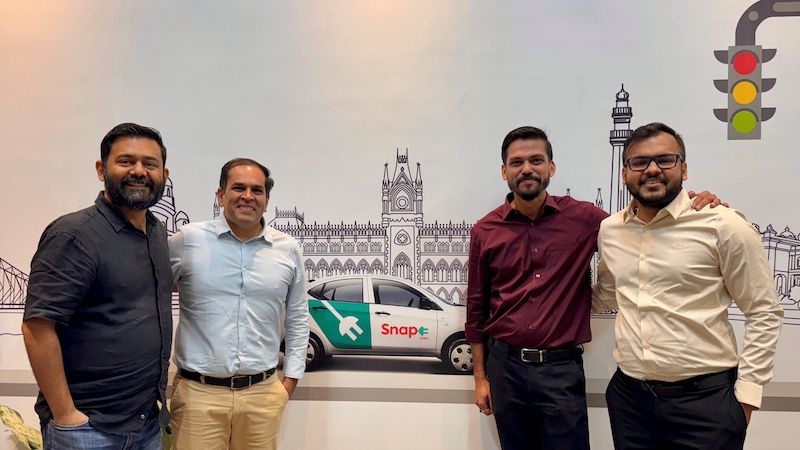
Credits: EVreporter
EV Mobility with a Clear Vision
Founded by Mayank Bindal, an industry veteran with over 15 years of telecom experience, SnapE Cabs is on a mission to build India’s fully integrated electric mobility ecosystem. The company stands out by offering a unique “EV as a Service” model that combines a 100% electric fleet with a built-in charging network and exclusive hub of CPO partners. This strategy not only promotes cleaner transportation but also ensures profitable scalability.
“Our model is not about chasing growth metrics blindly. Instead, it focuses on solving a real market supply gap by empowering demand aggregators and providing supply-led infrastructure,” explains Mayank Bindal, Founder and CEO of SnapE Cabs. “With IPV’s backing, we’ve already deployed 200 electric cabs in Delhi in the last three months, achieving profitability from day one.”
Impressive Growth Metrics
SnapE Cabs’ rapid growth has been backed by strong financial fundamentals and clear market demand. As of today, the company operates over 1,100 EV cabs, doubling its fleet from around 500 just a year ago. Its integrated EV charging network plays a key role in enabling this expansion, allowing SnapE to maintain operational efficiency while keeping costs significantly lower than traditional ICE (Internal Combustion Engine) cabs.
Key achievements so far include:
-
3.2 million rides completed
-
1.3 million app downloads
-
1.2 million paying users
-
Gross revenue of ₹120 crore
The company turned EBITDA positive in January 2025, further strengthening its position as a sustainable player in a market often associated with heavy cash burn models.
Strategic Partnership Fuels Delhi Expansion
One of SnapE Cabs’ most significant moves in recent months was its strategic partnership with Rapido, a prominent ride-hailing platform. Through this collaboration, SnapE deployed 200 EV cabs in Delhi in just three months, with a plan to roll out 5,000 EV cabs across India over the next two years. The partnership provides a strong distribution channel, allowing SnapE to tap into the growing demand for ride-hailing services while pushing forward India’s EV adoption.
According to Mitesh Shah, Co-Founder of IPV, “The global demand for sustainable mobility is growing, and SnapE Cabs addresses a critical need in India by offering both clean technology and a sustainable business model. Their approach of achieving profitability without excessive subsidies or cash burn is the future of EV mobility.”
A Market Poised for Growth
India’s EV market is booming, expected to reach $18.3 billion by 2029, growing at a CAGR of 28.5%. By 2030, EVs are projected to account for over 40% of India’s $100 billion auto market, while electric ride-hailing cabs will represent about 7% of the market. With around 57% of Indian consumers now preferring ride-hailing over personal vehicles, the timing couldn’t be better for SnapE’s expansion.

Credits: Indian Startup News
The Road Ahead
SnapE Cabs’ strategy stands apart in a competitive landscape by focusing on low customer acquisition cost (0.8% of revenue) and strong retention (up to 90% of riders retained). Its low operating costs (60–70% cheaper than ICE cabs) allow the company to offer competitive prices while maintaining healthy margins.
Mayank Bindal adds, “This funding round isn’t about rapid scaling for the sake of metrics. It’s about building a sustainable backbone that empowers India’s EV mobility vision for 2030 – clean, scalable, and built on fundamentals.”
With a strong foundation, a profitable model, and key strategic partnerships, SnapE Cabs is well-positioned to lead India’s transition towards sustainable urban mobility.