The going has just gotten tougher for SoftBank Chief Executive Officer Masayoshi Son as the Japanese giant tries to raise $22.5 billion by the end of the year to meet its obligations to AI firm partner, OpenAI. SoftBank has only a few days left to the end of 2024 as it ponders various financial options to raise such a huge amount of money.
SoftBank is among OpenAI’s major funders in its massive 500 billion Stargate datacenter plan that generated publicity in an announcement at the White House almost a year ago.
The infrastructure development project, in collaboration with Oracle Corporation and MGX, an investment firm based in Abu Dhabi, seeks to build a global network of GPU-enabled datacenters in the USA and other parts of the world to facilitate OpenAI’s next models toward developing AGI.
As reported by Reuters, Son has several possibilities lined up to generate the required funding. Son’s biggest leverage is in the unused margin loans that can potentially generate about $11.5 billion based on SoftBank’s majority stake in British chip design leader Arm Holdings.
Additionally, it also has a four percent stake in T-Mobile valued at around $11 billion, besides an untapped cash position of around $27 billion at the end of September.
Why SoftBank is Now the Ultimate Kingmaker for OpenAI?
The fact that the partners behind Stargate had the ability to follow through on such astronomically high investment promises was questioned right from the beginning of this project being made public.
Elon Musk, who is now the CEO of xAI and previously a co-founder of OpenAI, questioned right after this announcement that any of these partners had the investment power to fall back on regarding making such monumental claims about the investment of $500 billion, or even just the first $100 billion investment to make this all happen.
As speculations ran rampant, Oracle has been carrying out a massive infrastructural development project on behalf of OpenAI with the acquisition of substantial debt. SoftBank has also made an uncharacteristically bold move of cashing out their investment in the firm’s shares in Nvidia.
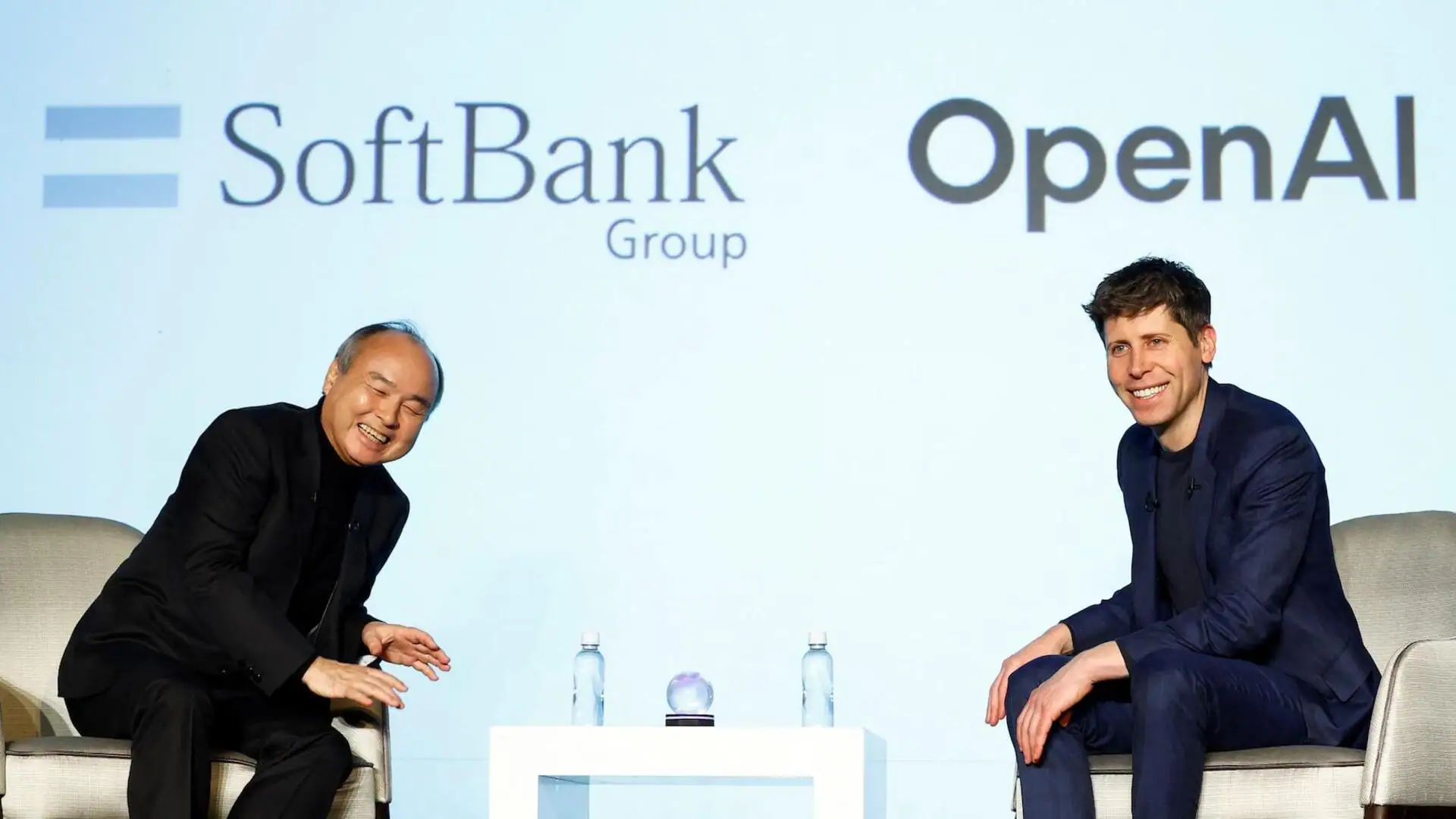
However, an important condition included in SoftBank’s contribution to the venture is the conversion of OpenAI to a for-profit organization.
This required OpenAI to successfully hurdle the for-profit threshold, and that happened in October. Now, the ball is firmly placed in SoftBank’s court with a deadline that couldn’t be more urgent, given that OpenAI is soon going to be confronted with operational expenses.
High-Stakes AI Infrastructure and SoftBank’s Strategic Caution
This is because Sam Altman’s success in persuading partners, such as Oracle and Crusoe, to invest in datacenter infrastructure overloaded with high-tech hardware, like that offered by AMD and Nvidia, has created this sense of urgency because the Stargate facility in Abilene, Texas, has been operational since early this year, meaning that Oracle will start collecting payment for their services offered to Open AI.
It seems that the growing financial burden has made Son more conservative in making financial commitments. According to reports, the SoftBank CEO is personally checking the investment commitment of over $50 million. The reason behind this intense scrutiny is the seriousness of the company’s financial condition.
The Stargate initiative is one of the most ambitious projects in infrastructure development in the field of artificial intelligence, aiming to fast-track the development of highly advanced artificial intelligence systems. The sheer magnitude of investment that has raised many eyebrows in both tech and finance circles is staggering.
People have questioned whether this investment can be sustainable in terms of the potential returns on investment that may come from infrastructural investment in artificial intelligence.
SoftBank’s Race to Save the Future of AI
In the case of SoftBank, it not only has stakes in this particular promise but also in its overall reputation of being a trustworthy tech investor. Its failure could jeopardize the brand’s relationship with other investors in the future since Son has made it his hallmark of taking bold bets on revolutionary technologies.
As the deadline of December 31 looms, all eyes are set on how SoftBank will accomplish this financial miracle. The ability of SoftBank to utilize their portfolio of assets ranging from Arm Holdings to T-Mobile indicates the intricate ownership structures which big players in the tech industry utilize.
Whether this final resort by Son to pull the right strings in time will determine the future of not just SoftBank but also one of the most ambitious projects undertaken in AI infrastructure.
It remains to be seen whether SoftBank has the ability to turn its holdings into the cash that OpenAI so desperately needs in order to continue realizing its vision.