• Send Us A Tip
  • Calling all Tech Writers
  • Advertise
Sunday, July 12, 2026
  • Login
TechStory
  • News
  • Crypto
  • Gadgets
  • Memes
  • Gaming
  • Cars
  • AI
  • Startups
  • Markets
  • How to
No Result
View All Result
  • News
  • Crypto
  • Gadgets
  • Memes
  • Gaming
  • Cars
  • AI
  • Startups
  • Markets
  • How to
No Result
View All Result
TechStory
No Result
View All Result
Home Business

SpaceX Eyes an $800 Billion Valuation by Conducting a Secondary Share Sale

What a Secondary Share Sale Means: Liquidity for Insider

by Anochie Esther
December 7, 2025
in Business, News
Reading Time: 3 mins read
0
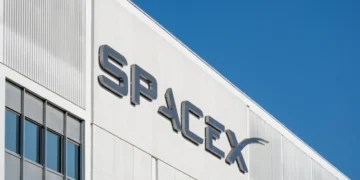
SpaceX

Image Credits: Reuters

TwitterWhatsappLinkedin

According to recent reports, SpaceX is in talks to conduct a secondary share sale allowing existing shareholders (early investors, employees etc.) to sell part of their stake that would place the company’s value at around US $800 billion.

You might also like

Refurbished Phones And Laptops Are Heading For Their Best Year Ever As Memory Prices Push New Devices Out Of Reach

Deepinder Goyal’s Temple Brain Wearable Could Cost More Than An iPhone: Here Is Why He Thinks It Is Worth It

Zetwerk Gets SEBI Approval For IPO, Eyes ₹4,200 Crore Raise At $4 Billion Valuation

That nearly doubles its most recent private-market valuation of roughly $400 billion.

If this deal goes through, SpaceX would reclaim the title as the most valuable private company in the world overtaking companies like OpenAI (recently valued around $500 billion) at the top of the private-company rankings.

In parallel, SpaceX is reportedly eyeing a public listing (IPO) as soon as the second half of 2026, which could open up a path for public shareholders to buy into the company.

Why the Valuation Is Climbing: What’s Driving Investor Confidence

Several factors seem to underpin why SpaceX might command such a steep valuation today:

  • Strong track record in space launches: SpaceX remains the world’s leading private rocket company, frequently launching satellites, cargo, and crew missions making it a dominant player in the space-launch sector.
  • Its satellite-internet arm, Starlink now backed by thousands of satellites is viewed as a long-term, high-growth revenue engine. Regulators and competition notwithstanding, the scale and ambition of Starlink give investors a bet on global internet coverage from space.
  • Ambitious long-term vision: With bold plans for lunar missions, Mars ambitions, and heavy investment in next-generation rockets and satellite networks, SpaceX positions itself not as a niche launch provider but as a foundational infrastructure company for space and communications which justifies premium valuations.

In short: investors seem to be buying not just a company delivering launches today but a conglomerate of cutting-edge aerospace engineering, global satellite internet infrastructure, and future-forward ambitions.

A “secondary share sale” means existing shareholders (employees, early investors, insiders) not the company itself, sell part of their stakes to outside investors. So this sale would not raise fresh capital for SpaceX, but rather give liquidity to private-stakeholders, while establishing a new market price for its shares.

By setting a $800 billion valuation floor, SpaceX essentially draws a line in the sand anyone buying in via this sale would be betting that the company is worth at least that much. It signals strong confidence from both sellers and new buyers.

Moreover, this large valuation helps set expectations ahead of a possible IPO (planned for late 2026). With a high anchor valuation, public investors might get a sense of how investors privately value the company, influencing IPO pricing and market appetite.

What to Watch Out For: Risks & What Could Go Wrong

That said, an $800 billion valuation comes with big expectations and nothing is guaranteed. Some of the risks and open questions:

  • Valuation depends on demand: The sale’s success depends heavily on how many outside buyers are willing to pay that high valuation. If demand is weak, price may be renegotiated or scaled down. Reports note that price per share under consideration is “above $400,” but that may move depending on buyers’ appetite.
  • Space & satellite markets remain uncertain: While Starlink and rocket launches are promising, these are capital-intensive businesses with regulatory, competitive, and technological risks. If those don’t play out as hoped, valuation may not hold up.
  • IPO risks: Public markets are unpredictable. When/if SpaceX goes public in 2026, investors will scrutinize profitability, revenue growth, and long-term viability. A high pre-IPO valuation sets a high bar.
  • Broader macroeconomic & geopolitical headwinds: Space and satellite businesses are sensitive to regulation, government contracts, global stability, and capital costs. Economic downturns or geopolitical shifts could dampen investor enthusiasm.

For investors, that means betting not just on rockets and satellites but on the long-term transformation of global connectivity, space commerce, and how humanity reaches (and uses) outer space in coming decades.

If SpaceX truly reaches an $800 billion valuation, it would redefine what a “space company” looks like in the eyes of investors. It would:

  • Prove that commercial space and satellite internet are not niche or hobby-space industries, but major infrastructure plays with global scale.
  • Raise the bar for competitors (rival launch providers, satellite-internet firms, governments) prompting more investment, innovation, and possibly more competition.
  • Influence how tech investors view “deep-tech” companies i.e., firms doing hardware, aerospace, infrastructure which historically commanded lower valuations compared to software/AI firms.

Moreover, for retail and institutional investors waiting for SpaceX’s IPO, this could be the rare chance to own shares in a space-era juggernaut but given the risks and high valuation, it’ll take careful analysis.


 

Tags: #$800 Billion ValuationSecondary Share SaleSpaceX
Tweet54SendShare15
Previous Post

EU Slaps €120 Million / $140 Million Fine on X

Next Post

Porsche Set to Add Virtual Gear Shifts to EVs Starting 2027

Anochie Esther

Recommended For You

Refurbished Phones And Laptops Are Heading For Their Best Year Ever As Memory Prices Push New Devices Out Of Reach

by Rounak Majumdar
July 12, 2026
0
Refurbished Phones And Laptops Are Heading For Their Best Year Ever As Memory Prices Push New Devices Out Of Reach

Something is shifting in how Indian consumers buy electronics and it has everything to do with what is happening to new device prices. Industry analysts now expect 2026...

Read more

Deepinder Goyal’s Temple Brain Wearable Could Cost More Than An iPhone: Here Is Why He Thinks It Is Worth It

by Rounak Majumdar
July 11, 2026
0
Deepinder Goyal's Temple Brain Wearable Could Cost More Than An iPhone: Here Is Why He Thinks It Is Worth It

The gadget that first went viral when Zomato founder Deepinder Goyal appeared wearing it on a podcast is inching closer to becoming an actual commercial product and the...

Read more

Zetwerk Gets SEBI Approval For IPO, Eyes ₹4,200 Crore Raise At $4 Billion Valuation

by Rounak Majumdar
July 11, 2026
0
Zetwerk Gets SEBI Approval For IPO, Eyes ₹4,200 Crore Raise At $4 Billion Valuation

One of India's most consequential manufacturing sector listings has cleared its most important regulatory hurdle. Zetwerk Manufacturing Businesses Limited received its observation letter from the Securities and Exchange...

Read more
Next Post
Porsche is preparing to introduce a virtual gear-shift system on its upcoming electric models, starting with the 2027 Taycan, expected to hit dealerships in late 2026. The move comes after internal benchmarking of Hyundai’s Ioniq 5 N, whose simulated transmission impressed Porsche engineers enough to explore their own version. According to a source present at a dealer meeting in Atlanta, Porsche has already briefed dealership trainers to get sales teams ready ahead of next year's order window. Customers will reportedly be able to place reservations for the 2027 Taycan with this feature, dubbed a virtual transmission, from August. What Porsche Is Calling It Here’s the interesting bit: Porsche itself is now using the term virtual transmission. It’s the clearest signal yet that the feature is moving toward production branding rather than remaining a behind-the-scenes experiment. The company didn’t confirm or deny the rollout, sticking to the line that it routinely tests new technologies as part of R&D. But the language is new, and telling. The idea is simple: EVs don’t need gears, but drivers often miss the rhythm, engagement, and predictability that shifting brings—especially at the performance end. Porsche’s engineers, including teams from both its dual-clutch and automatic gearbox divisions, have been calibrating simulated shift points to feel as authentic as possible. One prototype driver said he was shocked at how convincingly the system mimicked a traditional torque-converter transmission. Why Hyundai’s Influence Matters Hyundai’s Ioniq 5 N has been widely praised for making EV performance more visceral with its fake shifts and sound profiles. Porsche, often stubbornly purist about driving feel, appears to see potential in using the same trick but pushing it further. Unlike Hyundai’s simple paddle-triggered shifts, Porsche’s execution is expected to be more tightly integrated with power delivery, torque mapping, and traction systems. The function will reportedly be optional and fully toggleable. But it won’t be coming to older Taycans via software update, simply because earlier models lack the necessary paddle shifters. What This Means for Porsche’s EV Lineup The virtual transmission feature is confirmed only for the 2027 Taycan for now, but it’s hard to imagine Porsche limiting it to one model. The upcoming electric Cayman seems like an obvious fit, and future versions of the Macan Electric and Cayenne Electric could also adopt the system once they receive cabin updates that add paddle controls. Alongside the new shift function, the next-gen Taycan is set to receive a major update to Porsche Communication Management. The interface will draw elements from the 2026 Cayenne Electric, though the much-talked-about curved screen won’t make its way to the sedan. Porsche’s first electric model arrived in 2020 and has since seen improvements in range, performance, and software. With virtual shifts now on the horizon, Porsche is signaling that emotion—not just efficiency—is going to shape its next era of EVs.

Porsche Set to Add Virtual Gear Shifts to EVs Starting 2027

Please login to join discussion

Techstory

Tech and Business News from around the world. Follow along for latest in the world of Tech, AI, Crypto, EVs, Business Personalities and more.
reach us at info@techstory.in

Advertise With Us

Reach out at - info@techstory.in

Aviator Game India 2026

BROWSE BY TAG

#Crypto #howto 2024 acquisition AI amazon Apple Artificial Intelligence bitcoin Business China cryptocurrency e-commerce electric vehicles Elon Musk Ethereum facebook funding Gaming Google India Instagram Investment ios iPhone IPO Market Markets Meta Microsoft News OpenAI samsung Social Media SpaceX startup startups tech technology Tesla TikTok trend trending twitter US

© 2025 Techstory.in

No Result
View All Result
  • News
  • Crypto
  • Gadgets
  • Memes
  • Gaming
  • Cars
  • AI
  • Startups
  • Markets
  • How to

© 2025 Techstory.in

Welcome Back!

Login to your account below

Forgotten Password?

Retrieve your password

Please enter your username or email address to reset your password.

Log In
Are you sure want to unlock this post?
Unlock left : 0
Are you sure want to cancel subscription?