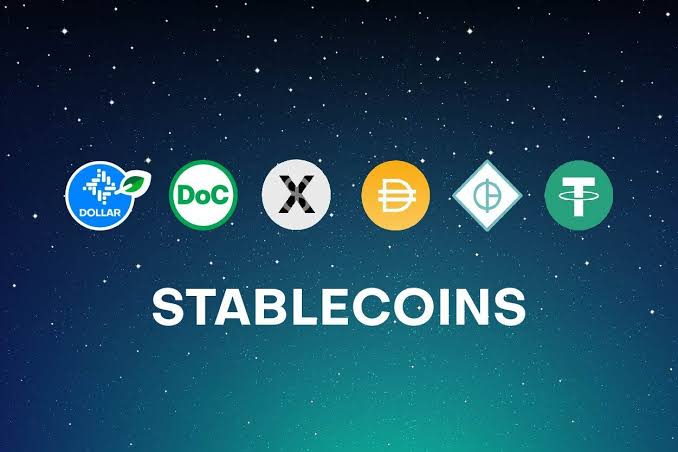
For a very long time banks have primarily provided standard savings accounts for holding an individual’s money with a degree of interest. Savings accounts can provide three key functions; i.e. protect your funds against losses, make your funds readily accessible at any time you wish to withdraw them, and allow you the ability to earn interest on the balance of your account.
The emergence of cryptocurrency over the last few years has created a whole host of new options for managing our personal finances. One type of digital asset that has evolved in response to the cryptocurrency explosion is known as a stablecoin. Like traditional cryptocurrencies (such as Bitcoin or Ethereum), stablecoins use the underlying technology behind cryptocurrencies but have stable prices due to being backed by tangible, physical assets (such as US Dollars).
With the rise in popularity of decentralized finance (DeFi) protocols and more asset managers holding significant portions of their portfolios in digital assets, stablecoins are becoming increasingly common alternatives to traditional bank savings accounts as investment vehicles to preserve and grow wealth.
The purpose of both types of financial tools is to give individuals access to liquid assets while securing their funds. However, they are implemented differently. Savings Accounts (and any money stored in them) are regulated by bank systems and the government. However, stablecoins do not have these same protections because they exist on the blockchain and use cryptocurrencies for transactions. Therefore, understanding the key features of both assets will be helpful for anyone who is choosing which of the two assets to hold as money in a digital world where there will be less physical cash held by individuals and more digitized forms of money being held by all of us custodying our digital assets.
What Are Stablecoins?
Stablecoins are a type of cryptocurrency meant to keep a consistent price by pegging to a stable currency, usually the US dollar. Examples are USD Coin, Tether, and Dai. They are much less volatile than other cryptocurrencies because they try to stay at approximately one US dollar per token, whereas other cryptocurrencies can change dramatically in price.
Stablecoins are used to combine the benefits of blockchain (fast and easy access) with the stability of traditional currencies’ values for trading, international payments, DeFi applications, and by earning yields from other crypto platforms. Because they provide price stability, stablecoins also act as a bridge between traditional finance and the cryptocurrency world.
How Savings Accounts Work
A savings account is an account that is held with Banks and other Financial Institutions which allows all customers to deposit their money into the account while also earning interest on that deposit. The Bank or Financial Institution who holds your deposit can then use that deposit to lend to other customers or finance other services it provides. Due to various regulations from the Government and providing the available FDIC (Federal Deposit Insurance Corporation), Savings Accounts are usually considered to be one of the safest places for a consumer to keep their savings as the government offers protections for your deposits.
One of the key benefits of using a savings account is the ease of access and having a predictable return on your savings while still being able to access your funds at any time by simply going to your bank’s branch or when you make a ATM withdrawal to access your funds. While the interest rate you may receive on your savings changes based on many factors such as the overall economy or how your central bank adjusts. Savings accounts have been widely identified as a stable option for people to have access to funds if they have an emergency or for short-term savings goals.
Comparing Returns and Earning Potential
The primary reasons that people often look to compare a stablecoin to a traditional savings account is the difference in the respective potential returns. Traditional savings accounts usually provide fairly low rates of interest compared to what some stablecoin lending options currently can offer (usually, traditional savings accounts are known to have relatively low interest rates during times of low rates). They can provide you with a certain level of security and predictability however, over the long term your inability to earn an interest rate that exceeds the rate of inflation could lead to disability over time.
On the other hand, some of the different options available for finding yield on stablecoins (such as staking or lending) can provide investors with a much larger amount of yield than they can receive from traditional savings accounts. The potential returns on many different stablecoin platforms or through decentralized finance can provide an investor with a significantly higher return than an investor would otherwise have received from traditional savings accounts. Because these varying levels of yield have attracted the attention of many investors wanting to put their idle funds to work, many of these high-yield protocols generally will increase the risk associated with such a high level of yield; thus an investor should always consider their personal risk tolerance when they consider investing in a stablecoin or through a high yield protocol.
Safety and Risk Considerations
The critical difference between stablecoins and traditional savings accounts is their safety features. A savings account is typically hosted by a well-established financial institution and also backed by the federal government. Most nations have some form of deposit insurance that protects depositors up to a predetermined limit, assuring them of the safety of their accounts in case a bank fails financially. Assistance from the government for depositors in the event of a bank failure can take many forms.
Stablecoins, on the other hand, generally do not have the same level of regulation or government support that traditional currencies do.Most stablecoins are pegged to fiat currencies (such as USD) or other types of currency (e.g., gold). Therefore, each stablecoin you purchase can be accounted for as having the same value. The major difference between regulated currencies and many stablecoins is that no government backs the issuance of stablecoins; therefore, stablecoin investors must rely on the stablecoin issuer being sufficiently capitalized and able to maintain a stable one-to-one exchange rate. The year 2023 has seen multiple instances of a stablecoin losing its value (e.g., USDT), and a few stablecoins have completely failed. Therefore, even though stablecoins are, for the most part, less volatile relative to other cryptocurrencies, they generally present a greater level of risk than traditional savings accounts.
Accessibility and Convenience
Despite similar levels of accessibility, stablecoins and regular savings accounts have different uses. Savings accounts are part of the traditional banking system and can be used by consumers for their day-to-day banking needs including receiving salaries, withdrawing money and making bill payments. Therefore, since so many people already understand how to manage bank accounts the way in which most individuals would manage their finances makes these types of accounts extremely convenient.
Inflation and Purchasing Power
When considering any strategy for saving money one factor that must be taken into consideration is inflation. If your general interest rate of savings does not keep pace with inflation, you will essentially lose purchasing power (or value) over time due to the increase of cost of the goods and services you purchase day in and out. Traditional savings accounts struggle during periods of high inflation because the interest rates offered by these accounts may not increase enough to keep up with the increased cost of living.
While stablecoins do not typically provide direct protection against inflation as they are usually pegged to fiat currency (the same currency that can lose its purchasing power), there may be a degree of assistance in that it’s possible to earn higher yields on these digital currencies by participating in various lending and borrowing products within the crypto ecosystem than what is available with more traditional savings accounts that offers you a low yield. However, that additional yield also comes with the risk/uncertainty of being able to realize those additional returns so this would not be a good option for a conservative investor who does not want to expose their savings to potential losses due to market volatility.
Regulatory Environment
The savings account regulations are set and established. The banks are heavily regulated and the consumers of these products benefit from legal protections that have developed over the years. This regulatory framework gives account holders a sense of security and stability.
Conversely, stablecoins exist in an immature and rapidly evolving regulatory environment. Governments and financial regulators around the world are still determining their stablecoin rules and regulations with respect to how to issue, how to reserve, how to be transparent and how to protect consumers. As regulations evolve, stablecoin users may experience changes in how their digital asset is used and managed. Regulation could ultimately enhance the success of the stablecoin industry, but there remains a level of uncertainty for investors.
Which Option Is Better?
People focused on safety and stability will likely continue using traditional savings accounts, as they remain one of the most trusted options within the market. They are completely predictable, provide consumer protection through regulation, and have a simple level of usability that meets most consumers’ everyday financial needs.
Investors who are comfortable with holding their wealth in digital assets and are willing to accept greater levels of risk to receive potentially greater rewards, as well as to increase their overall financial purchasing power, may find stablecoins more desirable. As stablecoins offer opportunities that traditional banking systems cannot provide (e.g., international money transfers or to participate in decentralized finance), their attractiveness is somewhat diminished by the additional exposure to technological risk, regulatory exposure and market risk associated with holding and conducting transactions in stablecoin.