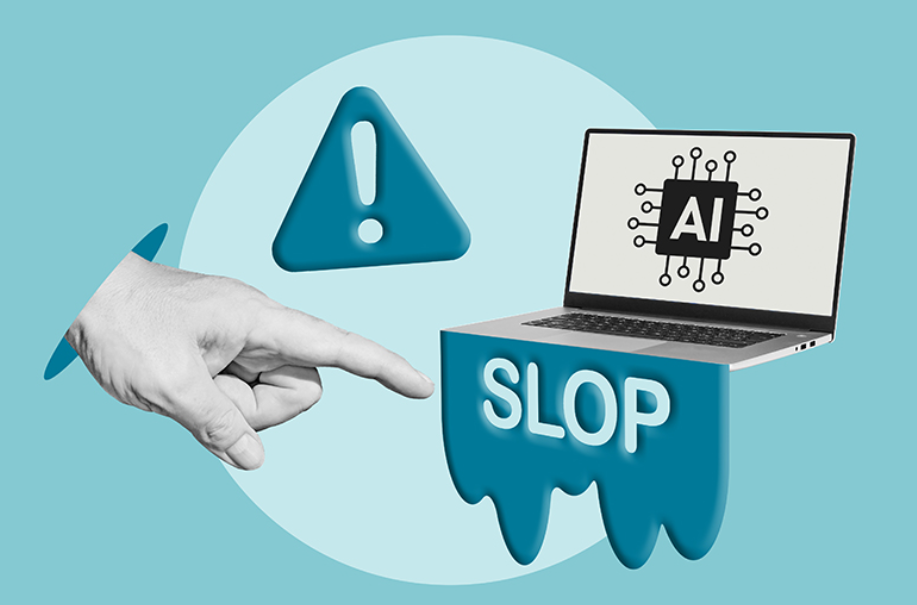
The promise of the social media revolution was rooted deeply in human connection, showcasing raw personality, unique artistic perspective, and organic community interaction. However, the rise of mass-market generative artificial intelligence has fundamentally shifted the underlying economics of online media creation. Rather than spending hours writing scripts, editing footage, and recording voices, digital operators are increasingly deploying automated software tools to generate high-volume, low-effort video clips. According to a striking report highlighted by 9to5Mac, the digital landscape has crossed a definitive threshold: nearly 60% of TikTok videos served to a brand-new user feed qualify as AI slop, while the same is true for 21% of recommendations on YouTube.
This content explosion represents a massive quality crisis across the entire attention economy. The comprehensive study, conducted by the video creation platform Kapwing, analyzed 10,742 TikTok videos across 20 distinct content categories alongside a dedicated fresh-account test monitoring the first 500 videos recommended to a user with no watch history. The findings paint a dark picture of modern algorithmic curation, proving that low-quality, synthetic media is actively displacing human creativity. By exploring the data behind this sudden surge, it becomes clear that the business models of these major platforms are currently optimized to favor rapid robotic volume over genuine human substance.
The Scale of the Slop: Comparing the Platforms
The Kapwing report highlights a stark contrast in content quality between the two dominant short-form video networks, revealing that TikTok’s default feed recommends three times as much AI slop as YouTube Shorts.During the fresh-account test, TikTok’s For You page served a staggering 294 automated videos out of the first 500 clips. On the other hand, YouTube’s feed recommended 104 synthetic videos out of 500. While YouTube still battles a major content quality issue, its lower saturation rate stems from the platform’s proactive implementation of stricter monetization policies and early backend detection systems designed to demonetize low-effort, mass-produced channels.
Vulnerable Targets: The Kids’ Content Crisis
The most alarming finding in the research centers on content explicitly targeted at children. Of the 2,000 videos analyzed within TikTok’s Kids category, an absolute majority of 57% was flagged as machine-generated junk.
AI Saturation Across High-Risk Hashtags
The concentration of synthetic videos reaches near-total saturation when looking at specific children’s tags:
- #CartoonKids: 97% of all featured videos were machine-generated, leaving only three human-created clips out of 100.
- #cartoons: 83% of all content met the criteria for automated junk.
- #babysong: 83% of clips featured robotic templates and voiceovers.
- #forkids: 79% of the feed was built on low-effort synthetic scripts.
Pediatric specialists are raising major alarms over this industrial-scale automated content pipeline. Because young children lack the contextual awareness to spot warped AI animations, synthetic voices, and factual errors such as counting lessons that state numbers in the wrong order they are highly vulnerable to these engaging but meaningless loops.
Category Analysis: Where Human Creation Holds the Line
The research shows that categories requiring a direct on-camera presence or physical demonstration are highly resilient against the automated wave. Conversely, topics reliant on stock imagery and voiceover narration have been completely overrun.
AI Slop Density Across Major Content Categories
| Social Media Content Category | Percentage of AI-Generated Content | Dominant Creative Format |
| Kids & Animation | 57.0% | Synthetic animations & warped audio |
| Science & Education | 35.0% | Stock compilations with AI voices |
| Health & Wellness | 33.0% | Voiceover medical claims & diagrams |
| History Recaps | 33.0% | AI-generated imagery & text scripts |
| Fitness & Workouts | 1.6% | On-camera physical demonstrations |
| Music Performance | 1.5% | Human instrumentation & vocals |
| Fashion & Style | 1.3% | Real-world modeling & outfit reviews |
Training the Feed: How to Avoid the Machine
While these statistics are troubling, the study notes that these high percentages represent the absolute worst-case scenario: a blank-slate account with no historical watch data. Because social media recommendation systems prioritize watch time, clicking away from automated videos, long-pressing to select “Not Interested,” or searching directly for human creators will rapidly train the algorithm to clean up your feed.
Both networks are responding to user backlash; TikTok previously launched user-facing controls to limit AI recommendations, and YouTube continues to roll out stricter labeling mandates. However, as long as creator payout systems reward raw upload volume over substantive quality, social media feeds will remain an uphill battleground between human authentic expression and endless automated noise.