• Send Us A Tip
  • Calling all Tech Writers
  • Advertise
Tuesday, June 23, 2026
  • Login
TechStory
  • News
  • Crypto
  • Gadgets
  • Memes
  • Gaming
  • Cars
  • AI
  • Startups
  • Markets
  • How to
No Result
View All Result
  • News
  • Crypto
  • Gadgets
  • Memes
  • Gaming
  • Cars
  • AI
  • Startups
  • Markets
  • How to
No Result
View All Result
TechStory
No Result
View All Result
Home News

Stanford scientists invent a way to store large amounts of wind and solar electricity

by Smriti Sharma
July 22, 2018
in News
Reading Time: 2 mins read
0
Stanford scientists invent a way to store large amounts of wind and solar electricity
TwitterWhatsappLinkedin

22 July, 2018 

You might also like

India and UAE Hold Talks on BrahMos Missile Deal as Defence Ties Deepen

Windsurf vs Cursor: Which AI-Powered IDE Is Leading the Future of Software Development?

How Does Stripe Make Money? Inside the Business Model of the $65 Bn Payments Giant

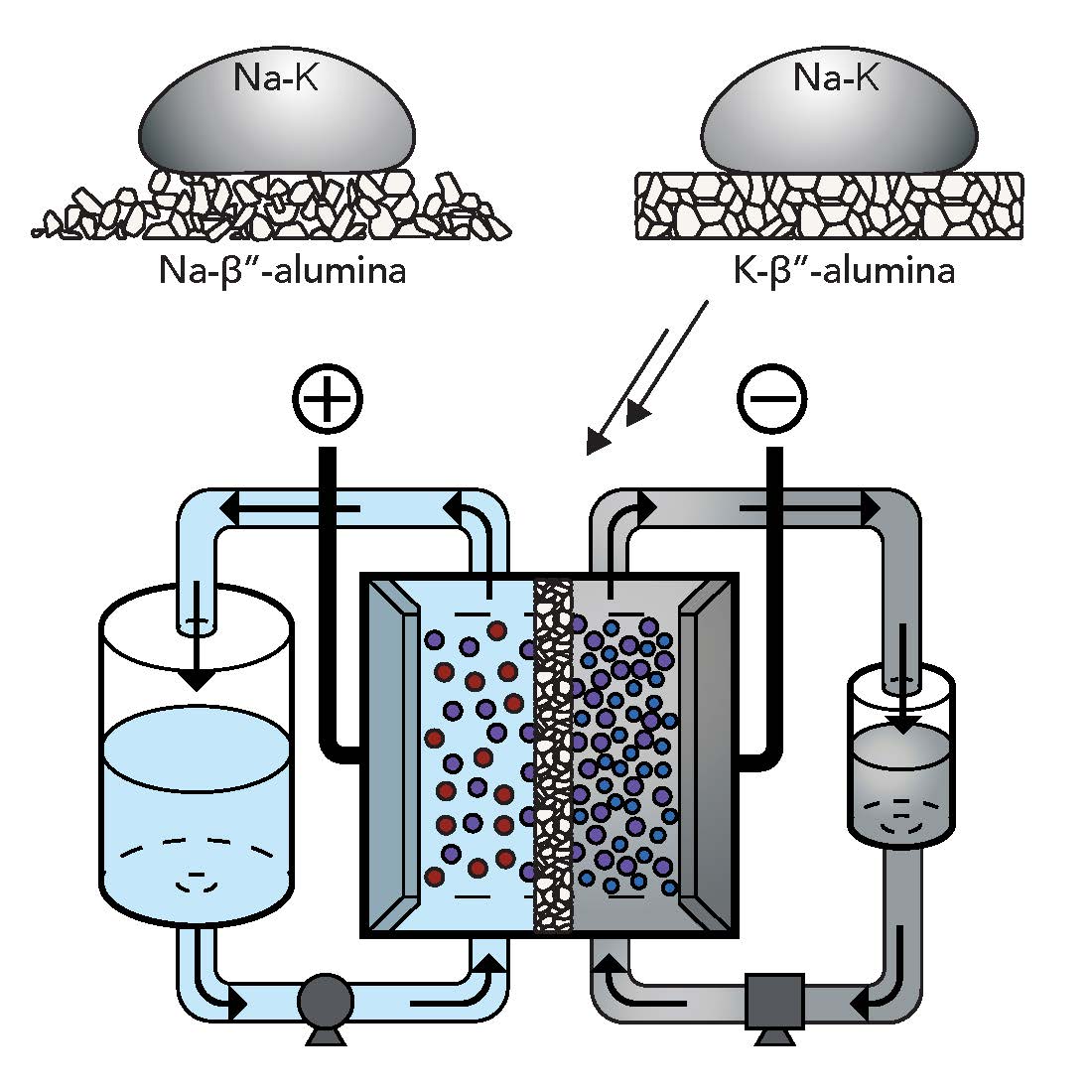
A new combination of materials developed by Stanford researchers may aid in developing a rechargeable battery able to store the large amounts of renewable power created through wind or solar sources. With further development, the new technology could deliver energy to the electric grid quickly, cost effectively and at normal ambient temperatures.

The technology – a type of battery known as a flow battery – has long been considered as a likely candidate for storing intermittent renewable energy. However, until now the kinds of liquids that could produce the electrical current have either been limited by the amount of energy they could deliver or have required extremely high 

temperatures or used very toxic or expensive chemicals.

Stanford assistant professor of materials science and engineering William Chueh, along with his PhD student Antonio Baclig and Jason Rugolo, now a technology prospector at Alphabet’s research subsidiary X Development, decided to try sodium and potassium, which when mixed form a liquid metal at room temperature, as the fluid for the electron donor – or negative – side of the battery. Theoretically, this liquid metal has at least 10 times the available energy per gram as other candidates for the negative-side fluid of a flow battery.

“A new battery technology has so many different performance metrics to meet: cost, efficiency, size, lifetime, safety, etc.,” said Baclig. “We think this sort of technology has the possibility, with more work, to meet them all, which is why we are excited about it.”

The team of Stanford PhD students, which in addition to Baclig includes Geoff McConohy and Andrey Poletayev, found that the ceramic membrane very selectively prevents sodium from migrating to the positive side of the cell – critical if the membrane is going to be successful. However, this type of membrane is most effective at temperatures higher than 200 degrees Celsius (392 F). In pursuit of a room-temperature battery, the group experimented with a thinner membrane. This boosted the device’s power output and showed that refining the membrane’s design is a promising path.

(Image:- news.stanford.edu) 

Tags: Scientistssolar energyWind Energy
Tweet54SendShare15
Previous Post

Google is building a subsea cable that runs from Virginia to France

Next Post

8 Futuristic Car Features

Smriti Sharma

Recommended For You

India and UAE Hold Talks on BrahMos Missile Deal as Defence Ties Deepen

by Rounak Majumdar
June 22, 2026
0
India and UAE Hold Talks on BrahMos Missile Deal as Defence Ties Deepen

India is in discussions with the United Arab Emirates (UAE) over a potential defence deal involving the export of the BrahMos supersonic cruise missile and the Akashteer air...

Read more

Windsurf vs Cursor: Which AI-Powered IDE Is Leading the Future of Software Development?

by Ishaan Negi
June 22, 2026
0
Windsurf vs Cursor: Which AI-Powered IDE Is Leading the Future of Software Development?

Artificial intelligence is no longer just an add-on feature for developers—it is rapidly becoming the foundation of modern software development workflows. Over the past two years, AI-powered coding...

Read more

How Does Stripe Make Money? Inside the Business Model of the $65 Bn Payments Giant

by Ishaan Negi
June 22, 2026
0
How Does Stripe Make Money? Inside the Business Model of the $65 Bn Payments Giant

If you've ever made an online purchase, subscribed to a digital service, or paid for a product through a website, there's a good chance that Stripe was working...

Read more
Next Post
8 Futuristic Car Features

8 Futuristic Car Features

Please login to join discussion

Techstory

Tech and Business News from around the world. Follow along for latest in the world of Tech, AI, Crypto, EVs, Business Personalities and more.
reach us at info@techstory.in

Advertise With Us

Reach out at - info@techstory.in

Aviator Game India 2026

BROWSE BY TAG

#Crypto #howto 2024 acquisition AI amazon Apple Artificial Intelligence bitcoin Business China cryptocurrency e-commerce electric vehicles Elon Musk Ethereum facebook funding Gaming Google India Instagram Investment ios iPhone IPO Market Markets Meta Microsoft News OpenAI samsung Social Media SpaceX startup startups tech technology Tesla TikTok trend trending twitter US

© 2025 Techstory.in

No Result
View All Result
  • News
  • Crypto
  • Gadgets
  • Memes
  • Gaming
  • Cars
  • AI
  • Startups
  • Markets
  • How to

© 2025 Techstory.in

Welcome Back!

Login to your account below

Forgotten Password?

Retrieve your password

Please enter your username or email address to reset your password.

Log In
Are you sure want to unlock this post?
Unlock left : 0
Are you sure want to cancel subscription?