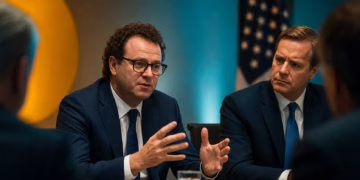
Starbucks is changing course on remote work and increasing the number of required in-office days for corporate employees. Starting in October, those working near its major offices in Seattle, Toronto, and other regional locations across North America will be expected to work on-site Monday through Thursday.
This marks a shift from the previous requirement of three days a week, signaling a more assertive approach from the company’s leadership as it looks to rally employees around improving performance and regaining momentum.
The update was communicated to staff in an internal email from CEO Brian Niccol, who highlighted the need for greater collaboration and cultural cohesion as Starbucks moves into a new fiscal year.
A Response to Slowing Sales
The decision comes at a time when Starbucks is grappling with lackluster sales and ongoing operational challenges. In its most recent quarterly earnings released in April, the company reported a 1% drop in same-store sales. Despite efforts to address service delays, update store staffing levels, and revise store policies, the results have not yet shown the improvement leadership had hoped for.
Since taking the top job, Niccol has made it clear that his priority is to get the business back on track. He has pushed for tighter execution, stronger team alignment, and a refreshed focus on customer experience—elements he believes are more effectively achieved through in-person teamwork.
Culture and Speed at the Center of the Push
Starbucks says the decision to increase the number of in-office days is not just about oversight—it’s about fostering quicker decision-making and stronger relationships between colleagues. In-person settings, the company argues, encourage real-time problem-solving and build trust in ways that remote work sometimes cannot.
For a company built around human interaction—from the barista counter to its corporate culture—bringing people together under one roof is seen as vital to turning around recent performance declines.
Option to Exit for Those Unwilling to Return
Recognizing that not everyone will be on board with this return-to-office (RTO) push, Starbucks is giving employees a choice. Those who feel they cannot meet the new expectations will be offered a one-time cash payout to voluntarily leave the company.
The move is designed to give employees a clear path forward—whether that means recommitting to a more office-centric environment or moving on. It’s a practical acknowledgment that workplace priorities have shifted for many people since the pandemic, and not all employees will be aligned with the company’s direction.
Part of a Broader Workplace Trend
Starbucks’ policy change aligns with a growing trend across major U.S. companies. From tech giants to financial institutions, many employers are beginning to scale back remote work options, arguing that being in the office drives better collaboration and innovation.
That said, these changes haven’t come without pushback. Workers across industries have voiced concerns about losing flexibility, especially when remote work proved effective during the pandemic. For Starbucks, the voluntary separation offer is a way to ease this tension while reaffirming its own priorities.
Niccol Moves to Seattle Full-Time
In a symbolic and practical move, CEO Brian Niccol has also relocated to Seattle full-time. When he took the role last September, he was commuting weekly from Southern California by jet. As of this week, the company confirmed he now has both a permanent office and residence in Seattle.
His relocation reflects Starbucks’ deeper push for in-person leadership and visibility. It also underscores his commitment to the cultural reset the company is trying to achieve—starting with its top executives.
Starbucks had already taken steps to return employees to the office before this new change. In early 2023, former CEO Howard Schultz required corporate staff within commuting distance of Seattle to come in at least three days a week. That policy laid the groundwork for the current shift, but the latest mandate represents a more definitive stance on how Starbucks wants to operate going forward.