• Send Us A Tip
  • Calling all Tech Writers
  • Advertise
Sunday, June 21, 2026
  • Login
TechStory
  • News
  • Crypto
  • Gadgets
  • Memes
  • Gaming
  • Cars
  • AI
  • Startups
  • Markets
  • How to
No Result
View All Result
  • News
  • Crypto
  • Gadgets
  • Memes
  • Gaming
  • Cars
  • AI
  • Startups
  • Markets
  • How to
No Result
View All Result
TechStory
No Result
View All Result
Home World

Starlink Satellite vs. Starlight: Why 1 Million Orbiting AI Data Centers Have Astronomers Worried

by Sneha Singh
March 20, 2026
in World
Reading Time: 3 mins read
0
Starlink vs. Starlight: Why 1 Million Orbiting AI Data Centers Have Astronomers Worried
TwitterWhatsappLinkedin

SpaceX has presented a new idea: a huge constellation of orbiting data centers. The idea, which is associated with Elon Musk, could include up to one million objects orbiting the Earth. According to astronomers, this will change the night sky in ways we’re not prepared for.

You might also like

Hyundai Moves to Take Full Control of Boston Dynamics in $325 Mn Deal

Weekly Business News: Everything from SEBI’s GARUDA Launch to TCS-Anthropic Partnership

Weekly Startup Funding News: Indian startups raise $426 Mn; from CREST to Sarvam

Currently, space is filled with large groups of satellite, including Starlink. These provide internet services, but they also add streaks of light in telescope images. However, over time, technology was developed to minimize this. New satellites are much less reflective and much fainter. This was seen as a step forward, and astronomers were hopeful that space and astronomy could coexist.

This new idea takes a different turn.

Unlike small satellites, these data centers will be large, and some could be as long as 100 meters. The satellites will be much higher and will always be in the sun, even on a night. From the ground, these satellites will look like a bright point of light moving across the sky. When there are a lot of satellites, they will fill telescope views with light trails.

How Satellite Megaconstellations are Reshaping Our Skies

Astronomers have warned that these satellites could change the way we view the universe. The current technology used by observatories is based on long, uninterrupted views. Even a few streaks of light will interfere with these views. The problem will grow rapidly when there are thousands of objects visible at one time.

Facilities such as the Vera Rubin Observatory and Extremely Large Telescope require clear skies. These telescopes will help scientists observe faint galaxies, track asteroids, and investigate dark matter. If satellite trails dominate their images, scientists might not be able to make important observations. In some cases, they will be forced to close their shutters, which will reduce their observing time.
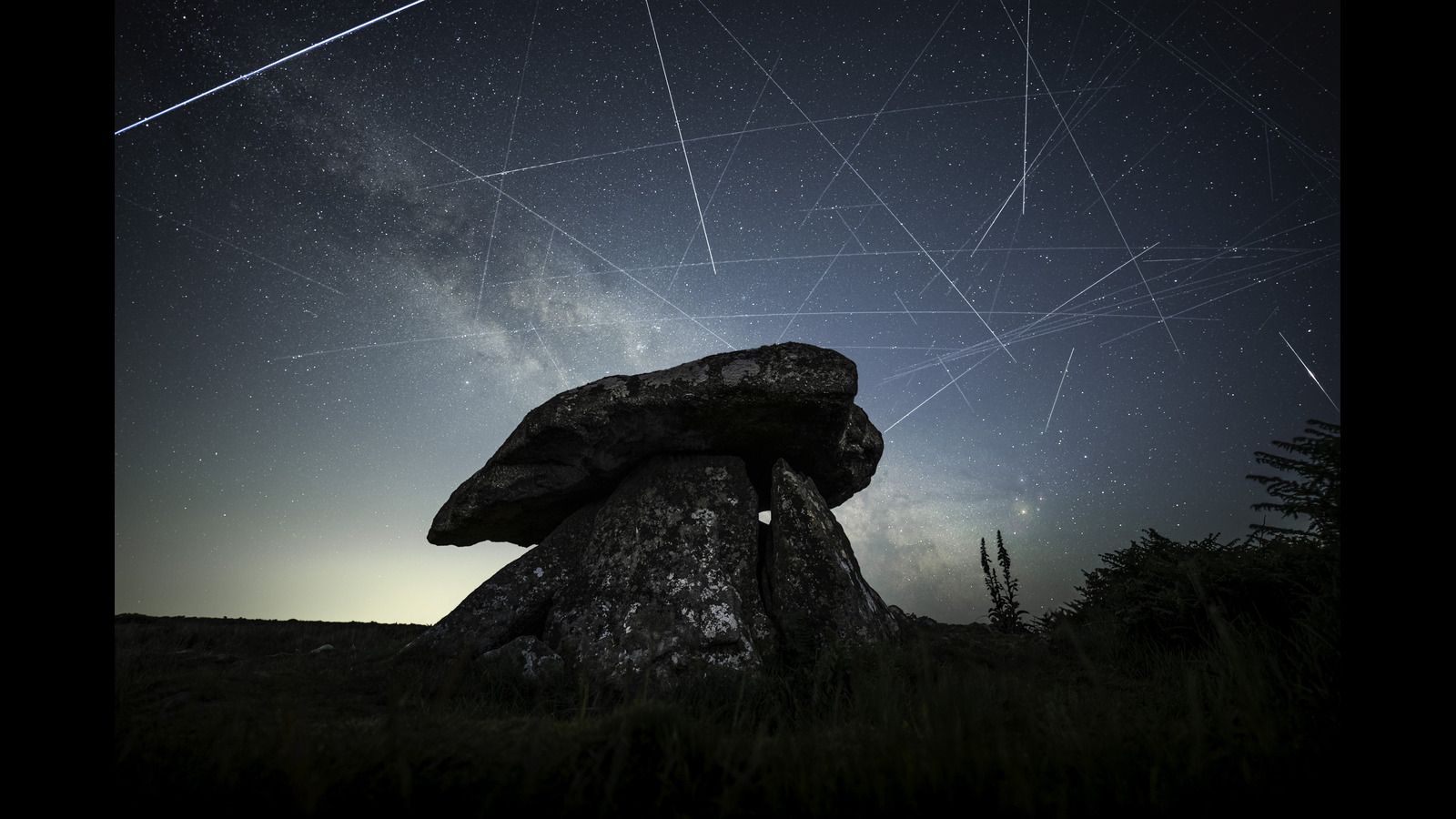
Starlink vs. Starlight: Why 1 Million Orbiting AI Data Centers Have Astronomers Worried
Credits: Space

There is also a wider concern about the sky itself. For many, the night sky holds cultural and scientific value. A sky filled with moving lights could change how people experience it. What once felt natural may begin to look artificial.

The environmental impact adds another layer. Satellites do not last forever. They burn up in the atmosphere when they fall back to Earth. With a network this large, experts estimate one object could re-enter every few minutes. This process releases materials like aluminum oxide into the upper atmosphere. Scientists are still studying how this affects ozone and temperature.

Balancing Innovation and the Infinite Dark

Rocket launches would also increase. Each launch adds emissions and noise. More traffic in orbit raises the risk of collisions. Space debris already poses a challenge. A larger network could make that risk harder to manage.

Regulation plays a key role here. The Federal Communications Commission reviews such proposals in the United States. In this case, the application moved on a fast-track path. That means no full environmental review is required at this stage. Critics argue that this shifts the burden onto scientists to prove harm, rather than asking companies to show safety first.

Supporters of space-based data centres point to potential gains. These systems could reduce latency and support global computing needs. They may also shift some energy use away from Earth. But these benefits remain theoretical at this scale.

The debate now centres on balance. Space is no longer empty. It serves business, science, and public interest. Each new project adds pressure on that shared space.

Astronomers do not reject progress. They ask for limits, better design, and careful review. The question is not whether we use space, but how far we go.

This proposal forces that question into the open.

Tags: Artificial IntelligenceElon MusksatelliteStarlightStarlink
Tweet54SendShare15
Previous Post

Block Inc. Rehires Staff Weeks After 4,000+ Job Cuts Amid Restructuring Strategy

Next Post

Pentagon Replies Back to Anthropic: Refusal to Accept Contract Terms Is Not Protected Speech, Agency Tells Court

Sneha Singh

Sneha is a skilled writer with a passion for uncovering the latest stories and breaking news. She has written for a variety of publications, covering topics ranging from politics and business to entertainment and sports.

Recommended For You

Hyundai Moves to Take Full Control of Boston Dynamics in $325 Mn Deal

by Ishaan Negi
June 20, 2026
0
Hyundai Moves to Take Full Control of Boston Dynamics in $325 Mn Deal

The future of mobility is no longer just about cars, it’s increasingly about robots. In a move that highlights this shift, Hyundai Motor Group is reportedly preparing to...

Read more

Weekly Business News: Everything from SEBI’s GARUDA Launch to TCS-Anthropic Partnership

by Ishaan Negi
June 20, 2026
0
Weekly Business News: Top business updates in this week

India witnessed a series of significant developments this week spanning capital markets, regulation, automobiles, information technology, and infrastructure. From Jio Platforms gearing up for a record-breaking IPO to...

Read more

Weekly Startup Funding News: Indian startups raise $426 Mn; from CREST to Sarvam

by Ishaan Negi
June 20, 2026
0
Weekly Startup Funding News: Indian startups raised $447 Mn this week; from Techjockey to Physics Wallah

India’s startup ecosystem witnessed a significant funding resurgence this week, with startups collectively raising $426 million across 19 deals between June 15 and June 19. The amount marks...

Read more
Next Post
Pentagon Fires Back: Refusal to Accept Contract Terms Is Not Protected Speech, Agency Tells Court

Pentagon Replies Back to Anthropic: Refusal to Accept Contract Terms Is Not Protected Speech, Agency Tells Court

Please login to join discussion

Techstory

Tech and Business News from around the world. Follow along for latest in the world of Tech, AI, Crypto, EVs, Business Personalities and more.
reach us at info@techstory.in

Advertise With Us

Reach out at - info@techstory.in

Aviator Game India 2026

BROWSE BY TAG

#Crypto #howto 2024 acquisition AI amazon Apple Artificial Intelligence bitcoin Business China cryptocurrency e-commerce electric vehicles Elon Musk Ethereum facebook funding Gaming Google India Instagram Investment ios iPhone IPO Market Markets Meta Microsoft News OpenAI samsung Social Media SpaceX startup startups tech technology Tesla TikTok trend trending twitter US

© 2025 Techstory.in

No Result
View All Result
  • News
  • Crypto
  • Gadgets
  • Memes
  • Gaming
  • Cars
  • AI
  • Startups
  • Markets
  • How to

© 2025 Techstory.in

Welcome Back!

Login to your account below

Forgotten Password?

Retrieve your password

Please enter your username or email address to reset your password.

Log In
Are you sure want to unlock this post?
Unlock left : 0
Are you sure want to cancel subscription?