The debate over artificial intelligence and its impact on jobs has been intensifying, with leaders in technology offering really different visions for the future. Some foresee a disastrous apocalypse of jobs, but others envision a utopian world where automation frees mankind from work in its entirety. Now, Google CEO Sundar Pichai has weighed in, sending out a sobering message that AI will touch every profession, and even his role is not immune to any disruption.
Speaking to the BBC recently, Pichai didn’t mince words about the transformative power of the technology his company is helping to build. “AI is the most profound technology humanity is ever working on, and it has potential for extraordinary benefits, and we will have to work through societal disruption,” he explained.
That carries a lot of weight coming from Pichai. Google just released Gemini 3 last month to great fanfare, with investors and analysts calling it their “favorite model generally available today.”
The release, coming roughly eight months after Gemini 2.5, underlines how fast things are moving in the field of AI. Few individuals have a better view of what’s next than Pichai, who leads one of the world’s premier AI developers.
Google Chief, Sundar Pichai, Warns of AI’s Universal Impact on the Workforce
The Google chief executive made it clear that the effect of AI would not only be confined to entry-level positions or routine tasks. Though many workers think that only customer service representatives or junior analysts are vulnerable to automation, Pichai insists the transformation will be far more sweeping.
“It will evolve and transition certain jobs,” Pichai said. “People will need to adapt, and then there will be areas where it will impact some jobs. So, as a society, I think we need to be having those conversations.”
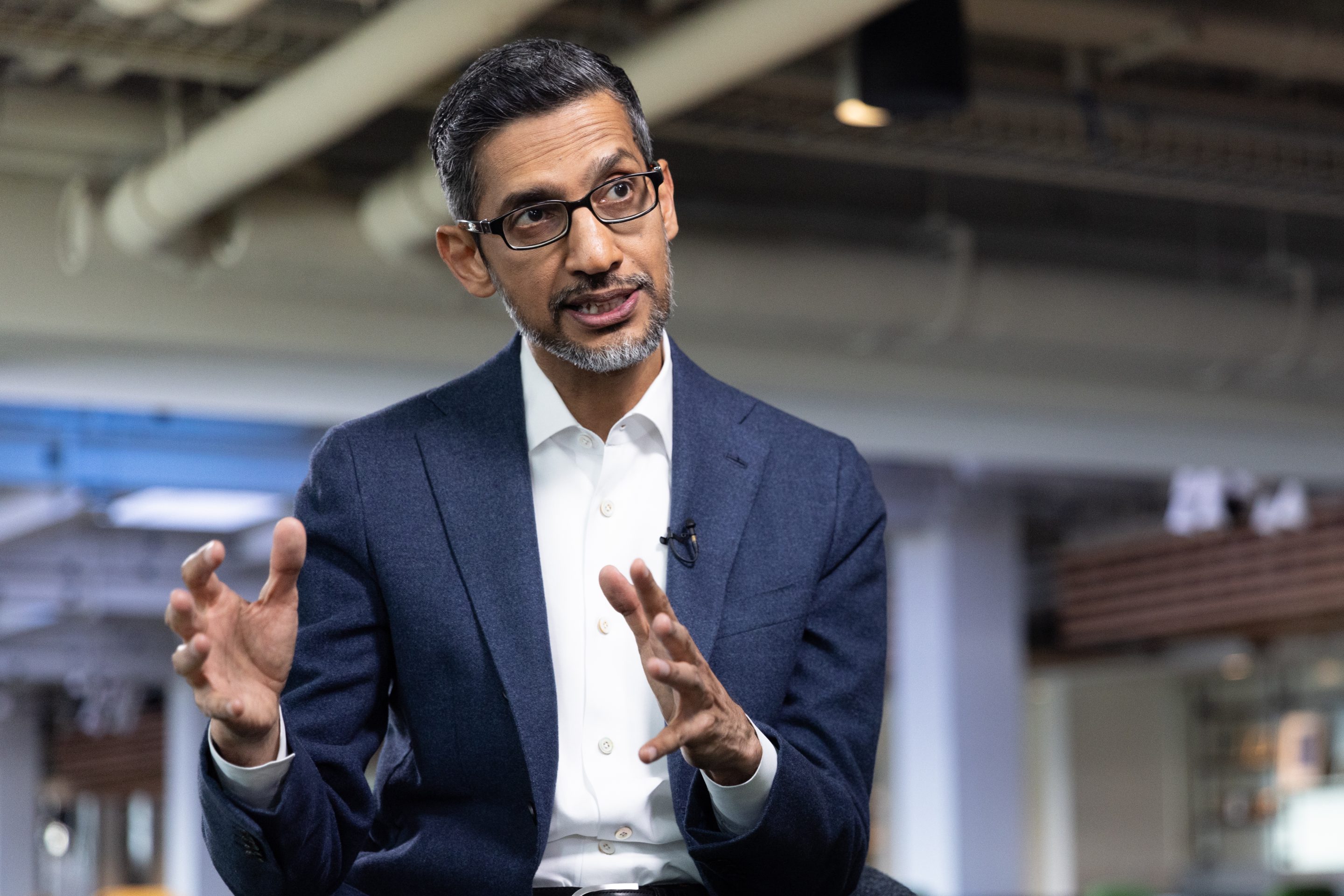
But perhaps most striking was his admission that even his position could be handled by AI someday. Pichai suggested that being a CEO is “one of the easier things” for artificial intelligence to take over someday. The message is unmistakable: there’s no such thing as an AI-proof job anymore.
However, Pichai emphasized that in this new era, success will not come from avoiding AI; rather, it will come from embracing the technology. “I think people who learn to adopt and adapt to AI will do better,” he said.
“It doesn’t matter whether you want to be a teacher, a doctor-all those professions will be around, but the people who will do well in each of those professions are people who learn how to use these tools.”
How AI and Dwindling Tech Jobs Are Pushing Graduates Toward Blue-Collar Work
For young professionals just entering the workforce, these predictions arrive in tandem with troublesome employment trends. Job postings across the United States have fallen by some 32% since the release of ChatGPT, according to Federal Reserve figures, as companies increasingly turn to AI tools to boost productivity.
Generation Z workers have been among the hardest hit. Their numbers in major public tech companies have been cut by half over the last two years. Positions in computer programming that had been considered a gateway to lucrative work are dwindling. Even physical labor is no longer immune as companies create humanoid robots to do manual work.
These developments have convinced many young people that expensive college degrees may no longer be worth it. Some are now considering a shift toward blue-collar careers in hopes that such fields might provide greater insulation from automation.
Sundar Pichai’s Call for Adaptation and Skill Integration
Despite the turmoil, Sundar Pichai called on the next generation not to abandon their career aspirations or change their educational paths. There’s no magic major or profession that guarantees immunity from the influence of AI, he argued.
“Based on what I see, I wouldn’t change anything about how we’ve always thought,” said Pichai on how parents should guide their children. “I think there’s going to be a wide variety of disciplines that will end up mattering. I would encourage the next generation to embrace the technology, learn to use it in the context of what you do.”
The underlying message here is one of adaptation, rather than avoidance. In effect, in a work environment reshaped by AI, those who will be integrating these tools into their skills base will have the edge over those who resist change.
Whether Pichai’s rosy prediction pans out remains to be seen, but his call for society-wide conversations about AI’s impact is already overdue. The technology isn’t slowing down, and neither can the discussions about how to navigate the profound changes it brings.