In what could be one of the boldest cross-border automotive acquisitions in recent history, Tata Motors is reportedly set to acquire Italian commercial vehicle manufacturer Iveco in a $4.5 billion transaction. If finalized, this deal will not only be Tata Motors’ largest acquisition ever, but also the Tata Group’s second-largest—right after Tata Steel’s $12 billion takeover of Corus in 2007.
For India’s oldest and most trusted conglomerate, the acquisition signals an aggressive push to scale up globally and take the wheel in the international commercial vehicle arena. For the Agnelli family—the dynastic force behind Ferrari and Fiat—it marks the end of an era and perhaps the beginning of a strategic realignment.
Credits: News18
The Road to Europe: Tata’s Strategic Leap
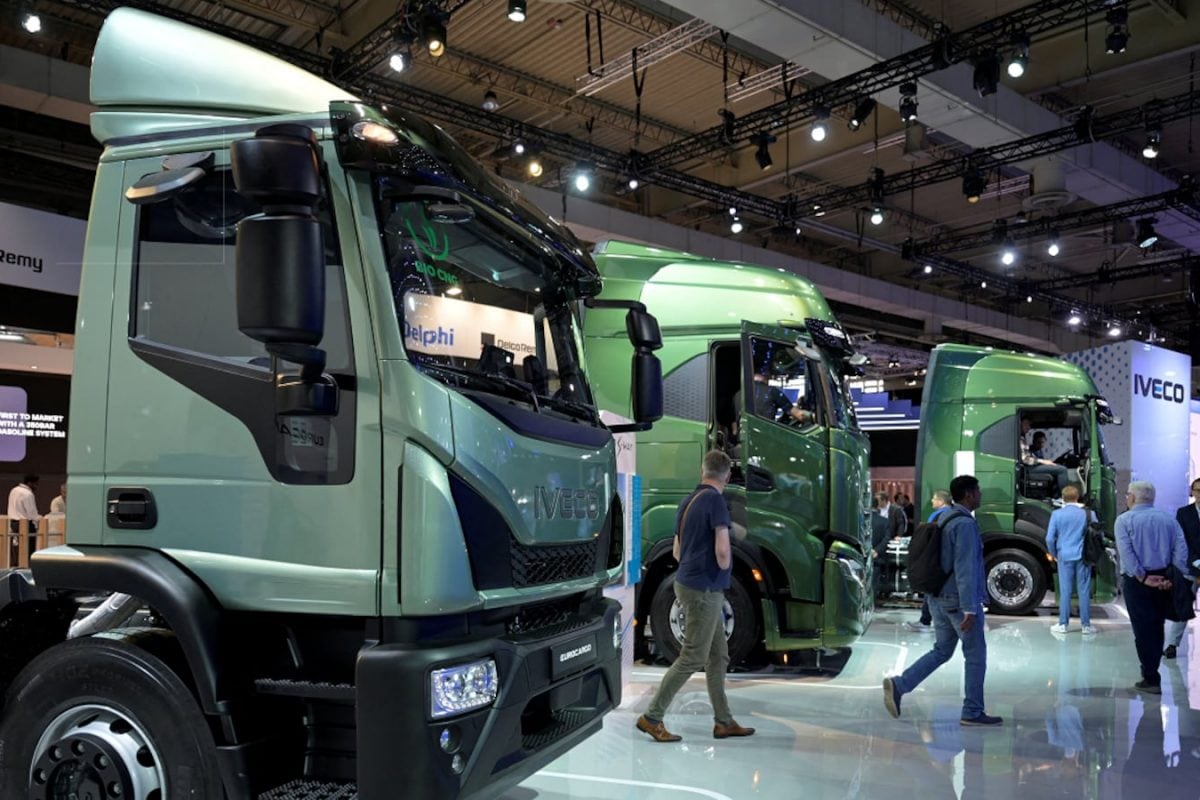
The acquisition of Turin-headquartered Iveco gives Tata Motors instant access to Europe’s mature and highly regulated trucking market. Iveco has a storied legacy and manufactures a wide range of light, medium, and heavy commercial vehicles, along with specialty vehicles for off-road and military use.
Currently, Tata Motors has a stronghold in India’s commercial vehicle segment but limited global penetration beyond its UK-based Jaguar Land Rover operations. Iveco changes that dynamic overnight. From Latin America to Africa, and from Europe to the Middle East, Iveco’s well-established distribution network, combined with Tata’s scale, could create a formidable global player.
According to sources, board meetings in both Tata Motors and CNH Industrial (Iveco’s parent company) are set for July 30 to finalize the acquisition. The timing is key—coinciding with Tata Motors’ Q1 FY26 earnings next week, which could provide the perfect platform to unveil a bold new roadmap.
The Agnelli Exit: Farewell to a Trucking Legacy
For the Agnelli family—Italy’s industrial royalty—this deal represents the gradual unraveling of a decades-old empire that once spanned cars, football clubs, newspapers, and even politics. Their holding company, Exor, controls CNH Industrial, Ferrari, and Juventus Football Club, among others.
Reports suggest that Iveco had been in advanced discussions with two suitors before zeroing in on Tata. While the family has been refocusing its portfolio toward new-age technology and financial services, letting go of Iveco marks a significant pivot away from traditional manufacturing.
On Tuesday, Iveco confirmed that talks were underway with two parties, fueling speculation. But all signs point toward Tata Motors as the frontrunner—now just one boardroom vote away from sealing the deal.
Flashback: From Corus to JLR—Tata’s M&A Legacy
Tata has a reputation for transformational acquisitions. In 2007, Tata Steel acquired Corus for $12 billion, a deal that catapulted it into the global steel big leagues. A year later, Tata Motors stunned the auto world by acquiring Jaguar Land Rover for $2.3 billion—rescuing the luxury brands from Ford and eventually turning them into profitability powerhouses.
If the Iveco deal is signed, it will not only be a financial milestone but a strategic masterstroke—giving Tata Motors access to advanced diesel and electric vehicle tech, R&D facilities in Europe, and a much-needed global manufacturing footprint.
Earnings Pressure Meets Expansion Ambition
The timing, however, is delicate. In Q4 FY25, Tata Motors reported a 51% year-on-year decline in consolidated net profit to ₹8,470 crore, even as consolidated revenue rose marginally by 0.4% to ₹1,19,503 crore. The results fell short of market expectations, putting pressure on the company to demonstrate its long-term growth strategy.
While the $4.5 billion price tag may raise concerns about leverage and integration risk, analysts believe the potential synergies could outweigh the short-term financial strain. Iveco’s strong presence in alternate fuel trucks and hydrogen mobility could complement Tata’s push for sustainable transportation.
Credits: Moneycontrol
What Iveco Brings to the Table
Iveco is more than just a truck maker—it’s a symbol of European engineering and innovation. With manufacturing facilities in Europe, Latin America, and North Africa, and a diverse lineup that includes fire engines, defense vehicles, and even buses, Iveco offers Tata a broad spectrum of growth opportunities.
Notably, Iveco has been investing in clean-energy technologies, including natural gas and hydrogen fuel cell trucks—areas where Tata Motors is keen to expand as regulatory pressures mount worldwide.