The past week has offered a clear view of how fast modern technology is moving from controlled research spaces into real-world use. From advances in quantum science to major funding rounds and large consumer electronics plans, the focus has been on practical progress rather than distant promises. Universities, private companies, and global brands have all shared updates that show how ideas once limited to theory are now being tested, built, and prepared for wider use. This mix of deep science and consumer-facing plans makes this week a strong snapshot of where the tech industry stands as 2025 comes to a close.
Quantum Teleportation Breakthrough Between Dissimilar Quantum Dots
One of the most important scientific updates came from Europe, where researchers reported a breakthrough in quantum communication. Teams from Paderborn University and Sapienza University of Rome managed to achieve quantum teleportation between two different types of semiconductor quantum dots. One dot was based on gallium arsenide, while the other used indium arsenide. These materials usually do not work together, which has been a long-standing problem in quantum networking.
By transferring quantum states between them through light-based links, the researchers showed that mixed hardware systems can still share information. The reported accuracy crossed 80 percent, which is considered strong for such experiments. This result matters because future quantum networks will not rely on a single type of hardware. Instead, they will need different systems to talk to each other across long distances.
Quantum Tech Reaches “Transistor Moment” with Real-World Applications
Another major theme this week was the growing belief that quantum technology is entering a more useful stage. A detailed review published in the journal Science described this phase as a “transistor moment,” drawing a comparison with the early days of modern electronics. According to the review, quantum tools are now being tested in sensing, secure communication, and early computing tasks.
The report covered multiple hardware types, including superconducting systems, trapped ions, and quantum dots. It also pointed to real-world use cases, such as space-based sensors supported by NASA and diamond-based tools used in chip manufacturing. While large, general-purpose quantum computers are still years away, the review argues that smaller systems are already offering value in specific tasks, especially where energy use and precision matter.
Stanford’s Room-Temperature Quantum Communication Device Unveiled
Stanford University added to this sense of progress with news of a room-temperature quantum communication device. Researchers there developed a tiny optical system that links light particles with electron spins without the need for heavy cooling equipment. Until now, most quantum devices required extremely low temperatures, making them expensive and difficult to deploy.
By showing stable entanglement at normal conditions, the Stanford team removed one of the biggest barriers to wider use. The device was tested over very short distances, but the team believes it can be scaled using existing chip production methods. This work could support secure communication networks and help bring quantum tools out of specialised labs.
Quantum Art Raises $100M for Trapped-Ion Quantum Computers
Private investment in quantum computing also made headlines this week. Quantum Art, a company based in Dallas, raised 100 million dollars in early funding to develop trapped-ion quantum computers. The firm plans to focus on modular systems that can link smaller units together. Trapped-ion machines are known for keeping quantum information stable for longer periods, which is helpful for complex calculations. The new funding will be used to improve manufacturing and to work with cloud service providers. Analysts say this deal reflects growing confidence among investors, even as technical challenges like system size and control remain.
Samsung Teases CES 2026 with Massive Exhibition and AI Vision
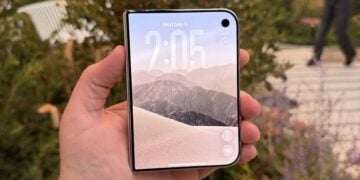
Away from research labs, consumer technology news was led by Samsung. The company confirmed details for its “The First Look” event ahead of CES 2026 in Las Vegas. Samsung plans to host its largest exhibition so far, with a strong focus on artificial intelligence across devices. Early hints suggest updates to foldable phones, smart home systems, and connected services designed to work together. The event is expected to shape early discussion at CES, where competition between major brands remains intense.