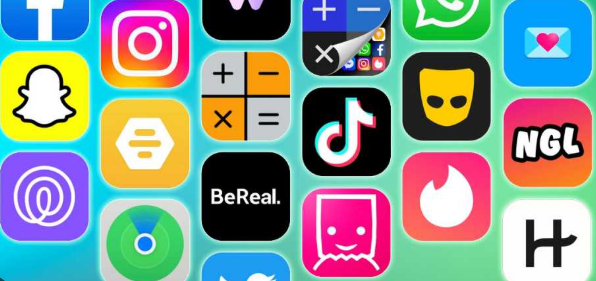
The modern software landscape operates on a fascinating psychological paradox: the most lucrative products on earth cost absolutely nothing to download. For decades, traditional commerce relied on a straightforward exchange of value a business manufactured a physical product or coded a software application, and a consumer paid an upfront fee to purchase it. However, as global smartphone penetration scales past billions of active users and cloud infrastructure costs continue to drop, the upfront friction of a price tag has become a major commercial liability.
Today, digital marketplaces like the Apple App Store and Google Play Store are heavily dominated by platforms that give away their core software completely free of charge. Yet, platforms like TikTok, WhatsApp, Spotify, and Fortnite regularly clear ten-figure annual revenues and command massive public market evaluations. Investigating why free apps can become billion dollar businesses reveals a highly sophisticated economic model. This framework exploits zero-marginal-cost scaling, advanced behavioral loops, and diverse multi-sided business ecosystems to turn free users into massive revenue engines. By removing upfront payment barriers, innovative tech companies can scale their active user bases at speeds that were impossible for traditional businesses. Once an application achieves this massive scale, the software developer transitions from a simple product vendor into an absolute platform gatekeeper. Understanding why free apps can become billion dollar businesses requires shifting your perspective from traditional sales to modern platform economics, where user attention, data, and engagement serve as the foundational currency of the digital age.
1. The Power of Zero: The Psychology of Virality and Scaling
At the heart of the free software model sits a powerful cognitive phenomenon known in behavioral economics as the Zero-Price Effect. When a product’s price drops from one dollar to zero, the consumer’s brain doesn’t just see a minor discount; it perceives a massive upgrade in value. A price tag of even $0.99 forces a consumer to stop, evaluate their budget, calculate potential buyer’s risk, and manually input payment credentials. A price of absolute zero completely eliminates this cognitive friction, paving the way for rapid, organic virality and explosive user scaling.
Furthermore, this rapid user growth triggers massive network effects. A network effect occurs when a digital platform becomes exponentially more valuable to its users as more people join the ecosystem. For example, a messaging app like WhatsApp or a social network like Instagram is completely useless if you are the only person on it.
By keeping the application free, these platforms ensure that early adopters can easily invite their entire social circles without running into financial barriers. This creates an aggressive word-of-mouth growth loop. This rapid scale allows digital platforms to build massive, sticky user bases before they ever attempt to extract a single dollar of revenue.
2. Multi-Sided Platforms: The Hidden Customers
The primary structural reason why free apps can become billion dollar businesses is that the person downloading the software from the app store is rarely the actual customer. Instead, successful free platforms function as multi-sided business models. They give away a premium consumer product to collect user attention and data, which they then monetize by selling access to high-paying third parties.
| The Monetized Core Asset | The Free Consumer Offering | The Real B2B Paying Customer |
| User Attention & Intent | Social Feeds, Search Utilities | Corporate Brand Advertisers |
| Anonymized Data Profiles | Navigation Tools, Fitness Trackers | Market Research Groups & Aggregators |
| Transaction Processing | Peer-to-Peer Payment Infrastructure | Merchant Point-of-Sale Networks |
| Audience Distribution | Content Feeds, Video Hubs | Independent Creators & Publishers |
The Advertising Model
In an ad-driven business model, the user’s daily attention is the core product being manufactured. Tech giants like Meta and ByteDance invest billions of dollars to build engaging social feeds completely for free.
As millions of users interact with these feeds every day, they reveal their specific personal interests, geographic locations, and purchasing habits. The platform packages this deep behavioral data and sells highly targeted, programmatic ad space to corporate brands. This model transforms a free entertainment app into an indispensable marketing engine for businesses worldwide.
The Data and Analytics Marketplace
Many utility applications, including free navigation systems, weather trackers, and fitness utilities, use their software to build comprehensive, real-world data networks. As millions of users move through cities with their location tracking active, the app collects valuable spatial and consumer trend data.
When anonymized and aggregated, this operational data is highly prized by real estate firms, hedge funds, and municipal urban planners. This allows the software developer to generate massive business-to-business (B2B) revenue streams completely out of sight of the everyday consumer.
3. The Freemium Tier: Converting the Top 5%
For applications that choose not to rely heavily on third-party advertising, the Freemium Business Model stands as the definitive framework for generating massive revenue. Under this system, the software developer splits their product into two distinct tiers: a basic version accessible to everyone for free, and a premium tier locked behind a recurring digital subscription or paywall. The underlying mathematical logic of freemium operations relies heavily on zero-marginal-cost software distribution. Because streaming an app to a new user costs next to nothing, a company can comfortably support a massive user base where 95% of people never pay a dime.
The entire business is sustained by converting a small, highly passionate 5% slice of the user base into premium subscribers. This high-margin premium core, exemplified by Spotify Premium subscribers or Tinder Gold members, generates more than enough cash to cover the operational overhead of the free tier while driving immense profits straight back to the corporate boardroom.
4. Microtransactions and the Gaming Revolution
The interactive entertainment industry provides the ultimate masterclass in why free apps can become billion dollar businesses. Over the past decade, the video game industry underwent a massive commercial evolution, abandoning the legacy model of selling physical $60 discs in favor of the “Free-to-Play” (F2P) framework. Platforms like Fortnite, Roblox, and Candy Crush cost absolutely nothing to download, yet they generate billions of dollars in annual profit through the strategic implementation of microtransactions. Free-to-play games monetize user behavior by capitalizing on emotional and psychological triggers at runtime. Rather than locking the core gameplay behind a paywall, developers sell highly specialized, optional digital items such as unique character outfits (skins), limited-time expressions (emotes), and performance-boosting items.
Because these purchases are broken down into small, frictionless $1 to $5 price points, consumers frequently lose track of their total spending. Furthermore, this ecosystem is supercharged by “whales” a small group of hyper-engaged users who spend thousands of dollars a month on digital items, transforming a free download into a highly lucrative entertainment property.
5. Ecosystem Lock-In and the Long-Term Monetization Horizon
Finally, many corporate giants deploy free software as a strategic loss leader designed to pull users into a larger, closed hardware ecosystem. Under this framework, the free app functions as an effective marketing and retention tool for separate, high-margin lines of business. Consider how Apple and Google utilize their free productivity applications, cloud storage backups, and communication suites. By giving away premium digital tools like Google Docs or Apple Notes for free, these tech giants ensure that your entire digital life becomes deeply linked to their cloud frameworks.
Once you have stored thousands of family photos, work documents, and system backups inside a specific company’s cloud network, switching to a competitor’s operating system becomes incredibly difficult. The free application effectively locks you into the brand ecosystem, ensuring you continue to buy their expensive, high-margin smartphones, tablets, and laptops for decades to come.
The Ultimate Standard for Digital Enterprise
The massive financial success of the zero-dollar download proves that traditional commercial rules are completely insufficient for navigating the internet economy. In a physical marketplace, a company can only grow by matching its production output directly to its incoming cash flows. In the digital landscape, however, raw scale and user attention serve as the definitive foundation for long-term corporate value.
By eliminating upfront financial barriers and leveraging the power of network effects, free applications can scale their user bases to sizes that physical industries can only dream of. Whether through targeted programmatic advertising, premium freemium conversions, behavioral microtransactions, or ecosystem lock-ins, the paths to extracting massive value from a free audience are virtually limitless. As the global digital landscape continues to expand, the businesses that master this zero-dollar framework will continue to dominate the markets, proving that the absolute fastest way to build a multi-billion-dollar empire is to stop charging your users at the front door.