The Trump administration has reportedly directed NASA to draw up plans to terminate two critical climate-monitoring missions. These missions, known as the Orbiting Carbon Observatory (OCO)-2 and OCO-3, play a central role in tracking carbon dioxide emissions from space — a function that researchers consider vital to understanding and addressing climate change.
One of the satellites is mounted on the International Space Station, while the other orbits Earth independently. Both collect highly detailed carbon dioxide data that is used globally by scientists, energy companies, and farmers alike. This information helps assess greenhouse gas levels and evaluate crop health, making the satellites a rare source of high-resolution, real-time environmental data.
Sudden Reversal for Long-Term Missions
The push to end these programs appears to have emerged recently, with NASA employees being asked to plan for termination scenarios. While the White House has not offered a public explanation, the decision is widely viewed through the lens of President Trump’s long-standing skepticism of climate science and the administration’s broader attempts to downscale environmental programs.
The OCO satellites were never intended to be short-term missions. In fact, scientists had anticipated that the instruments would remain operational for several more years. In 2023, NASA formally reviewed the missions and reported that the data they were generating was of exceptionally high scientific value.
Ending one of the missions — the free-flying OCO-2 satellite — would result in it burning up as it re-enters Earth’s atmosphere. Such a shutdown would not only halt data collection but erase a vital platform for monitoring the planet’s changing climate.
Scientists Call the Cuts Wasteful and Irresponsible
Former NASA scientist David Crisp, who played a key role in developing the OCO instruments, told NPR that current NASA staff had contacted him with questions that clearly pointed to planned shutdowns. Crisp and other experts argue that ending the missions makes little financial or scientific sense. Operating both satellites costs roughly $15 million per year, a negligible amount compared to NASA’s $25.4 billion annual budget.
More importantly, researchers say the value of the data far outweighs the cost. The carbon monitoring offered by OCO-2 and OCO-3 helps nations verify emission reduction efforts, track deforestation, and improve the accuracy of climate modeling.
A Broader Effort to Scale Back Climate Monitoring
The threatened termination of the OCO missions is just one piece of a larger strategy included in the Trump administration’s proposed fiscal year 2026 (FY26) budget, which calls for deep cuts to NASA’s Earth science division. If implemented, the proposal would eliminate funding for more than 50 existing or planned missions, many of which focus on monitoring environmental changes from space.
This sweeping reduction has sparked concern among scientists, who warn that cutting Earth observation programs would significantly impair the nation’s ability to understand and respond to environmental crises — from wildfires and floods to hurricanes and droughts.
Congressional Lawmakers Push Back
Lawmakers on Capitol Hill are now pushing back against the White House’s proposal. A bipartisan group in Congress has introduced a counter-budget that would maintain NASA’s funding for scientific missions at current levels. According to Senator Chris Van Hollen (D-MD), this counterproposal aims to prevent the elimination of dozens of missions and shield critical science programs from politically motivated cuts.
Concerns have also been raised about the legality of the administration’s approach. Representative Zoe Lofgren (D-CA) has pointed out that attempting to scale back programs already funded in the fiscal year 2025 (FY25) budget may violate federal budget laws. In short, the administration’s attempt to cancel already approved missions could be challenged as illegal interference with previously allocated funds.
National Preparedness at Risk
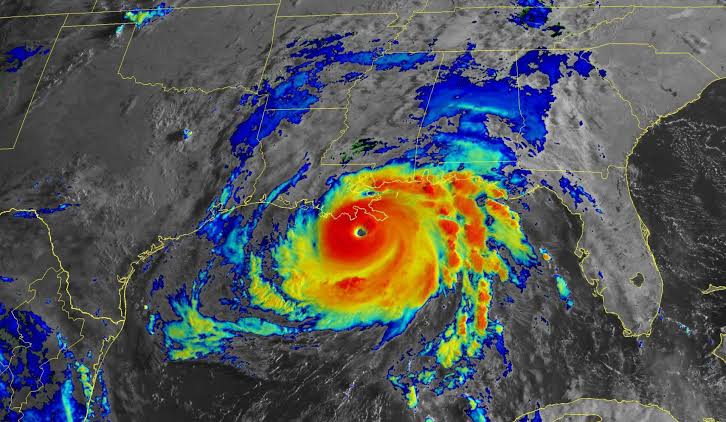
The potential fallout from these cuts goes far beyond lost satellite missions. Earth observation satellites, like those in the OCO series, are crucial tools for tracking climate trends and predicting extreme weather events. With climate-related disasters becoming more frequent and severe, scientists and policymakers alike rely on such data to make informed decisions on public safety, infrastructure, agriculture, and emergency planning.
Cutting off this stream of information now, experts say, would severely diminish the United States’ ability to forecast, manage, and respond to natural disasters and long-term climate risks. It could also weaken the country’s position as a global leader in climate science and space-based research.