A sweeping proposal for Gaza’s future has emerged from within the Trump administration, outlining a controversial plan that would temporarily relocate the territory’s entire population while transforming the coastal enclave into a high-tech economic powerhouse and luxury tourism destination.
The Washington Post revealed details of the 38-page document this Sunday, which bears the ambitious title “Gaza Reconstitution, Economic Acceleration and Transformation Trust,” or GREAT Trust.
The plan directly reflects President Donald Trump’s earlier pledge to “take over” Gaza and oversee its development for at least a decade.
The Trump Administration’s Gaza Relocation and Reconstruction Plan
Under this proposal, Gaza’s more than 2 million residents would face temporary relocation through one of two paths. They could voluntarily depart to another country or move into secured zones within Gaza itself during the massive reconstruction effort.
The plan sweetens this difficult choice with financial incentives designed to make relocation more appealing than staying put.
Palestinians choosing to leave would receive a $5,000 cash grant upfront, along with rent subsidies covering four years and a full year’s worth of food assistance.
The proposal’s authors calculate that these departure incentives would actually save money, roughly $23,000 per person, compared to providing temporary housing and basic services for those who remain during reconstruction.
Those who stay or eventually return wouldn’t be left empty-handed either. Current landowners would receive “digital tokens” representing their property rights, which they could either cash in to finance new lives elsewhere or redeem for apartments in six to eight planned “smart cities” powered by artificial intelligence technology.
The plan paints an ambitious picture of Gaza’s economic potential. Developers envision massive projects including electric vehicle manufacturing plants, cutting-edge data centers, pristine beach resorts, and modern high-rise apartment complexes.
The proposal claims a $100 billion investment could generate nearly four times that amount in returns over a decade, with steady revenue streams continuing beyond the initial period.
Trump Discusses Business-Led Gaza Reconstruction
Notably, the plan emphasizes it wouldn’t require U.S. government funding, instead relying on private investors attracted by the projected returns. This approach aligns with Trump’s preference for business-driven solutions to complex political problems.
The GREAT Trust wasn’t developed in isolation. According to reporting, some of the same Israelis who created the Gaza Humanitarian Foundation, currently responsible for food distribution in Gaza under U.S. and Israeli oversight, contributed to this broader reconstruction vision.
Financial modeling came from a team with Boston Consulting Group backgrounds, though BCG has distanced itself from the work, noting it wasn’t officially approved and that two senior partners involved in creating the financial model were later dismissed.
The proposal gained serious attention at a Wednesday White House meeting where Trump discussed Gaza’s postwar possibilities.
A Multi-Faceted Proposal and Its Controversies
The gathering included heavy hitters like Secretary of State Marco Rubio, special presidential envoy Steve Witkoff, former British Prime Minister Tony Blair, and Jared Kushner, Trump’s son-in-law who handled much of the first administration’s Middle East policy and maintains business interests in the region.
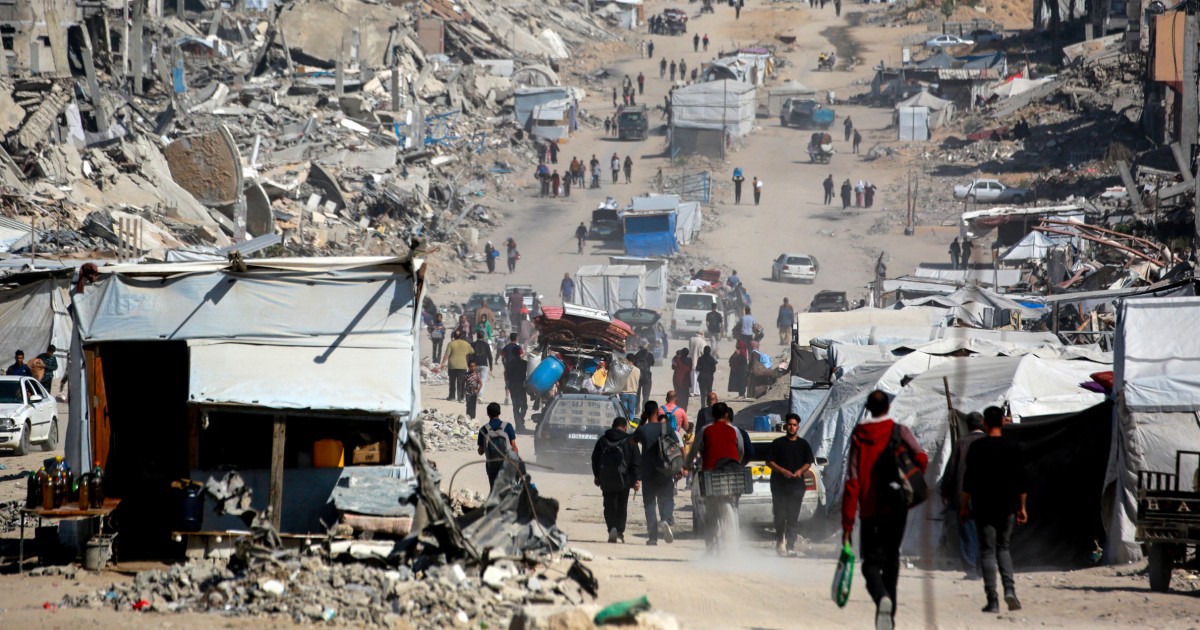
The reconstruction timeline would begin with clearing debris and unexploded ordnance, a massive undertaking given the extensive damage from recent conflicts. Infrastructure reconstruction, like utility and electric infrastructures, would be next, followed by the uplifting of industrial and tourist hubs near Gaza’s east and west frontiers.
The new “smart cities” will be provided with cutting-edge facilities like residential units, office units, units for industries, healthcare units, schools, parks, and green spaces, essentially developing new urban centers from ground zero.
But there are legitimate legal and ethical questions about such a plan. Specialists in international law disagree with any such plan keeping Palestinian refugees out of own residences or without adequate provisions for them, including food supplies, accommodations, and medicine, regardless of whatever monetary compensation is made.
This plan is but one alternative among several others that are being considered to shape Gaza’s future. Other proposals include a temporary UN or Palestinian Authority ruling and plans favored by Arab states calling for a technocratic ruling.
Israel has refused all proposals that would hand power back to the West Bank-based Palestinian Authority and has refused to yield security control of Gaza.
GREAT Trust proposal is in line with Trump’s signature style of seeking business fixes to long-standing political issues, but will be a subject of feasibility and international acceptability until further debate.