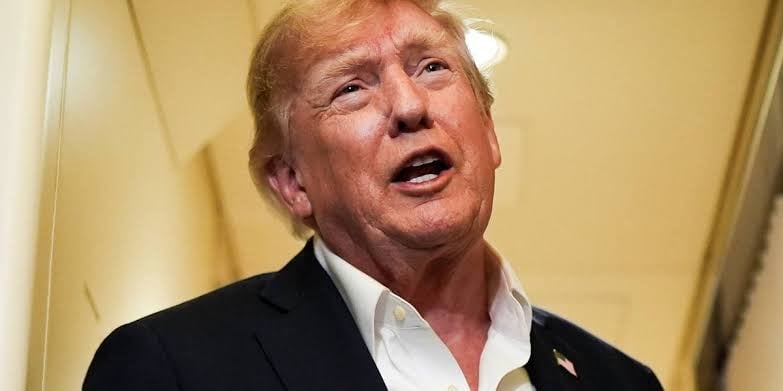
President Donald Trump and his family are becoming increasingly connected to the booming artificial intelligence economy, creating a notable overlap between the president’s business interests and one of the most important policy debates of his administration.
While Trump has rejected calls from some technology leaders for a slowdown in the development of increasingly powerful AI systems, members of his family have continued building financial interests in companies and infrastructure linked to the sector. The growing investments have prompted questions about potential conflicts of interest as the administration shapes policies affecting AI, data centers, energy and advanced technology.
Trump has made artificial intelligence a central part of his economic and technological agenda. He has repeatedly argued that the United States must maintain its lead over China in AI and has resisted proposals for broad restrictions that could slow development.
The debate has intensified in recent weeks as several prominent technology figures have called for greater caution. Anthropic CEO Dario Amodei has argued for slowing the development of the most advanced AI systems, with OpenAI CEO Sam Altman and SpaceXAI CEO Elon Musk also supporting stronger safety measures.
Trump, however, has maintained that the United States cannot afford to surrender its technological advantage.
Trump’s investments tied to the AI boom
Trump’s financial disclosures include investments in companies that provide hardware and infrastructure essential to the development of AI systems.
Among the companies disclosed in his transactions are Dell Technologies, Micron Technology and GE Vernova. Their businesses are connected to areas such as computing hardware, semiconductors and electricity infrastructure, all of which have become increasingly important as companies build massive data centers to train and operate AI models.
The scale of AI infrastructure spending has made the sector increasingly broad. The AI economy now extends beyond companies developing chatbots and software. Semiconductor manufacturers, server companies, electricity producers, cooling-system providers and data-center developers are all benefiting from the rapid expansion of computing capacity.
Trump’s financial exposure therefore extends into several parts of the infrastructure supporting the AI industry.
His investment accounts have reportedly carried out thousands of transactions, although the exact holdings at any given moment are not always clear because the president does not have to disclose trades immediately. His representatives have said that his investments are handled through independent managers and discretionary accounts rather than being personally directed by Trump.
Trump sons expand technology interests
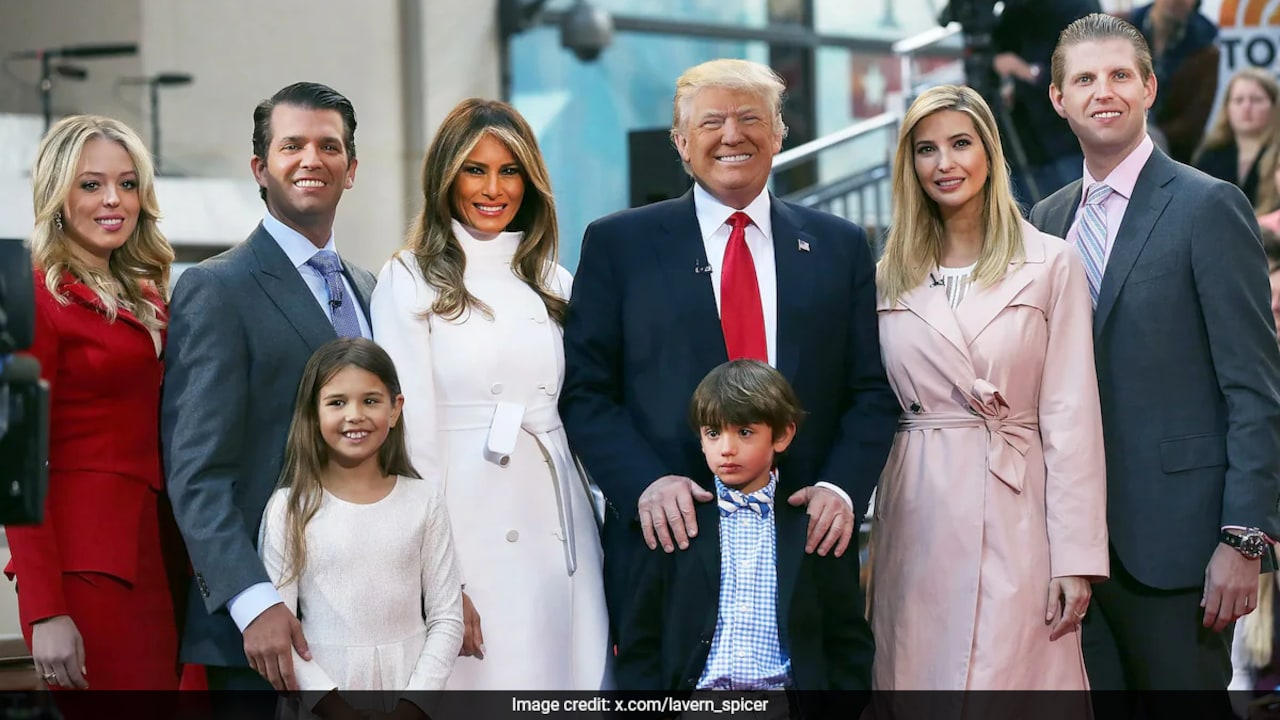
Trump’s sons have also established connections to the technology and AI investment ecosystem.
Donald Trump Jr. is a partner at 1789 Capital, an investment firm that has backed companies operating in technology, defense and artificial intelligence. The firm’s investments have included AI-related businesses such as Cerebras Systems, Perplexity and xAI.
In August, 1789 Capital also closed a $1.2 billion real estate fund that includes digital infrastructure such as data centers among its investment areas.
Eric Trump has separately invested through American Ventures, an investment operation connected to Dominari Holdings. His interests include companies involved in defense technology, robotics and AI-based data analysis.
The Trump brothers have also pursued data-center opportunities through American Data Centers, a venture created after their father’s return to the White House. The initiative later became connected to American Bitcoin, a cryptocurrency mining and infrastructure company involved in a major data-center project in Texas.
These investments place the Trump family close to an industry that is receiving enormous amounts of private capital while simultaneously becoming a major focus of U.S. economic and national-security policy.
Debate over AI slowdown
The question of whether AI development should continue at its current pace has become increasingly contentious.
Supporters of a slowdown argue that AI systems are advancing faster than existing safety mechanisms. They have raised concerns about cyberattacks, misinformation, autonomous systems and the possibility that future AI models could become difficult to control.
Amodei’s call for a slowdown received support from other prominent AI leaders, while companies and investors have continued to compete aggressively to develop more powerful systems. The debate has already affected financial markets, with AI-related stocks experiencing volatility following warnings about the risks of unchecked development.
Trump has taken a different approach. He has emphasized technological competition with China and argued that excessive regulation could weaken America’s position in the global AI race.
At the same time, the administration has indicated that existing laws could be used to address harmful applications of AI rather than imposing broad restrictions on the industry’s development.
Conflict-of-interest questions
The intersection between Trump’s policy position and his family’s financial interests has become a subject of political and public scrutiny.
The issue does not establish that Trump’s policy decisions are being made to benefit his investments. His representatives have said his investments are independently managed, while Trump Jr.’s representatives have emphasized that he operates as a private citizen rather than a government official.
Nevertheless, the overlap has become difficult to ignore as AI policy increasingly affects industries in which the Trump family has financial exposure.
Government decisions on data centers, electricity generation, semiconductor production, technology exports and AI regulation can influence the value of businesses throughout the sector.

The stakes are particularly high because AI has moved beyond being a niche technology issue. It has become closely connected to the American economy, energy demand, national security and competition with China.
As Trump continues to push for rapid AI development, his family’s expanding presence in the sector is likely to remain part of the broader debate over how the United States should regulate artificial intelligence while maintaining its position in the global technology race.