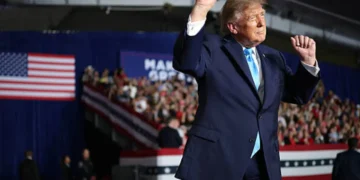
Tensions are mounting ahead of the highly anticipated meeting between US President Donald Trump and Russian President Vladimir Putin in Alaska this Friday, August 15. The talks are being billed as a critical attempt to end the war in Ukraine, triggered by Russia’s full-scale invasion in February 2022.
But for India, the stakes extend beyond geopolitics — they now threaten to hit its trade and energy security. On Wednesday, US Treasury Secretary Scott Bessent issued a stern warning: if the Trump-Putin talks “don’t go well,” Washington could increase the secondary tariffs it has already imposed on India for purchasing Russian oil.

Credits: Hindustan Times
From 25% to 50% — Tariff Pressure Mounts
India is already feeling the heat. Initially, President Trump levied a 25% tariff on Indian goods. That figure doubled on August 7, when he imposed an additional 25% penalty specifically targeting India’s Russian oil purchases. The combined rate now stands at a hefty 50%.
Trump has been vocal about his displeasure with New Delhi’s continued energy trade with Moscow, accusing India of “fueling the war machine” and warning he would not “be happy” if it continued. The message from Bessent on Bloomberg TV was clear: more pain could be on the way.
“We’ve put secondary tariffs on Indians for buying Russian oil. And if things don’t go well, then sanctions or secondary tariffs could go up,” Bessent said.
Europe Urged to Step Up Sanctions
In his interview, Bessent also called out European nations for what he sees as insufficient action against Russia. While emphasising that President Trump is “creating his own leverage” ahead of the summit, Bessent urged European allies to “join in these sanctions” and be “willing to put on these secondary sanctions” to increase pressure on the Kremlin.
The US strategy, he hinted, is not just about direct negotiations but also about building a coalition of economic pressure.
India Stands Firm on Energy Security
New Delhi, however, has not been quick to bend. Earlier this week, Prime Minister Narendra Modi spoke with Ukrainian President Volodymyr Zelensky, reiterating India’s consistent stance on the conflict — calling for “an early and peaceful resolution” and pledging to contribute to peace efforts.
Responding to Trump’s tariff escalation, PM Modi declared that India would not compromise on the interests of its farmers, even if that meant economic consequences. The External Affairs Ministry (MEA) echoed this resolve, branding the US tariffs as “unfair, unjustified, and unreasonable.”
The MEA stressed that India’s energy imports are guided by “market factors” and aimed at safeguarding the energy needs of 1.4 billion citizens. In a pointed remark, the ministry noted that several countries criticising India for its Russian purchases are themselves engaged in trade with Moscow.
Geopolitical Crossroads for New Delhi
The Alaska summit will be watched closely in New Delhi, as its outcome could reshape the trade and diplomatic landscape. If Trump and Putin fail to reach an understanding on Ukraine, the fallout could come swiftly in the form of intensified US tariffs and possibly broader sanctions.
For India, the challenge lies in balancing three competing priorities:
-
Securing affordable energy supplies amid global price volatility.
-
Maintaining strategic autonomy in foreign policy without bowing to pressure from either Washington or Moscow.
-
Protecting domestic industries and farmers from the ripple effects of tariff hikes.

Credits: Hindustan Times
The Road Ahead
Trump has warned Russia of “very severe” consequences if it refuses to halt the war after the Alaska meeting. Whether those consequences will spill over onto India remains to be seen. For now, the message from Washington is unmistakable — India’s energy ties with Russia are under increasing scrutiny, and the tariff weapon remains locked and loaded.
As the summit approaches, the world’s eyes will be on Alaska. But in New Delhi’s corridors of power, the question is not just about whether peace in Ukraine is possible — it’s also about whether India can navigate the tightening grip of US trade pressure without sacrificing its core interests.