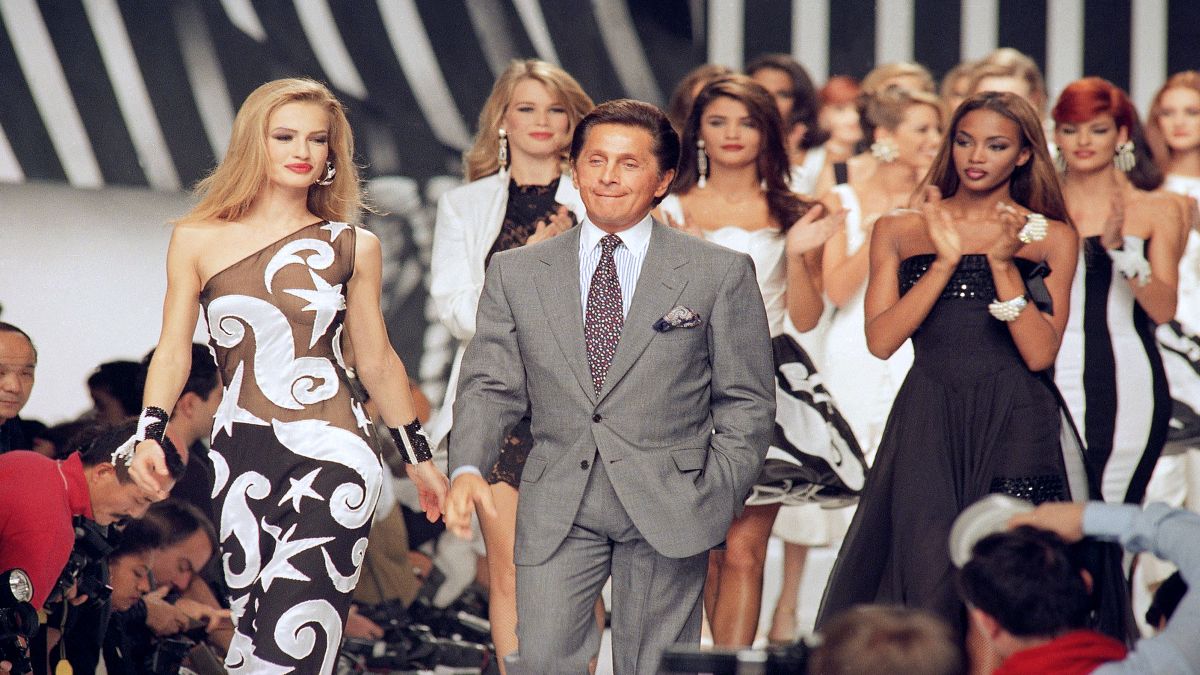
The world of fashion has lost one of its greatest visionaries. Valentino Garavani, the legendary Italian couturier whose creations defined elegance for over six decades, passed away at the age of 93 at his home in Rome. From dressing queens and First Ladies to creating unforgettable red-carpet moments, Valentino didn’t just design clothes — he shaped how beauty, power, and glamour were expressed in fabric.
As tributes pour in from across the globe, the designer’s passing also raises an inevitable question: what becomes of the empire he spent a lifetime building?
)
Credits: Firstpost
A Boy Who Fell in Love With Beauty
Born on May 11, 1932, in Voghera, a small town south of Milan, Valentino was named after the silent film star Rudolph Valentino — an omen, perhaps, of the glamour that would define his life. His father ran an electric cables business, but young Valentino was drawn to an entirely different world.
From a young age, he was obsessed with beauty, craftsmanship, and refinement. “I only like beautiful things,” he once said — a philosophy that would become his lifelong signature. At 17, he left home for Paris, studying at elite fashion schools before working under masters like Jean Dessès and Guy Laroche, where he learned couture discipline and luxury precision.
The Rise of the House of Valentino
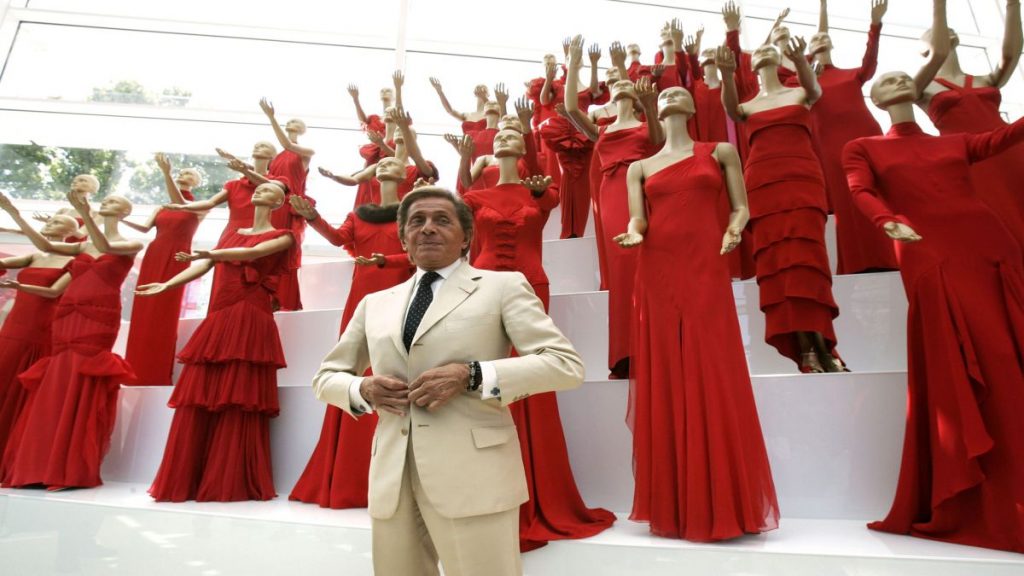
In 1959, Valentino returned to Italy and opened his own fashion house in Rome with the support of his partner Giancarlo Giammetti, whose business instincts perfectly complemented Valentino’s artistic genius. It was here that Valentino unveiled what would become his most famous calling card: Valentino Red — a bold, emotional shade that came to symbolise confidence and timeless glamour.
The fashion world quickly took notice. In 1960, Elizabeth Taylor wore Valentino to the premiere of Spartacus, instantly cementing his status as a designer to the stars. What followed was a golden era of couture dominance.
Dressing History’s Most Iconic Women
Valentino’s gowns were present at some of the most culturally significant moments of the 20th century. Jacqueline Kennedy turned to Valentino during her year of mourning after John F. Kennedy’s assassination, and later wore one of his creations for her wedding to Aristotle Onassis.
Royalty, actresses, and cultural icons followed — from Farah Diba, the Empress of Iran, to Julia Roberts, who accepted her Oscar in a black-and-white Valentino gown in 2001, and Cate Blanchett, whose yellow silk taffeta dress became an instant red-carpet legend in 2005. Valentino didn’t just dress women — he made them feel unforgettable.
From Couture House to Billion-Dollar Empire
With Giammetti’s guidance, the brand expanded far beyond couture into ready-to-wear, accessories, fragrances, and global licensing, transforming Valentino into a luxury powerhouse. In 1998, the fashion house was sold for $300 million, though Valentino continued designing until his retirement in 2007.
Subsequent ownership changes only increased the brand’s value, and even after stepping away from the runway, Valentino’s wealth continued to grow. At the time of his death, his net worth was estimated at around $1.5 billion — a testament to both his creative legacy and business foresight.
A Life of Art, Architecture, and Indulgence
Valentino’s fortune extended far beyond fashion. He owned lavish properties across the world — from a Roman villa near the Spanish Steps and a London mansion to a Manhattan penthouse, a French château, and a Swiss chalet.
He also possessed a 152-foot superyacht, TM Blue One, personally styled by himself, and an extraordinary art collection featuring works by Picasso, Warhol, Rothko, Basquiat, and Hockney. For Valentino, beauty wasn’t limited to clothing — it was a way of life.
Who Inherits the Valentino Legacy?
Valentino never had children, but he had deep emotional bonds — especially with his beloved pugs, whom he often said mattered more than any collection. His estate, however, was anything but whimsical.
According to those familiar with the structure, his wealth is held in carefully designed private trusts, with Giancarlo Giammetti playing a central role in stewardship. Italian inheritance laws and international estate planning suggest that Valentino’s legacy is meant to be preserved, not fragmented — protecting both his assets and his cultural contribution for generations to come.
?im=FitAndFill=(596,336))
Credits: Firstpost
A Legacy That Will Never Fade
Valentino Garavani leaves behind more than a fortune or a fashion house. He leaves behind a vision of elegance in a fast-moving world — proof that timeless beauty, when crafted with devotion, can outlive trends, decades, and even its creator.
Though the maestro is gone, his red gowns, his silhouettes, and his belief in beauty will continue to walk the world’s most glamorous stages forever.