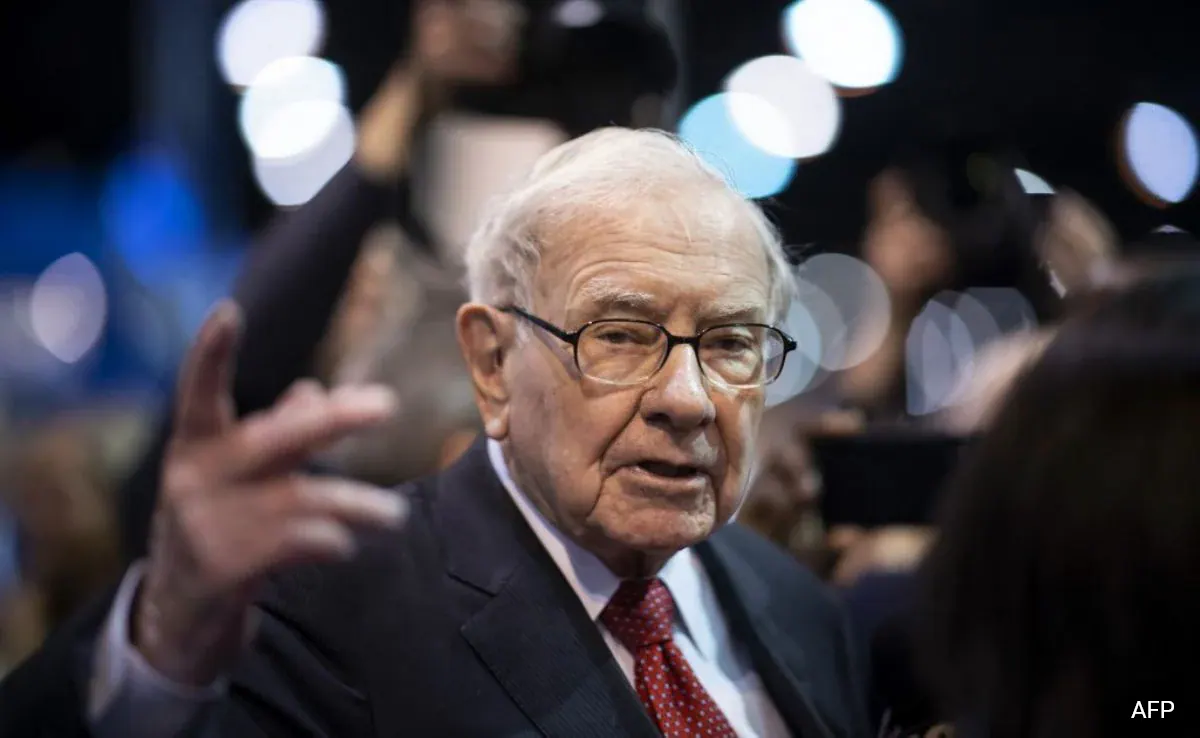
At 95, Warren Buffett, one of the most respected and successful investors in modern history, is stepping down as Chief Executive Officer of Berkshire Hathaway after six decades of leadership. The decision, announced in May 2025 and set to take effect on December 31, 2025, brings to an end a remarkable era that shaped global investment thinking and corporate management. Often called the “Oracle of Omaha,” Buffett’s approach to value investing, his quiet confidence, and his long-term outlook turned a struggling textile company into a global business empire worth more than a trillion dollars. His retirement marks a historic transition not only for Berkshire Hathaway but also for the wider investment community that has long looked to him as a moral and financial compass.
Buffett’s journey from a modest upbringing in Omaha, Nebraska, to leading one of the world’s most admired companies is a story of discipline, patience, and clarity of thought. Born on August 30, 1930, he bought Berkshire Hathaway in 1965 for just $11 per share when it was a failing textile firm. Over the next sixty years, through wise acquisitions and a unique philosophy centred on buying great companies at fair prices, he turned it into a diversified powerhouse. Today, Berkshire holds investments and businesses across insurance, energy, railroads, technology, and consumer goods, with brands such as Geico, BNSF Railway, Dairy Queen, and Duracell under its wing. Buffett’s strategy of “buy and hold forever” was not just a slogan but a lifelong commitment to long-term value creation.
Throughout his tenure, Buffett’s investment principles remained simple but powerful. He focused on finding quality businesses with strong management, steady earnings, and durable competitive advantages. His emphasis on patience, honesty, and rational decision-making became a model for investors across the world. The results speak for themselves: under his leadership, Berkshire Hathaway achieved a compounded annual return of 20% since 1965, compared with around 10% for the S&P 500. A $10,000 investment in Berkshire in 1965 would be worth more than $5 billion today. Buffett’s net worth, estimated at around $146 billion in 2025, has largely remained invested in the company he built, reflecting his lifelong belief in ownership and responsibility.
The official announcement of Buffett’s departure came during Berkshire’s annual shareholder meeting in Omaha on May 3, 2025, an event often called the “Woodstock for Capitalists.” He informed shareholders that he would retire as CEO at the end of the year and recommended Greg Abel, a long-time deputy and trusted colleague, as his successor. The news was received with both admiration and sadness, marking the closing chapter of a leadership period unmatched in corporate history. The following day, Berkshire’s board met and approved the transition plan, confirming that Buffett would stay on as non-executive chairman to guide the company through the change.
In interviews following the announcement, Buffett acknowledged that age had begun to slow him down. He spoke candidly about facing balance issues and occasional lapses in recall, remarking that there was no single “moment” that triggered his decision, but rather an honest recognition that it was time. “I’ll still be around,” he said in his characteristic calm tone, promising to remain available for advice and major decisions but no longer managing the day-to-day affairs.
Greg Abel, aged 62, represents a natural continuation of Buffett’s leadership style. A Canadian-born executive who joined Berkshire through its acquisition of MidAmerican Energy in 2000, Abel has led Berkshire Hathaway Energy since 2008 and has been responsible for overseeing all non-insurance operations, including energy, railroads, and manufacturing. Buffett once remarked that Abel “understands businesses better than I now do,” underscoring his faith in the successor’s competence and temperament.
Abel’s challenge will be to manage Berkshire’s vast $382 billion cash reserve and maintain investor confidence in a company long shaped by Buffett’s personal touch. Analysts have already discussed the risk of a “Buffett premium”, the intangible boost in Berkshire’s market value derived from Buffett’s reputation, fading away. In the months following the announcement, Berkshire’s Class B shares dropped about 12%, even as the S&P 500 rose by 15%. Investors expressed both concern and curiosity about what a post-Buffett Berkshire would look like. Yet, most observers agree that the company’s decentralised structure, strong subsidiaries, and disciplined culture give it stability far beyond any single individual.
Buffett’s farewell letter to shareholders, released on November 10, 2025, carried the quiet humility and wisdom that have defined his communication for decades. In the letter, he announced a major $6 billion donation in Berkshire shares to his family foundation, the Susan Thompson Buffett Foundation, the Sherwood Foundation, the Howard G. Buffett Foundation, and the NoVo Foundation. This move was part of his long-standing pledge to give away 99% of his wealth, much of it through the Bill & Melinda Gates Foundation. He also reflected deeply on his partnership with Charlie Munger, who passed away in 2023, calling their relationship “a partnership of equals” that shaped every decision Berkshire made.
In his letter, Buffett also addressed the coming change in leadership. He assured shareholders that Berkshire would remain in capable hands, crediting Abel and the company’s managers for maintaining the firm’s stability. “Berkshire will be fine,” he wrote, pointing to the company’s diverse assets and the ethical culture that underpins them. He emphasised that his role as chairman would be advisory, with no interference in operational matters, and expressed confidence that the company’s long-term values would continue unchanged.
The markets responded to Buffett’s farewell with a mixture of nostalgia and uncertainty. Some analysts called it the end of an era, while others noted that the transition was long planned and well-structured. On social media, investors and admirers shared quotes and reflections from Buffett’s six-decade career. Apple CEO Tim Cook praised him as “a once-in-a-century business leader,” while Columbia professor Bruce Greenwald described his career as “something unlikely to be repeated.” Online forums such as r/ValueInvesting buzzed with discussions about buying Berkshire stock after the dip, echoing Buffett’s own advice to “be fearful when others are greedy, and greedy when others are fearful.”
Buffett’s impact goes far beyond his investment record. He reshaped corporate governance by promoting transparency, trust, and decentralisation. He empowered subsidiary managers to operate independently, believing that people perform best when given both freedom and accountability. His plain-spoken letters to shareholders became educational documents in themselves, blending business insight with moral clarity. His refusal to invest in businesses he did not understand, such as cryptocurrency, which he famously dismissed as “rat poison squared”, reflected a discipline that many modern investors often lack.
Even in retirement, Buffett’s influence will remain embedded in Berkshire’s structure and culture. His decision to stay on as chairman ensures a smooth transition and maintains confidence among shareholders. His son, Howard Buffett, is expected to eventually take over as chairman, preserving the family’s stewardship and commitment to the firm’s founding values.
The larger question now is what Berkshire Hathaway will look like without its guiding figure. The company remains financially strong, with over 200 subsidiaries, $170 billion in insurance float, and growing earnings from its energy and railroad divisions. Abel’s focus will likely be on deploying the massive cash reserves, continuing disciplined buybacks, and pursuing opportunities that meet Buffett’s strict standards. Analysts predict stability rather than radical change, as Abel has promised to maintain Berkshire’s cautious and long-term approach.