Digital freight platforms have changed the way shipping professionals collect information, compare vessels and communicate with the market. A process that once depended heavily on telephone calls, telex messages and manually maintained vessel lists can now be supported by real-time vessel positions, automated rate calculations, electronic documentation and searchable databases.
These tools provide genuine value. They reduce the time required to process information and make parts of the freight market more transparent. A charterer can identify vessels in a region, review their technical particulars and compare indicative freight levels much faster than was previously possible.
However, faster access to information should not be confused with the ability to make a complete chartering decision.
A freight platform can organise data, but it cannot always determine whether that data is complete, current or commercially meaningful. It may identify a vessel that appears suitable on paper without recognising the operational difficulties that could emerge at the loading port, during the voyage or at the discharge terminal.
Maritime chartering is not simply a transaction between a cargo and an available ship. It is a decision involving the interaction of the vessel, cargo, ports, contract, schedule, counterparties and market conditions. Each element can affect the others, and apparently minor details can produce substantial consequences.
This is where digital systems reach their limit and experienced human judgement remains essential.
What digital platforms do well
Digital platforms are particularly effective when dealing with structured information.
They can collect vessel positions, deadweight, dimensions, year of construction, flag, classification and other technical particulars. They can help users monitor vessel movements, calculate distances and estimate voyage durations. Some systems can compare historical freight information, bunker prices and port costs.
Automation is also useful for repetitive administrative work. It can organise enquiries, identify missing fields, distribute cargo orders, maintain contact records and store previous negotiations. Used correctly, these functions reduce manual effort and allow brokers and charterers to concentrate on the parts of the process requiring analysis and communication.
Digital tools can also widen market visibility. A charterer may discover vessels or owners that would not have appeared within an established network of contacts. An owner may identify cargo opportunities outside its usual trading pattern.
The problem begins when the information displayed by a platform is treated as a conclusion rather than a starting point.
A vessel’s position does not confirm that it is commercially available. Its deadweight does not establish the quantity it can load at a particular port. A calculated freight rate does not show every cost or operational exposure. A database entry cannot guarantee that a vessel’s cranes, holds or hatches are suitable for the proposed cargo.
The platform presents information. The shipping professional must determine what that information means for the actual voyage.
An indicative freight rate is not the total transport cost
Automated freight estimates are attractive because they offer a quick number that can be incorporated into a preliminary calculation. For standard cargoes and frequently traded routes, such estimates may provide a useful indication of the current market.
They should not be mistaken for an executable freight offer.
A voyage calculation depends on assumptions about speed, fuel consumption, port time, canal charges, port expenses, cargo-handling productivity and the vessel’s next employment. If one assumption is inaccurate, the resulting rate can be misleading.
Two vessels with similar deadweight may produce very different voyage economics. One may be close to the loading port but require additional hold cleaning. Another may be farther away but have lower fuel consumption and better cargo intake. A third may offer the lowest nominal freight while creating additional costs for shore cranes, grabs or port overtime.
The lowest freight rate may therefore result in a higher total transport cost.
The commercial consequences extend beyond freight. If a vessel misses the contractual loading window, the seller may face problems under the sale contract. If the vessel loads less cargo than expected, the charterer may have to arrange a second shipment or leave part of the cargo behind. If discharge takes longer because of unsuitable hatch dimensions, demurrage exposure can exceed the original freight saving.
Digital calculations rarely capture every consequence because the relevant information is divided among several parties. The owner understands the vessel, the terminal knows the berth, the shipper understands the cargo and the trader knows the sale contract. The broker’s role includes connecting these separate pieces of information before a commitment is made.
Vessel suitability requires interpretation
A digital platform may match a cargo order with vessels based on deadweight, position and broad vessel type. These are useful filters, but they are not sufficient to establish operational suitability.
The correct vessel depends on the physical characteristics of the cargo and the limitations of the ports involved.
For dry bulk cargo, questions may include hold cleanliness, cubic capacity, permissible tank-top loading, hatch dimensions, grab requirements and loading or discharge rates. Even when the vessel has sufficient deadweight, draft restrictions may prevent it from loading the intended quantity.
This is why professional dry bulk cargo chartering requires more than matching cargo volume with vessel capacity. The entire transport chain must be considered before the ship is nominated.
For breakbulk cargo, the arrangement becomes more complicated. The dimensions and weight of individual units may determine whether the cargo can pass through the hatch opening or be positioned safely inside the hold. Crane outreach can be as important as crane capacity. A vessel may have two cranes capable of a tandem lift, but their position or working radius may not suit the cargo layout.
Project cargo adds further variables, including lifting points, centre of gravity, deck strength, stability, ballast operations, securing arrangements and the sequence of loading and discharge.
These factors cannot always be expressed through standard fields in an online form. Even when the data is available, it must be interpreted in relation to the specific voyage.
A platform may identify ten apparently suitable vessels. After operational review, only two or three may remain realistic candidates.
Port information changes the picture
The vessel cannot be evaluated separately from the ports.
Draft, length, beam and air-draft limitations are obvious considerations, but port suitability also depends on factors that are more difficult to standardise. These can include tidal windows, tug requirements, berth construction, crane outreach, daylight navigation, seasonal weather and local working practices.
Published port data can also be outdated or based on normal conditions. Silting, temporary maintenance, congestion or changes in terminal equipment may alter the actual position.
For example, a vessel may be within the port’s published maximum dimensions but still be unsuitable for the intended berth. Its cranes may not reach the required working area, or its hatch configuration may reduce the terminal’s discharge productivity. A vessel arriving at the maximum theoretical draft may have insufficient margin under the port’s current under-keel-clearance requirements.
Local agents and terminal representatives are therefore essential sources of voyage-specific information. Their responses must then be compared with the vessel’s particulars and the cargo plan.
This process involves asking precise questions. A generic request asking whether a vessel can enter the port may produce a generic answer. An experienced broker understands which technical details must be presented and which qualifications must be obtained in writing.
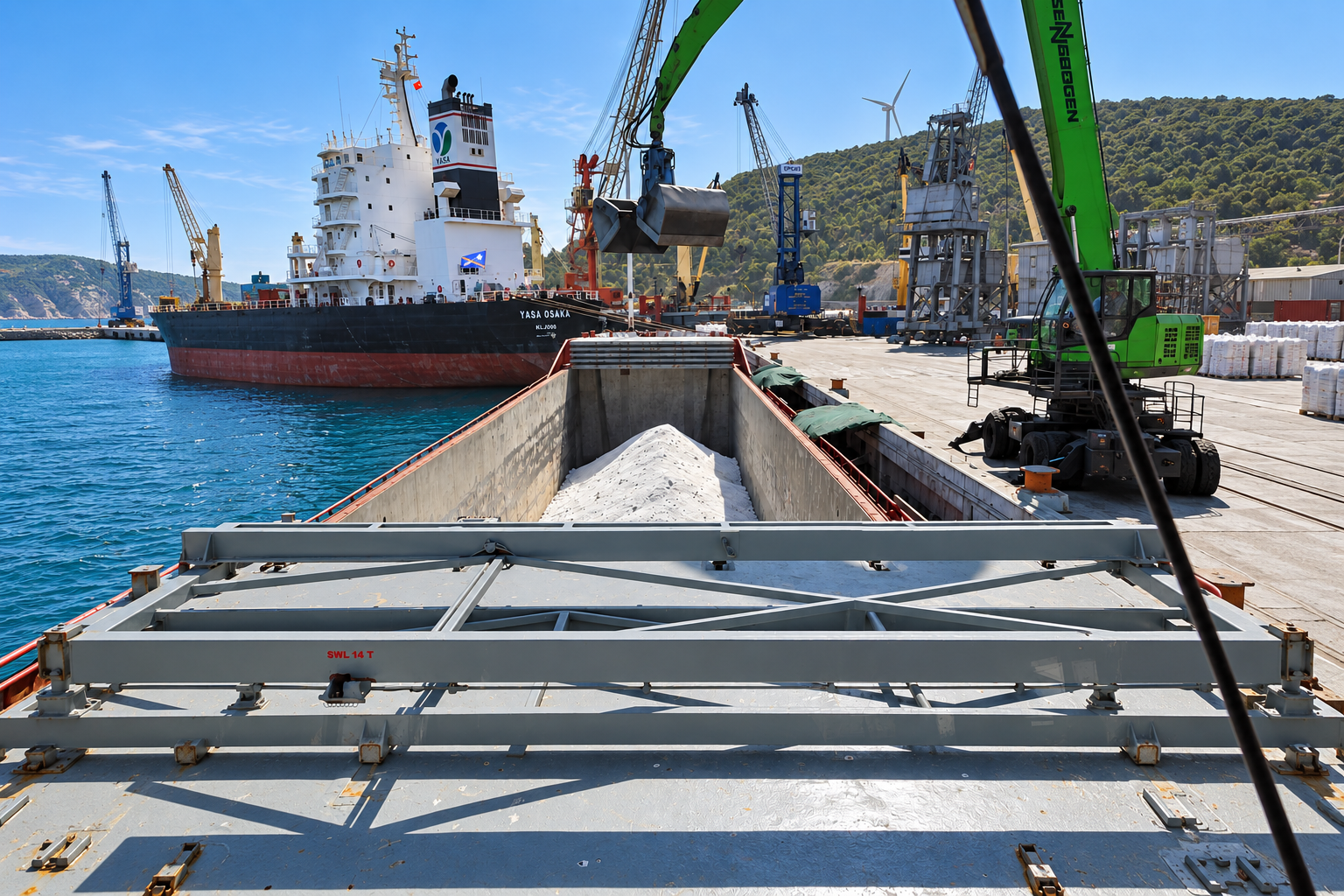
The interaction between the vessel, cargo-handling equipment and terminal can be seen in this cargo discharge operation handled by Kiev Shipping
Not all data is equally reliable
The shipping market relies on information from vessel databases, AIS transmissions, owners, brokers, agents, terminals and other commercial sources. These sources do not always agree.
A vessel may have changed its name, flag, manager or ownership. Technical databases may show different crane capacities or cargo-space figures. An AIS destination may not have been updated. A vessel described as open in one region may still have an intermediate voyage or port call to complete.
Automated systems can detect some inconsistencies, but they cannot always explain them.
Human judgement is required to decide which discrepancies are harmless, which require clarification and which indicate a material risk. A small difference in the reported year of construction may have little influence on one fixture. A difference in hatch dimensions or cargo capacity may make the proposed voyage impossible.
The same applies to estimated arrival dates. A platform can calculate sailing time from the vessel’s reported position, but it may not know whether the vessel is waiting for a berth, completing cargo operations, planning a bunker call or experiencing technical difficulties.
An experienced broker does not simply repeat the date shown on a screen. The broker examines the vessel’s itinerary, current status, remaining obligations and the assumptions behind the owner’s estimate.
Charter-party negotiations cannot be fully automated
Charter parties allocate commercial and operational risk. The wording of a clause may determine who pays when the voyage does not proceed as planned.
Standard forms provide a useful foundation, and digital contracting systems can make documents easier to prepare and exchange. However, the significance of an individual clause depends on the cargo, ports and circumstances of the fixture.
Laytime terms, notices of readiness, weather interruptions, berth availability, shifting time, hold cleanliness and cargo documentation can all become sources of disagreement. A clause that worked successfully on one voyage may be unsuitable for another.
The challenge is not simply selecting language from a database. It is anticipating where uncertainty may arise and allocating that risk clearly.
Negotiations also involve priorities that are not always visible in the written offer. An owner may accept a lower freight rate in exchange for faster payment or greater flexibility over loading dates. A charterer may accept a higher rate for a vessel with a more reliable schedule or superior cargo-handling equipment.
Experienced brokers identify which terms are genuinely important to each party and where a workable compromise may be possible. This requires an understanding of commercial behaviour, not only numerical comparison.
Unusual situations expose the limits of automation
Digital systems perform best when the market follows predictable patterns. Shipping regularly produces situations that are not predictable.
Cargo dimensions may change after the initial enquiry. Production may be delayed. The nominated berth may become unavailable. A port may introduce a temporary draft restriction. A vessel may miss its estimated opening date because of congestion or bad weather.
The parties must then evaluate alternatives quickly.
A platform may provide new calculations, but it cannot necessarily judge which compromise creates the least overall risk. Should the charterer wait for the preferred vessel, accept a substitute vessel or divide the cargo? Should the vessel change ports, reduce intake or use additional equipment?
The correct answer depends on the sale contract, cargo readiness, port costs, replacement-vessel availability and the commercial relationship between the parties.
Human judgement is especially important when no option is ideal. The task is no longer to identify the theoretically best solution, but to determine which imperfect solution is commercially workable.
Technology cannot replace responsibility
A freight platform can recommend a vessel, generate a rate indication or highlight a potential risk. It does not assume responsibility for the commercial decision.
The charterer must still decide whether to nominate the vessel. The owner must decide whether to accept the cargo and port exposure. The broker must communicate information accurately and ensure that material qualifications are understood.
This distinction matters because shipping decisions often involve substantial financial commitments. Freight, demurrage, port costs and cargo claims can quickly exceed the expected margin on the underlying trade.
When a problem occurs, it is not sufficient to say that the platform produced the result. The parties need to understand how the decision was reached and which assumptions were relied upon.
Digital tools should therefore support professional responsibility rather than obscure it.
The future is collaboration between technology and expertise
The choice is not between digital platforms and traditional shipbroking. The strongest model combines both.
Technology should handle data collection, repetitive calculations, document management and initial market screening. Experienced professionals should interpret the results, investigate inconsistencies, negotiate risk allocation and make recommendations based on the complete commercial context.
As platforms improve, they will become better at identifying patterns and highlighting possible problems. Artificial intelligence may help analyse large volumes of vessel, port and market data. These developments will make the chartering process faster and more informed.
They will not remove the need for judgement.
The more information a system produces, the more important it becomes to distinguish relevant evidence from noise. Shipping professionals must understand when an automated conclusion is reliable, when it requires verification and when the situation falls outside the model’s assumptions.
Digital freight platforms are valuable because they allow people to work with more information. Their greatest contribution will not be replacing brokers or charterers, but giving experienced professionals better tools with which to make decisions.
Maritime chartering remains a human responsibility because every voyage combines technical facts with commercial uncertainty. Technology can show what is available, calculate what may be possible and accelerate communication. It cannot fully determine what should be done.
That final decision still requires experience, accountability and judgement.
Author biography

Konstantin Kalnyi is the CEO and Founder of Kiev Shipping Ltd and an international shipbroker with more than 25 years of experience. He specialises in vessel chartering and maritime brokerage for dry bulk, breakbulk and project cargoes and has arranged more than 350 voyages.