For years, the automotive industry searched for a way to replicate the success of subscription-based businesses like Netflix, Spotify, and Adobe Creative Cloud. The idea seemed compelling: instead of buying or leasing a car, customers would simply pay a monthly fee to access one. Insurance, maintenance, registration, roadside assistance, and taxes would all be bundled into a single payment, eliminating much of the hassle associated with car ownership. Better yet, subscribers could switch between different vehicles whenever their needs changed, driving an SUV for a family vacation one week and a sports sedan the next.
The concept generated enormous excitement. Automakers believed younger consumers were losing interest in owning vehicles and instead valued flexibility and convenience above all else. Luxury brands, startups, and rental companies invested millions into building subscription platforms, convinced they had found the future of personal mobility. Yet only a few years later, most of these ambitious programs had quietly disappeared.
So, what happened? Why did a business model that appeared perfectly suited to the subscription economy fail to become mainstream? The answer lies in a combination of flawed assumptions, difficult economics, and the reality of how people actually use their cars.

Credits: Forbes
The Rise of the Subscription Dream
The timing initially seemed perfect. Throughout the late 2010s, subscription services transformed nearly every industry. Consumers became comfortable paying monthly fees for entertainment, software, meal kits, fitness programs, cloud storage, and even furniture. Rather than making large upfront purchases, people increasingly preferred recurring payments that provided flexibility and convenience.
Automakers believed transportation would naturally follow the same path. Urbanization was reducing the importance of car ownership in many cities, ride-hailing services had already changed commuting habits, and younger buyers were delaying major purchases due to rising living costs. At the same time, digital payment systems and smartphone apps made managing subscriptions easier than ever before.
Electric vehicles also strengthened the case. Since EV technology was evolving rapidly, many consumers worried about buying a vehicle that could become outdated within a few years. A subscription appeared to offer the perfect solution by allowing drivers to upgrade regularly without worrying about resale values or depreciation.
How Car Subscriptions Worked
Unlike traditional leasing, car subscriptions attempted to simplify the entire ownership experience. Customers paid one monthly fee that typically included insurance, maintenance, repairs, roadside assistance, registration, and taxes. Instead of coordinating multiple service providers, everything was managed through a single platform.
Many companies also marketed flexibility as their biggest advantage. Subscribers could change vehicles several times each year depending on their lifestyle. Someone might use a compact hatchback during weekdays, upgrade to an SUV for a road trip, or even choose a luxury sports car for a special occasion.
For customers relocating temporarily, business professionals on extended assignments, or people who simply disliked long-term commitments, the model sounded extremely attractive. It promised all the benefits of driving a new car without the paperwork, maintenance headaches, or financial commitment associated with ownership.

Credits: Forbes
Automakers Rushed Into the Market
The excitement surrounding subscriptions encouraged nearly every major automaker to experiment with the model. Porsche introduced Passport, allowing customers to switch between multiple luxury vehicles through a mobile app. Mercedes-Benz launched Collection, while BMW created Access by BMW. Audi rolled out Audi Select, and Volvo introduced Care by Volvo, combining financing, insurance, and maintenance into a single package.
General Motors entered the market with Book by Cadillac, one of the most ambitious subscription services of its time. Customers could drive various Cadillac models throughout the year without signing long-term lease agreements.
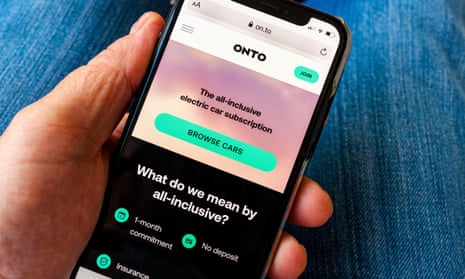
Outside traditional manufacturers, startups such as Fair, Finn, Cluno, Onto, and Carly built entire businesses around flexible vehicle access. Even rental companies including Hertz, Sixt, and Enterprise developed subscription products, hoping to capitalize on changing consumer preferences.
For a brief period, it appeared as though subscriptions would become a standard part of the automotive industry.
Price Became the Biggest Obstacle
Despite the attractive marketing, consumers quickly encountered the model’s biggest weakness: cost. While subscriptions bundled numerous services into one payment, the monthly fee was often significantly higher than traditional leasing or financing.
A luxury SUV that might cost around $700 per month on lease could easily exceed $1,500 through a subscription. Although insurance and maintenance were included, many consumers still found the premium difficult to justify. Once buyers compared the total monthly expense with conventional ownership, subscriptions rarely came out ahead financially.
The issue became even more apparent because most people intended to keep the same vehicle for long periods. If someone wasn’t planning to switch cars every few months, paying substantially more for that flexibility simply didn’t make economic sense. Convenience alone wasn’t enough to persuade mainstream buyers to spend hundreds of extra dollars every month.
Companies Misunderstood Customer Behaviour
One of the industry’s biggest mistakes was assuming that drivers constantly wanted variety. Marketing campaigns emphasized the ability to change vehicles whenever desired, suggesting customers would regularly swap between sedans, SUVs, and sports cars.
In reality, most people develop routines around a single vehicle. Commuters drive the same routes every day, families rely on familiar seating arrangements and storage spaces, and drivers become comfortable with a car’s controls, visibility, and infotainment system. Constantly switching vehicles can actually become inconvenient rather than exciting.
Research soon showed that many subscribers rarely changed cars after signing up. Ironically, the feature that justified premium pricing turned out to be one that relatively few customers actually used.
Credits: The Guardian
Running a Subscription Fleet Was Surprisingly Expensive
The operational challenges proved even greater than expected. Every time a subscriber exchanged one vehicle for another, companies had to inspect, clean, transport, service, and prepare the car for its next customer. Insurance details needed updating, paperwork had to be completed, and logistics teams coordinated deliveries across multiple locations.
Unlike leased vehicles, which usually remain with one customer for several years, subscription cars constantly moved between drivers. This significantly increased operational expenses while reducing the amount of time vehicles actually generated revenue.
Demand also fluctuated unpredictably. More customers wanted SUVs during holidays, convertibles in summer, and larger vehicles during festive seasons. Companies had to maintain larger fleets than necessary simply to accommodate these peaks, increasing financing and storage costs.
Depreciation and Insurance Hurt Profitability
Every automobile loses value over time, but subscription services accelerated that process. Frequent driver changes meant higher mileage, increased wear and tear, and greater chances of cosmetic damage. Even with careful inspections, scratches, dents, and interior wear accumulated faster than companies had anticipated.
Lower resale values created another financial burden. Automakers expected to recover a significant portion of their investment by selling used subscription vehicles, but higher usage often reduced those returns. As depreciation increased, already-thin profit margins became even smaller.
Insurance created additional complications. Traditional policies are generally designed around one primary driver, making risk assessment relatively straightforward. Subscription fleets, however, involved numerous drivers using the same vehicle over short periods. Insurers viewed this as a higher-risk model and charged higher premiums, forcing companies to either absorb the cost or pass it on to customers through even more expensive subscription fees.
Ownership Still Matters More Than Expected
Another assumption that proved inaccurate was the belief that younger consumers no longer cared about owning cars. While surveys suggested attitudes toward ownership were changing, actual purchasing behaviour told a different story.
For many people, a car is more than just transportation. It represents freedom, reliability, and personal identity. Owners enjoy customizing their vehicles, keeping personal belongings inside, and developing familiarity with every feature. There’s also a psychological benefit to knowing monthly payments are building equity toward ownership rather than simply paying for temporary access.
Traditional financing and leasing also became increasingly competitive, offering lower monthly payments and attractive incentives. Against these alternatives, subscriptions struggled to present a convincing financial argument.
The Pandemic Changed Everything
Just as subscription services were attempting to gain traction, the COVID-19 pandemic disrupted the global automotive industry. Semiconductor shortages limited vehicle production, causing inventories to shrink dramatically. Used-car prices soared, making existing fleets more valuable than anticipated.
Instead of allocating scarce vehicles to subscription programs, manufacturers focused on selling them outright, where profits were higher and more predictable. At the same time, inflation increased maintenance costs, insurance premiums, financing expenses, and vehicle prices, making already expensive subscription services even less attractive.
Several startups found it difficult to raise fresh investment as financial markets became more cautious. Without continuous funding, many businesses were unable to absorb the high operational costs associated with managing large subscription fleets.
Credits: CarBuzz
A Niche Model Rather Than a Revolution
As financial realities became impossible to ignore, many high-profile subscription programs quietly shut down. Book by Cadillac ended after struggling to achieve profitability, while BMW discontinued Access by BMW and Mercedes-Benz wound down Collection in several markets. Audi Select also disappeared, and several startups either pivoted toward long-term leasing or exited the market entirely.
However, this doesn’t mean the idea completely failed. Today, car subscriptions continue to serve niche customer segments where flexibility genuinely creates value. Business travellers, expatriates, corporate fleets, and customers wanting to test electric vehicles before buying still find subscription models useful. In Europe especially, several companies have repositioned subscriptions as flexible alternatives to leasing rather than replacements for ownership.