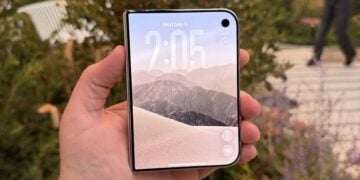
One of the most notable advancements in the smartphone industry in the past few years has undoubtedly been foldable phones and the question about why foldable phones still haven’t gone mainstream foldables deliver the best of both worlds, allowing users to own a small pocket phone while unfolding it into tablet-sized screens. Many of the big players in the smartphone game, such as Samsung, Google, Huawei, Honor, Motorola, and OnePlus, have been working in the foldable space for quite some time now, and each iteration gets better than its predecessor.
Even with all of the hype surrounding them, however, foldable smartphones continue to be a rare commodity in the mobile world. Most customers who can afford premium smartphones continue to go for slab smartphones instead.
Why hasn’t the adoption of foldable phones become mainstream yet? Here’s a list of reasons why.
:max_bytes(150000):strip_icc()/photo-1568378711447-f5eef04d85b5-992058bd686b4d88a771bea740253987.jpeg)
Why Foldable Phones Still Haven’t Gone Mainstream: They Cost Too Much
Price is the greatest barrier.
Foldable phones tend to be located at the pinnacle of the premium phone segment. Entry-level foldable devices also tend to be priced significantly higher than the flagships in their class. Customers tend to benchmark them against the Galaxy S range, iPhones’ Pro line, and Pixel Pro range, all of which boast impressive cameras, long battery life, great displays, and multiple years of software updates.
In many cases, paying additional money for a bigger screen is not financially justifiable.
This is because of multiple costly parts that go into making a foldable device:
- Flexible OLED screens
- Precise hinge system
- Complex engineering
- Low production volumes
- Internal hardware specific to the product
Since foldable smartphones do not yet reap the benefits of economies of scale like regular phones do, manufacturers have to produce fewer units, which results in increased production costs.
Foldables will remain a luxury item until they become cheaper.
Durability Concerns Continue to Hurt Consumer Confidence
Another major reason why foldable phones still haven’t gone mainstream is durability.
Despite the fact that modern foldable phones are much more robust than their predecessors, most consumers still recall the incidents when the screens cracked, the hinges broke, or the display protectors started peeling off.
This problem left an indelible impression on customers’ minds.
Today’s foldable phones have evolved significantly compared to their earlier versions. Modern manufacturers make use of more resistant hinges and folding mechanisms, stronger screen layers, and even higher waterproofing. Some phones can withstand hundreds of thousands of folds.
Nevertheless, certain doubts persist.
Unlike conventional smartphones, foldable phones feature moving parts. This means that each time users unfold or fold the phone, some kind of mechanical stress appears in the hinge of the device. Despite thorough tests made by manufacturers, the majority of consumers still doubt whether their phone will operate properly in several years from now under daily stress.
Another problem is the fact that the scratch-resistant layer of foldable screens is much softer than conventional Gorilla Glass screens.
The Everyday Benefits Are Still Limited
Foldable phones seem cool on paper. Your phone turns into a tiny tablet instantly.
But most people soon realize that their day to day life does not get altered much by changing to this new model.
The majority of your time goes into:
- Messenging apps
- Social media sites
- E-mailing
- Surfing the internet
- Watching videos
- Taking photos
All these functions are working perfectly fine on big slab phones.
Though the additional screen comes in handy for reading files, editing spreadsheets, viewing videos, or multitasking, people just don’t do that frequently enough to justify the higher cost.
This remains one of the strongest answers to Why Foldable Phones Still Haven’t Gone Mainstream.
Why Foldable Phones Still Haven’t Gone Mainstream: Software Still Needs Work
Improvements have been made in hardware. Not so much can be said about improvements in software.
Android is far more optimized for foldables compared to how things used to be, but a lot of apps still do not utilize the large inner screen properly.
Some common problems are:
- Stretching of the interface
- Black bars
- Aspect ratio problems
- Inconsistent layout designs
- Slow transitions from folded state to unfolded state and vice versa
- There are some apps which look great on the large screen.
But there are others which simply stretch the interface of a smartphone and offer no new functionality.
This happens because the developers usually cater to the needs of smartphones as they are used by more people.
Foldables Still Come With Hardware Trade-Offs
Every smartphone involves compromises. Foldables simply have more of them.
Most foldables are thicker than standard phones because they contain two display halves and a sophisticated hinge.
Many also weigh noticeably more.
Battery design presents another challenge. Manufacturers usually split the battery into two sections, which limits available space. As a result, battery life sometimes falls behind comparable flagship phones.
Camera systems also involve trade-offs.
To keep devices thin enough to fold, manufacturers occasionally use smaller camera sensors than those found in their premium slab phones.
Buyers paying flagship prices naturally expect flagship cameras.
When a conventional phone delivers better photography, some consumers question the value of switching.
Repair Costs Make Buyers Think Twice
The repair prices for premium smartphones are already quite high. Foldable phones cost even more.
A flexible screen or broken hinge repair costs significantly more than changing the screen of an ordinary smartphone.
No matter how much insurance a customer takes, the possibility of unforeseen repair costs after the expiration of the warranty makes people nervous.
And this is how customers come to their conclusion before purchasing the device.
Users simply ask themselves the following question:
“What will happen if it gets damaged?” If the answer is too expensive, consumers tend to buy the regular smartphone.
The Smartphone Market Is Already Mature
Another reason why foldable phones still haven’t gone mainstream is that today’s traditional smartphones have become incredibly good.
Features available on modern flagships include:
- High-quality cameras
- Bright OLED screens
- Good battery performance
- Powerful processors
- Water resistance
- Sturdy glass
- Software support for seven years on many phones
- Consumers are already very happy.
It is not an easy task for foldable phones. They do not have to beat old-fashioned phones.
They need to beat the best smartphones that exist! Making someone change a well-known design needs a lot more.
Foldables Appeal Mainly to Enthusiasts
Technology enthusiasts love trying new devices.
Mainstream buyers usually prefer reliability.
Foldables currently attract people who enjoy experimenting with new technology, multitasking, or owning unique devices.
The average smartphone buyer has different priorities.
Most people want:
- Long-lasting battery
- Great camera
- Reliable performance
- Affordable price
- Low maintenance
A foldable does not always score better in these areas.
As a result, adoption remains concentrated within a relatively small group of premium buyers.
Consumer Perception Still Shapes Buying Decisions
Technology history shows that first impressions matter. Early foldables experienced several high-profile failures.
News stories about cracked displays spread quickly across social media.
Although manufacturers solved many of those problems, consumer memories often last much longer than product flaws.
Many people still assume foldables are fragile. Others believe they will wear out after years of folding.
These concerns persist even though modern devices have become much more reliable. Changing public perception takes time.
Years of dependable products will do far more than any advertising campaign.
Limited Competition Keeps Prices High
The foldable market remains relatively small.
Only a handful of manufacturers compete seriously in many regions.
Limited competition slows price reductions and reduces consumer awareness.
In markets with more brands, buyers enjoy greater choice and stronger competition. However, foldables still represent only a small percentage of total smartphone sales.
Low demand leads to lower production.
Lower production keeps manufacturing costs high.
Higher costs keep retail prices high.
This creates a cycle that is difficult to break.
What Needs to Change?
For consumer acceptance, however, multiple improvements are necessary at once.
Reduced Costs
Cost is one of the most obvious problems for consumers to solve.
As long as the price of foldable devices is on par with high-end slab phones, far more people would buy them.
The availability of low-cost foldables in the mid-range market would attract even more customers.
Greater Durability
Customers must have faith in the product.
Manufacturers should continue improving hinging mechanisms, decreasing creasing, increasing screen strength, and providing more extensive warranties.
The greater foldables become as durable as traditional smartphones, the greater customer confidence will be.
Better Software
There should be a value proposition behind the software.
Multitasking, productivity, gaming, viewing, and creation should become noticeably more pleasant on foldables compared to traditional phones.
More applications should be optimized for larger screens.
The greater the software experience becomes, the greater its value proposition.
Increased Long-Term Reliability
Consumers tend to use smartphones for 3-5 years.
Manufacturers should demonstrate their ability to provide reliable operation of foldables over such period of time without any repairs and performance problems.
The Future of Foldable Phones
Despite all the difficulties facing the industry today, foldable phones keep getting better every year.
- Screens get tougher.
- Hinges get thinner.
- Software gets smarter.
- Battery efficiency keeps improving.
And the cost of production keeps decreasing as well because the number of units produced increases.
There are many technological products that have followed this trajectory.
The first models were costly, evolved for a few generations, and became common when they finally got affordable and reliable enough.
It looks like foldables are following the same path.
Whether they’ll become the standard smartphone form factor remains to be seen.
Concluding Why Foldable Phones Still Haven’t Gone Mainstream
The answer to why foldable phones still haven’t gone mainstream is not that people dislike the idea. In truth, most customers find such phones appealing.
The problem lies in the fact that at the present time, even though the price of such phones is dropping fast, they still expect users to pay extra money, spend more on repairs, endure bulky design, have some software inconsistencies and durability problems without providing any benefit for daily use compared to great smartphones.
This ratio may change in the coming several years.
While the price drops, the software improves, and the durability is increased, these phones will become a more reasonable purchase for a regular customer.
Before this happens, regular smartphones will stay the better choice for most users.